
Lily Fans have questions (thank you).
Questions About Quill
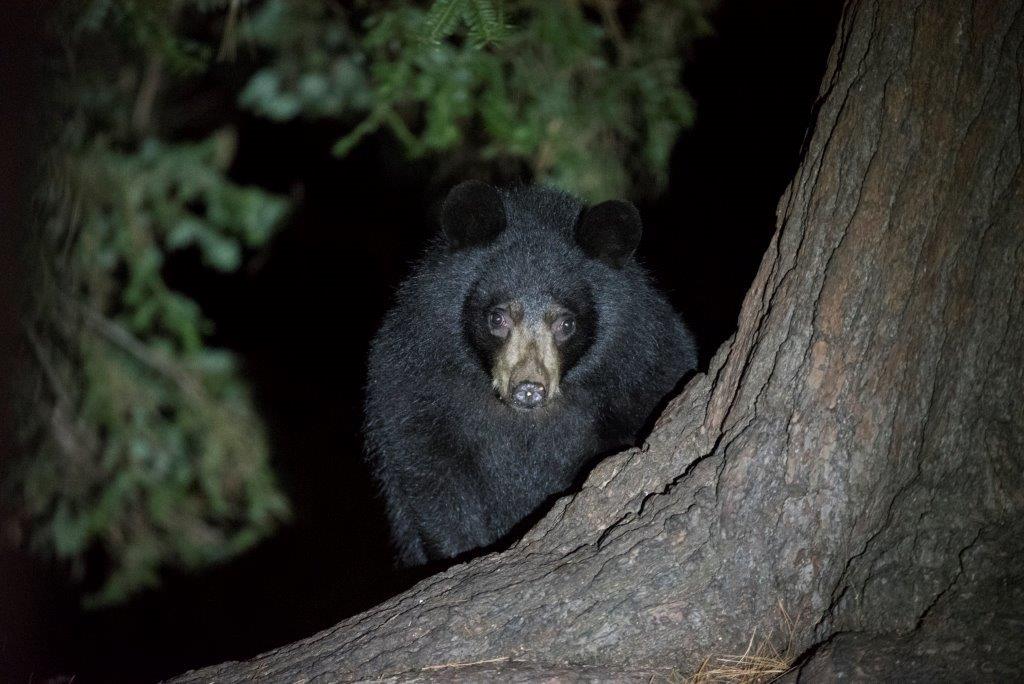
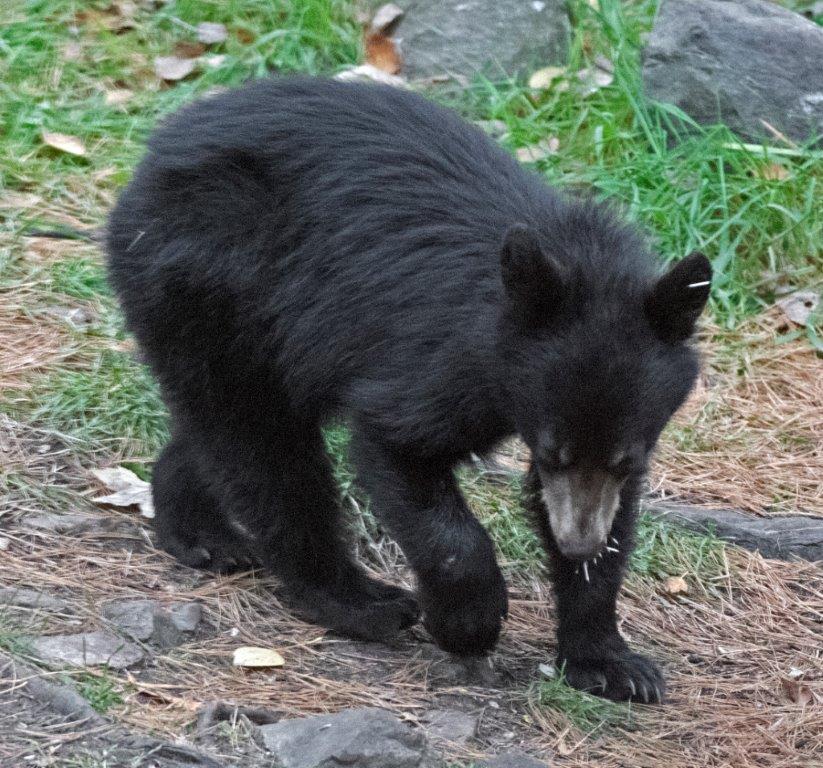
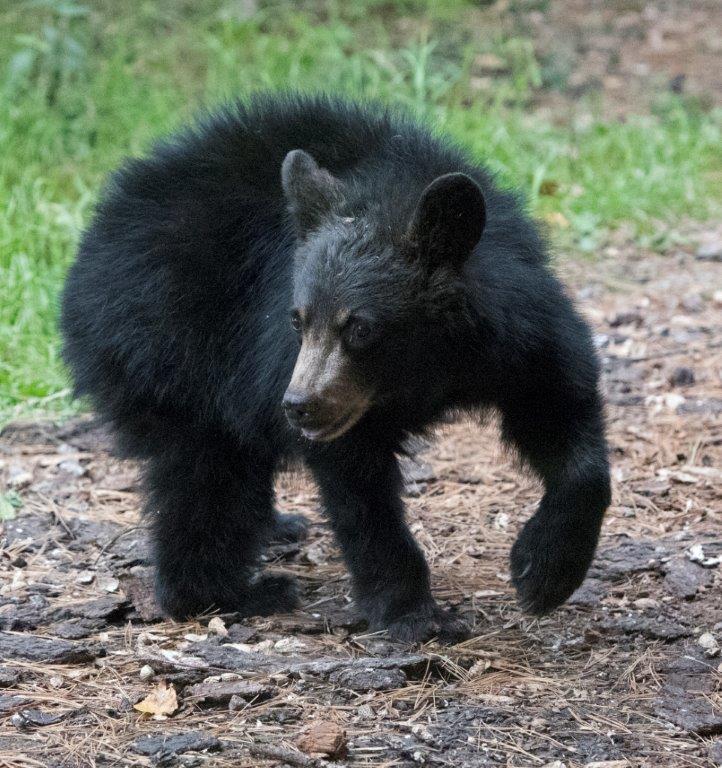 Quill on 10-21-16Does Quill have any identifying marks apart from his upturned nose to help you recognize him if and when he returns after hibernation?
I posted 6 pictures here that show his light muzzle that looks different in different light and his eyebrow pattern. Peggy said his right eyebrow patch was bigger than the left one, but a person has to look closely because marks show up differently in different light. He has no white marks on his chest.
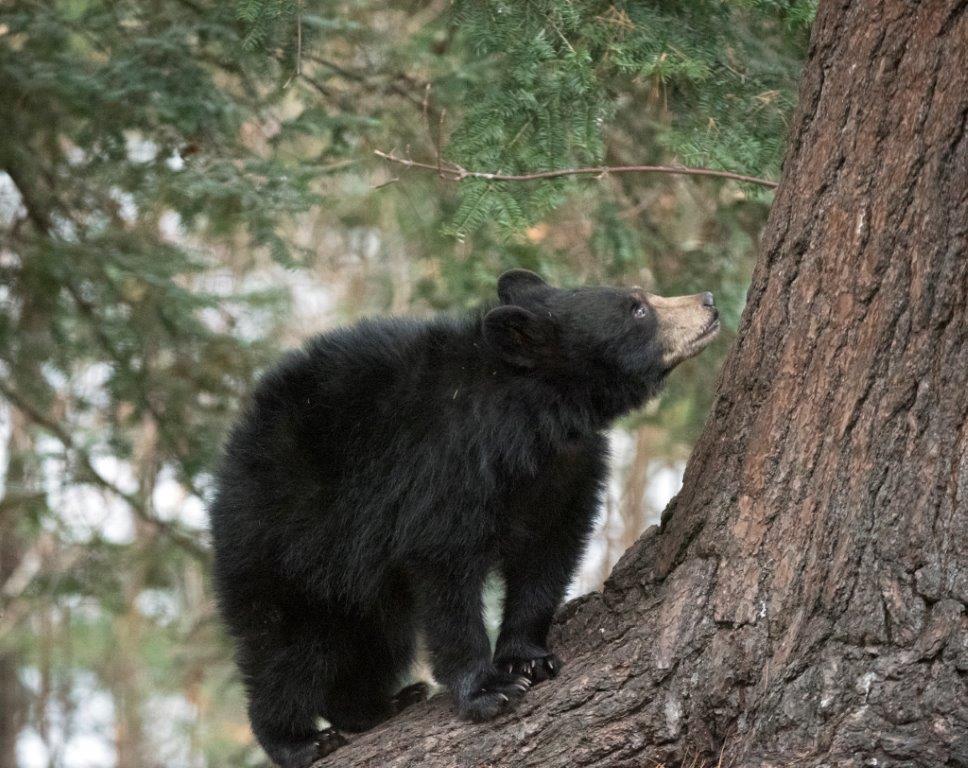 Quill on 10-26-16Could you tell if Quill’s eyes are still blue?
Yes, when I saw them well on October 19 and October 21, they were still a little blue, but now they are harder to spot as blue in the pictures. Is there an age or weight range at which a bear cub's eyes usually turn brown? I don’t have the weights handy and it would be hard to find tonight, but I’ve seen bluish eyes on very underweight yearlings in spring and brown eyes on most cubs in fall. Quill was a little underweight at 32 pounds despite the supplemental food he got here in late August and early September.
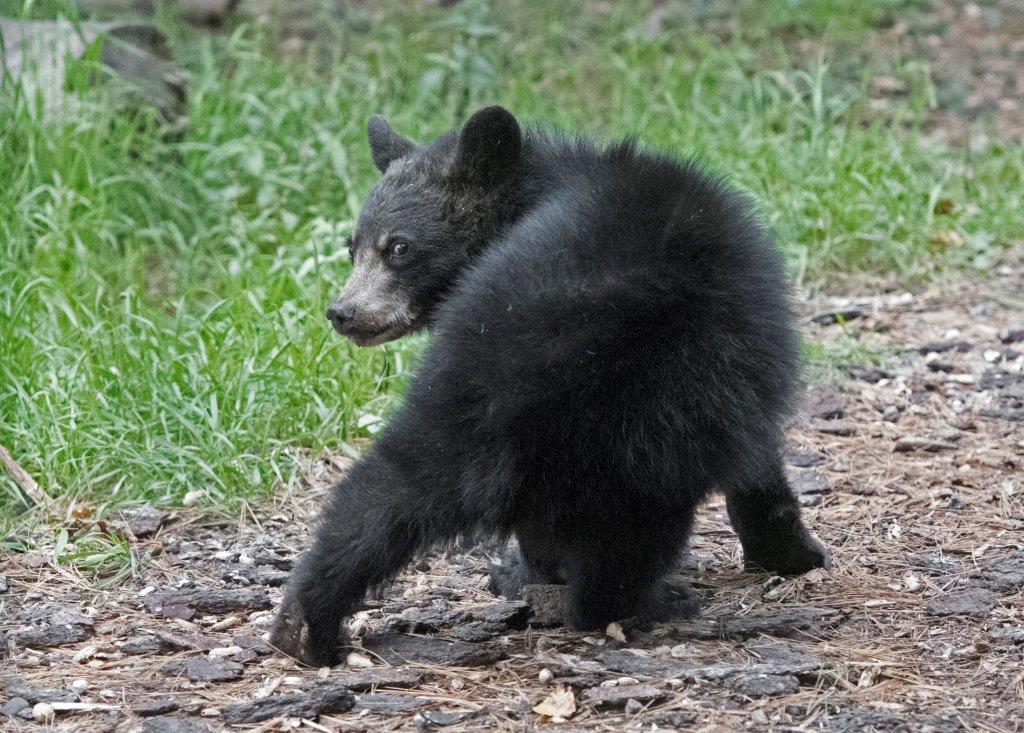 Quill on 10-21-16Is Quill vulnerable to predators such as wolves and coyotes?
I wish I knew where he was to answer that. Burrow dens and hollow trees give good protection, but surface dens are less secure. We’ve only had one bear killed by wolves at a den in all my 49 years of study. Actually, I should say one family because the mother’s cubs were eaten, too, by a pack of 9 wolves.
Are there empty dens on the WRI property and might Quill have taken residence in one of them?
Not that we know of.
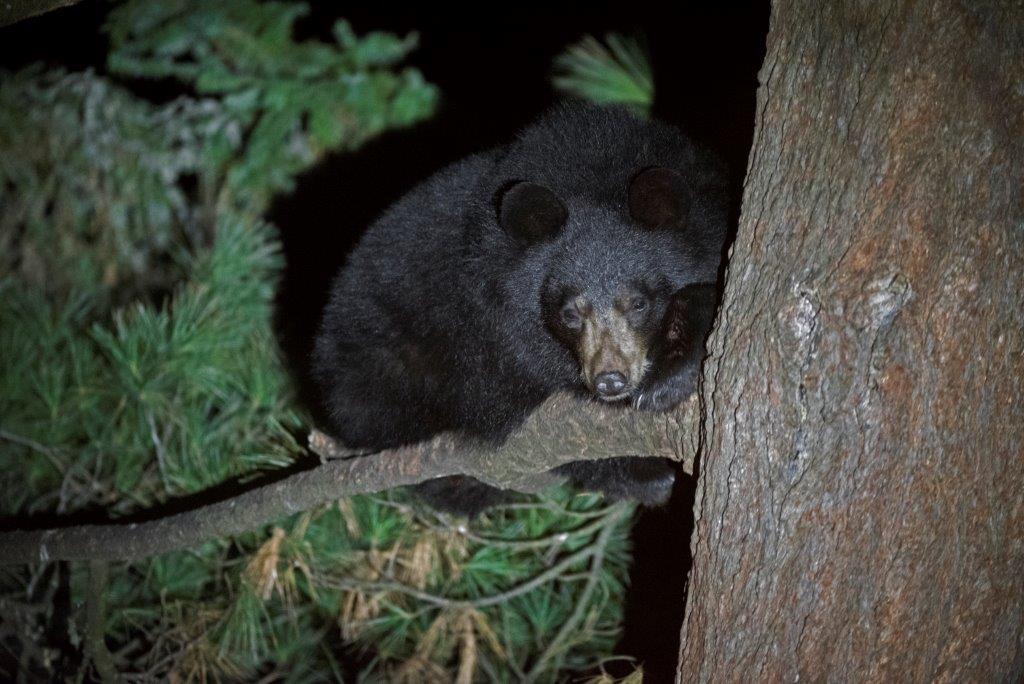 Quill in white pine on 11-17-16Does Peggy normally work the night shift or did she keep those hours for Quill?
Peggy is a metabolic miracle. Five hours sleep does it for her. She has to work all day and then she stayed up as late as 4 AM to get weights and observations on Quill and put out new formula from Chris and Larry after Quill lapped up the previous bowl. We all wanted him fat. We could hardly believe how we succeeded. Peggy recorded 63 pounds on that last night when Quill still had maybe a pound of formula to lap up. I dare say he left here weighing 64 or more. That’s doubled from the 32 pounds we recorded a week after he got here. Peggy might be able to interpret her good notes a little more when she next returns in mid-December. Peggy is an excellent note taker—probably from her experience of being a head nurse. Quill walked off and called it a year at 12:07 AM on November 18 about when the big snow began. From October 13 (first seen) through November 17 is about 36 days.
Bear Questions
 Quill by white pine on 11-17-16What age is an adolescent bear?
It’s a bit of a vague term. I call a bear an adolescent from one year of age until it reaches reproductive age—usually 3 around here. The females often have cubs at 3 or 4. A man who is fairly knowledgeable was saying 4-5 for Michigan’s Upper Peninsula. Without supplemental food around here, the average age at first giving birth is 6.3 years. Males around here often disperse as yearlings. On the other hand, Cal dispersed as a 2-year-old and was still traveling as a 3-year-old when a hunter shot him in September. In my old study (without supplemental food), they often dispersed as 2-year-olds—sometimes older. Pete was only two when he mated with Juliet. We still considered him an adolescent, though, because he had a lot of growing to do. Adolescents often get run off from females by the truly mature males. Females continue to grow until about 6, males until about 12.
General Questions
 Orphaned Quill with quills on 10-13-16What exactly is date mash?
I can’t seem to find it on the internet. It is date pulp without seeds all mashed up. It comes to us in a box, therefore is in the shape of a block.
The Pine Marten is clearly notable by its stench where we live. The odor is unforgettably strong and we are able to smell them before we see them. Is it the same for you and how would this odor be described?
I know pine martens are in the weasel family and can smell, but I’ve never caught an odor.
Is that really hair on the bill of the hairy woodpecker you have been photographing or is it very fine feathers?
Fine feathers.
Thank you for all you do.
Lynn Rogers, Biologist, Wildlife Research Institute and North American Bear Center