
My big concern about the fire in Tennessee was if the bears were in dens. I remember that a fire in Arkansas separated Holly from her mother and singed her fur before a man found her and raised her.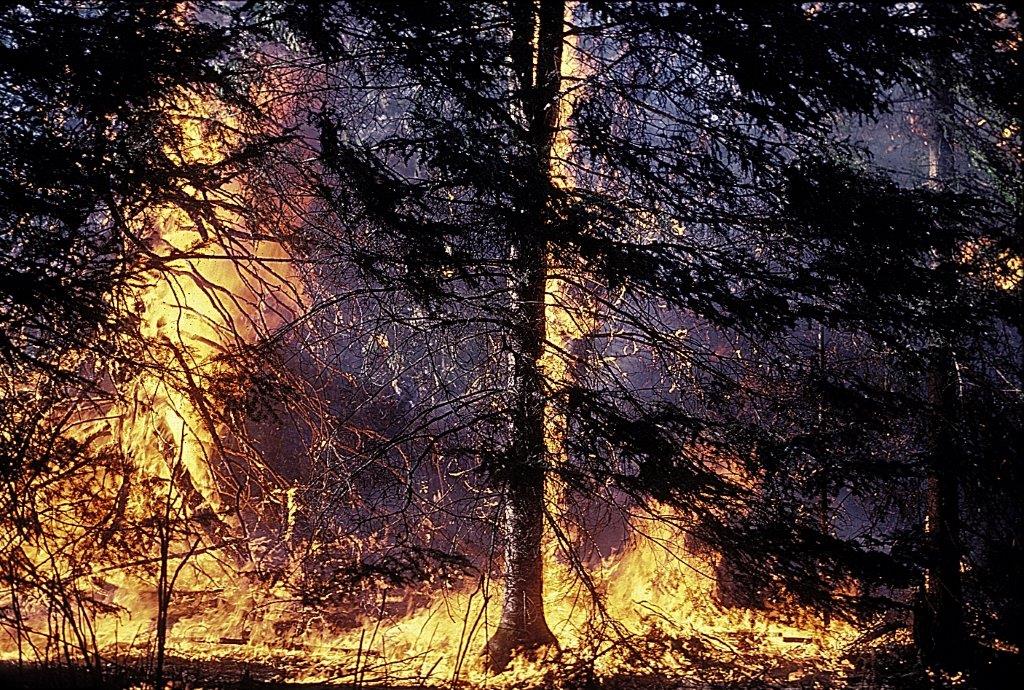 Forest fire - WRI file photo I was glad to see the post by the Appalachian Bear Rescue (ABR) folks that most bears are not yet in dens and that their radio-collared bears had moved out of the area. I hope all the bears and other critters can escape, but I know that even experienced fire-fighters sometimes find themselves trapped.
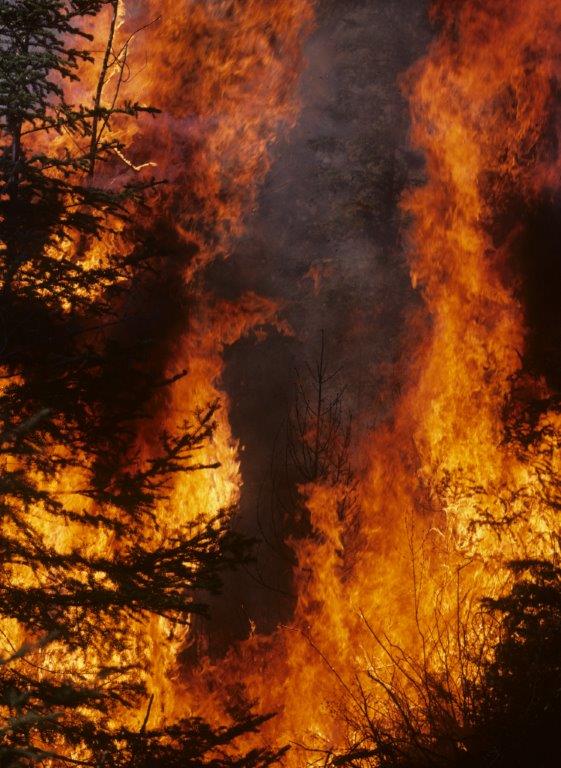 Forest fire - WRI file photoForest fires are scary. I remember the intense heat coming up from a valley just before it more or less exploded into flames. With the radiant heat, all I could do was pop up from behind a big rock, click, and duck down (photo). As the fire moved across the forest floor, a balsam fir tree would be intact one minute and a skeleton a few seconds later as the fire roared to the top. Shortly, an airplane dumped fire
 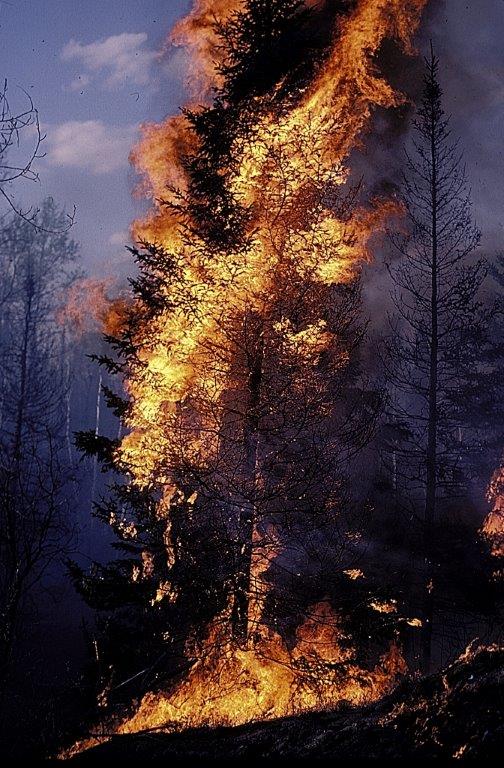 Burning balsam - WRI file photoretardant on the hotspot and me. It was all spectacular but scary. I didn’t see any wildlife. I think the mobile species vacated long before as the heat intensified, like the ABR folk saw with their radio-collared bears. All enlightening to me—what the fire showed me that day and what the ABR people shared with us about their radio-collared bear. Around here, burned areas are known for their blueberry production a few years later. Red squirrels know burned areas for the seeds that are released or made available still in the cones of jack pine trees. Jack pines are fire adapted with cones that stay tightly closed until a fire provides a nutrient-rich area of open soil where young saplings can grow in full sun. The cones open in the heat of the fire.
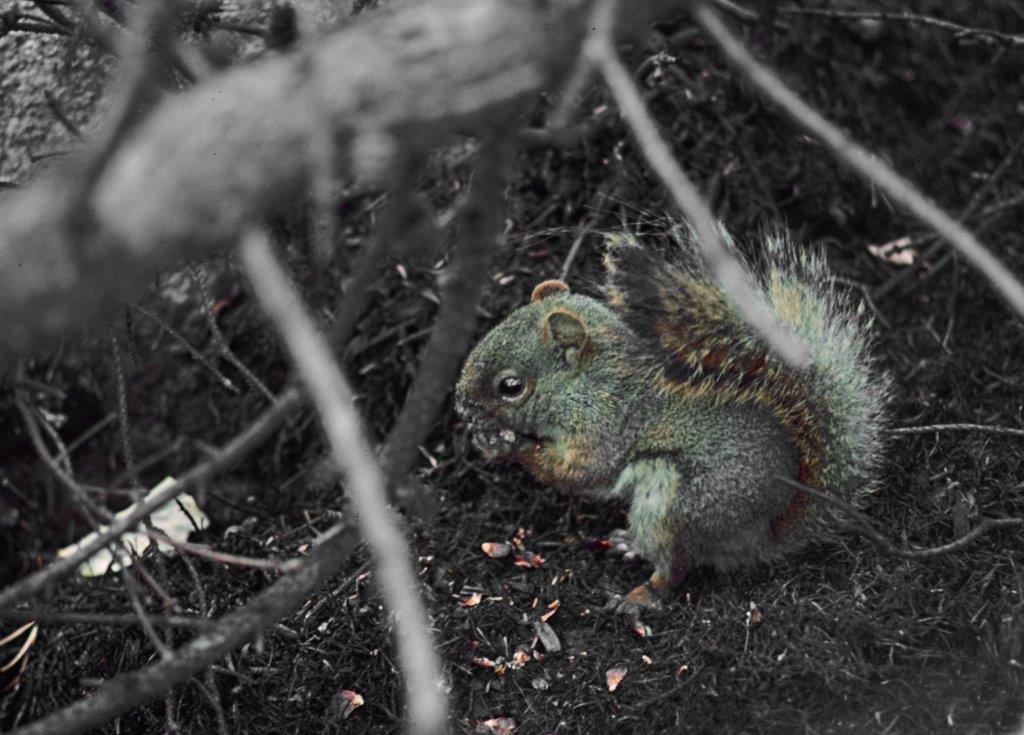 Red squirrel eats jack pine seeds after a fire - WRI file photo
Thank you for all you do.
Lynn Rogers, Biologist, Wildlife Research Institute and North American Bear Center