
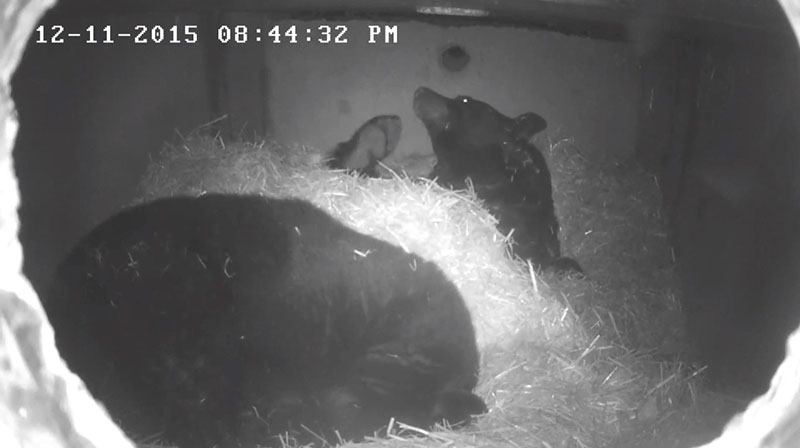
 Lucky wakes up and scratchesToday, good things came together. The new infra-red camera is showing us what we want to see—a clear picture, day and night, of Lucky and Holly’s whole den. Scott and the staff moved the camera to the other side of the den. You can see the hole on the opposite wall where the camera used to be. The entry is to the right just out of sight. I’m looking forward to what these bears show us. To watch the cam visit here: http://www.bear.org/website/live-cameras/live-cameras/lucky-and-holly-den-live.html
We have a video of the installation of the camera: https://www.youtube.com/watch?v=Cfo9f8xOhow and another captured at update time. We tuned in to see the quality of the infrared just at the time Vinny the Vole was bopping around the den. Look for his eyeshine in the lower right side of the screen. Lucky awakens and Vinny hightails it out of there. https://www.youtube.com/watch?v=hAOYY69WmWA
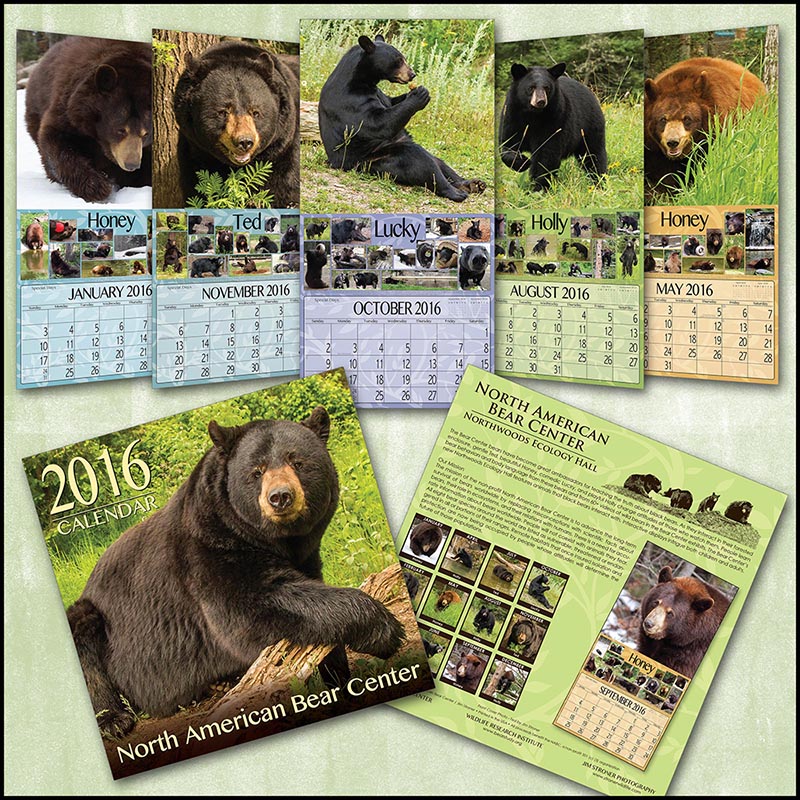 2016 Calendars (click image to go to gift shop)The calendars turned out beautifully. Perfect printing. Great color and sharpness. To me, it’s a keepsake of Lucky growing up, Holly integrating, and Honey and Ted over the years.
On another subject, a reporter from a national news network asked if the warm fall made a difference in bear hibernation. I wrote, “We haven’t noticed anything different here but you might find differences in the eastern deciduous forest. Black bears in different regions are genetically adapted to the annual cycle of plant growth and fruiting—food availability. Here in northeastern Minnesota, bears would have little chance of finding anything edible in late fall and winter, so they are genetically programmed to enter dens in September or October whether it is warm or cold, even if people put food out for them. In the eastern deciduous forest, food (hickory nuts, beechnuts, acorns, etc.) is available in late fall and sometimes overwinter, so bears don’t enter dens until November or December and often continue to forage through the winter if a good crop of nuts or acorns is not too far under the snow. There, bears do delay hibernation or stay up all winter if people put food out for them. Here in northeastern Minnesota, a warmer winter just means the bears won’t have to burn as much fat. Other factors are pregnancy and fatness. Most pregnant females around here enter dens in September. Very fat mature males often do the same. Other bears typically enter dens in October around here. In Florida, weather and food are more constant through the seasons and the bears are programmed to not slow down so much over winter. At the North American Bear Center, the bears held to their usual schedules this warm fall. These captive bears have various genetic backgrounds, so they hibernate on their own schedules, regardless of weather.
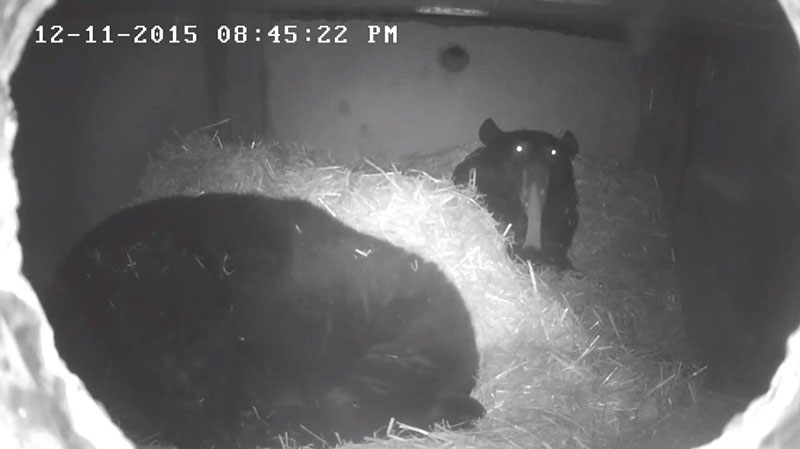 Lucky's long tongue rolls out as he yawnsA Grief Counselor wrote: “I have often been called on to help pets in homes where a family member or another pet has died. They do have feelings and are aware of the family and other pets, expressing their feelings. ....never sell them short....they are every bit as attached as we are...sometimes more.”
A Lily Fan wrote: “Of course animals have feelings! Scientists who believe that other living, breathing and thinking species do not have emotions have done humanity and the animal kingdom grave disservices, the negative ramifications of which last to this day.”
Alert Lily Fans were good to catch two errors. Bill’s picture was taken 3 months and 5 days (not just 5 days) after he saw Jo’s carcass, and I should have said most bears away from salmon streams (not most interior bears) never eat a fish. The Lily Fan who caught that error had watched bears feeling underwater to find dead land-locked (Kokanee) salmon 250 miles inland near Castlegar, British Columbia. She also saw that I was concerned about ice thickness this El Niño winter and sent this advice, “One inch, stay away. Two inches, one may. Three inches, small groups. Four inches OK.”
Thank you for all you do.
Lynn Rogers, Biologist, Wildlife Research Institute and North American Bear Center