
Ted spoke his friendly grunts showing delight as people visited him at his enlarged pen. Before that, he stopped by his chalet den to say the same nice things to me, but when the people arrived, it was all about them. The staff and volunteers did a great job setting up the doubled pen with his chalet den in the shade of a grove of balsam fir trees. Ted likes to stroll down to the pond and viewing area, but after a couple hours he goes back to his own pen and asks to get back in.
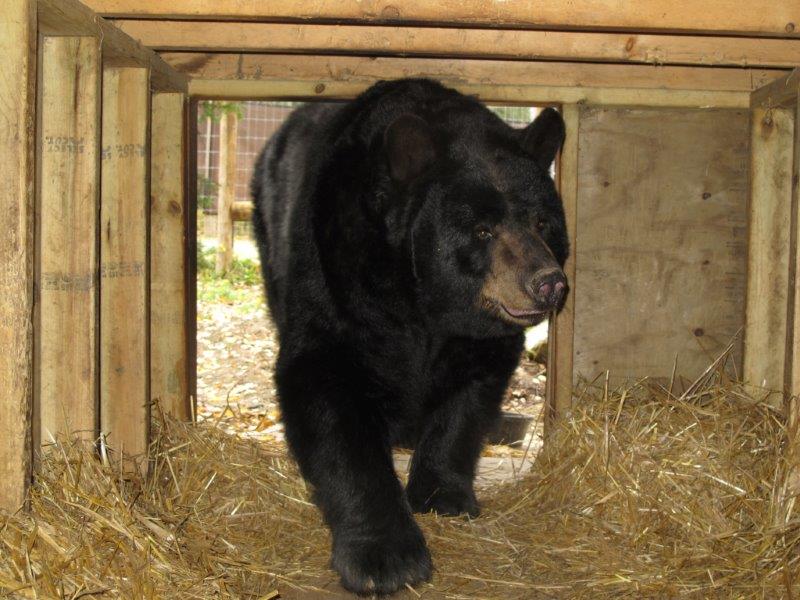
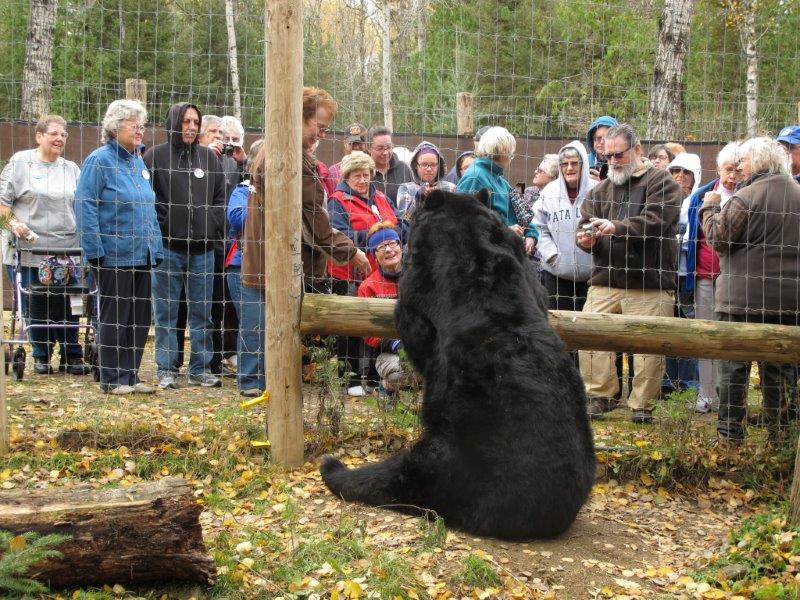

Ted in his den and greeting folks
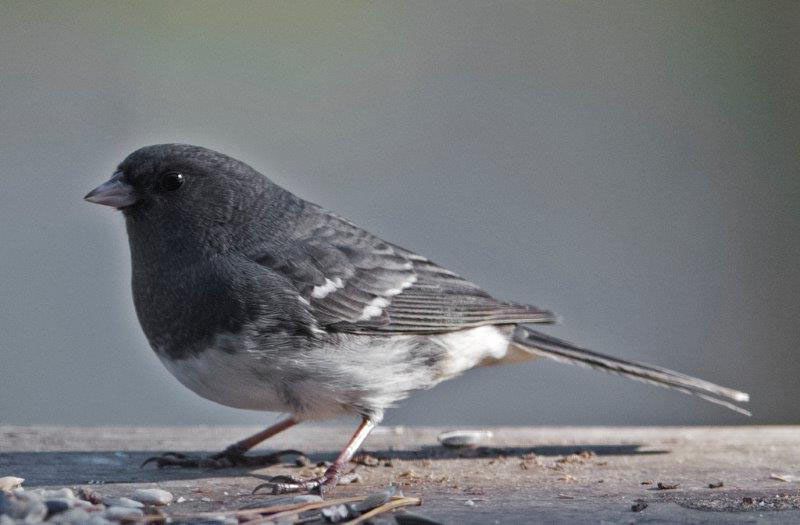 White-winged juncoAt the Wildlife Research Institute, no food disappeared overnight! The seeds on the railing attract some visitors by day, though—birds and squirrels.
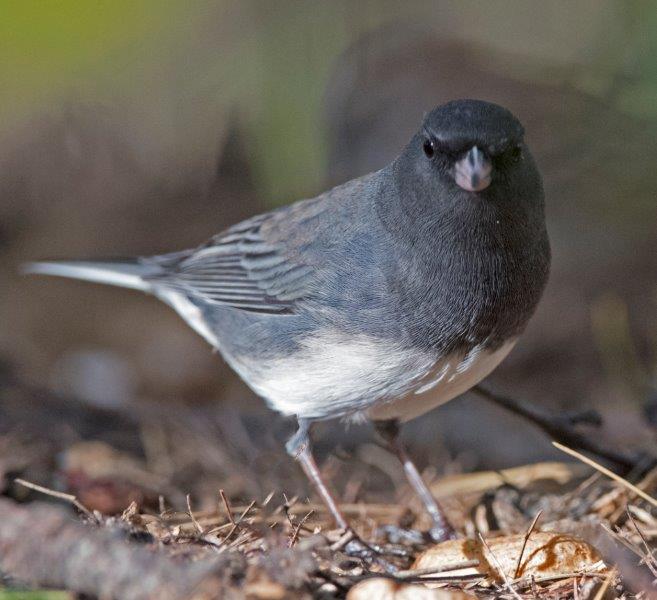 Slate-colored juncoWe were surprised to see a white-winged subspecies of dark-eyed junco (Junco hyemalis aikeni). We have never seen one here. They breed mostly in the Black Hills of South Dakota some 600 miles WSW of here. The usual junco in this area is the slate-colored subspecies of dark-eyed junco (Junco hyemalis hyemalis) that breeds mostly in the boreal forest of Canada and Alaska. Two of the ways the white-winged subspecies differs is in having white wing bars and a more convex bib.
Away from the seeds, this hairy woodpecker alternately pecked holes in a big white pine and contorted her head to reach in and extract the bug. Then the red squirrel investigated the spot and the hairy woodpecker had to move on, at least temporarily. I have never seen a woodpecker contort its head and neck like that before.
I had a great day at the Bear Center for a couple hours today meeting Lily Fans and seeing Ted in his enlarged quarters.
 |
 |
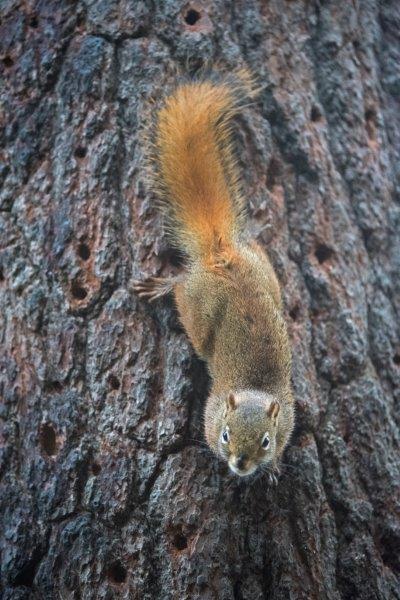 |
| Hairy woodpecker | ...twisting neck to get bug | Red squirrel investigates |
Thank you for all you do.
Lynn Rogers, Biologist, Wildlife Research Institute and North American Bear Center