
 Forest sunset - Sept 1, 2012The radio-collared bears with GPS units are all accounted for. The yearlings without GPS units are being tracked by telemetry from roads by the volunteers here. They are recording movement and getting active signals. By active signals, we mean signals that vary in strength. The radio-collars send different strength signals in different directions from different parts of the collar. When a bear is moving, the signal sounds like it varies in strength. All is well.
Several reasons.
Although we want to show that black bears are not the ferocious animals most people think, hand-feeding is not the message we want to promote. We also don’t want to show trained bears that respond to commands for food treats. We would rather scatter the food and show foraging behaviors like bears have to do in the wild. We want to show bears searching out foods like they would search out berries and insects in the wild. We want to show bears turning over rocks and logs as they actively cover ground. Any hand-feeding we do now is behind the scenes to make sure each bear gets adequate food and loving attention. Foraging keeps the bears active, stimulates their minds, and keeps their joints moving.
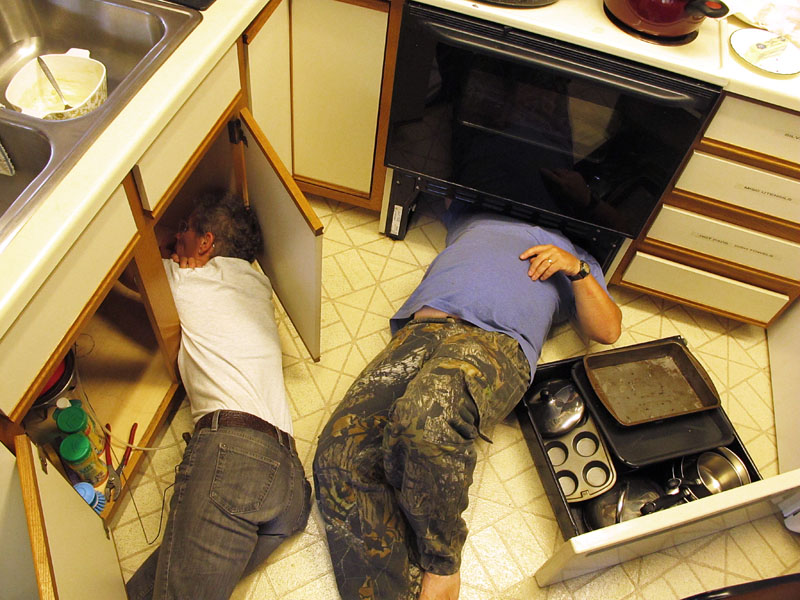 WRI volunteers are hard at work - Sept 1, 2012Another reason we are not doing as much hand-feeding is because it is hard to ration food and control diets when many people are doing it. We are working with veterinarians and zoo dieticians to assure that our care keeps the bears healthy. When many people have feeding privileges, some want to give a little more, and it adds up. We want Ted to weigh between 650 and 675 pounds when he enters a den around Thanksgiving. That is heavier than 99.9% of wild male black bears. He is already up to 633 pounds with nearly 3 months of feeding to go. Careful rationing is needed. We know from the past that if Ted weighs more, he has a hard time walking. We are following the best veterinary advice available.
 It’s the same story with Honey and Lucky. Honey’s frame is no bigger than the wild females we know, but she weighs far more than any of them. Veterinarians watched her struggle to get up from a sitting position and told us that if she weighed 20% more her problems would be drastically worse. Her pre-denning weight the first year we had her was 555 pounds. Each year we try to have her pre-denning weight be a little less than the year before until she is a more normal weight. She is now 462 pounds with 3 months to go before she dens. She is already at a more than adequate weight for hibernation. At 555 pounds she had a hard time walking. We must ration her food carefully.
 Blue Moon - Aug 31, 2012Lucky is healthy and by far the most active of the three. At 450 pounds he is far heavier than any wild bear we have ever heard of that was not supplementally fed. In our old study that did not include intentional feeding of wild bears, the weights of 13 bears 4-5 years old ranged from 135 to 380 pounds at this time of year (August-September) and averaged 222 pounds. The heaviest bears in that study fed at garbage dumps or were captured as ‘nuisance’ bears that fed extensively on garbage. Our generous feeding of Lucky has allowed him to grow and fatten far faster than bears in the wild. We need to ration his food to keep him from becoming obese and experiencing the problems that go with it.
 We want our ambassador bears to be healthy, active representatives of their species—both mentally and physically. That means refraining from over-feeding and minimizing hand-feeding. It means stimulating foraging activity by scattering the supplemental food we provide in addition to the wild foods in their forested enclosure and that are gathered for them from the wild by volunteers under the direction of Curator Donna Andrews.
Gathering wild foods for Ted, Honey, and Lucky is just one of the many ways volunteers are helping. Thank you for all you do.
We pulled from our archives to post Feb 21, 2007 video of June and cubs in their den at https://www.youtube.com/watch?v=nZiPQevRCw0. The light-faced cub is Lily.
—Lynn Rogers and Sue Mansfield, Biologists, Wildlife Research Institute and North American Bear Center