
A Lily Fan recorded Ted’s outing yesterday. Ted checked the new “Honey Tree” among other things. The name Honey Tree gives us an idea. 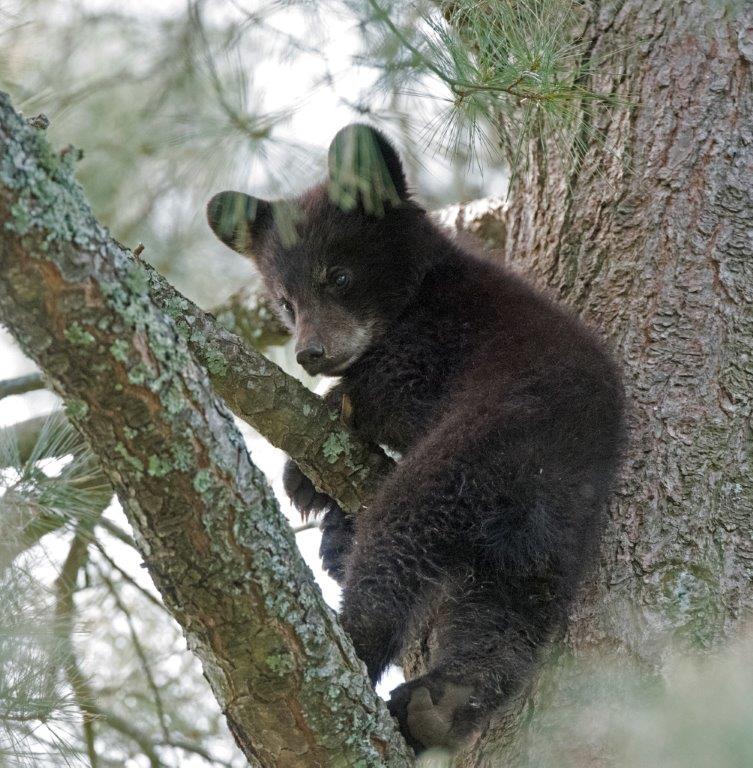 Daisy's cub 6/7/17Maybe we could put some honey on Lucky or Holly’s food tray up in the tree to give visitors a longer look. Here we go with parts 1, 2, and 3:
Part 1 https://www.youtube.com/watch?v=h-NJd-DBPRY
Part 2 https://www.youtube.com/watch?v=8ra35IeSkAw
Part 3 https://www.youtube.com/watch?v=Um9KfAS0VRQ
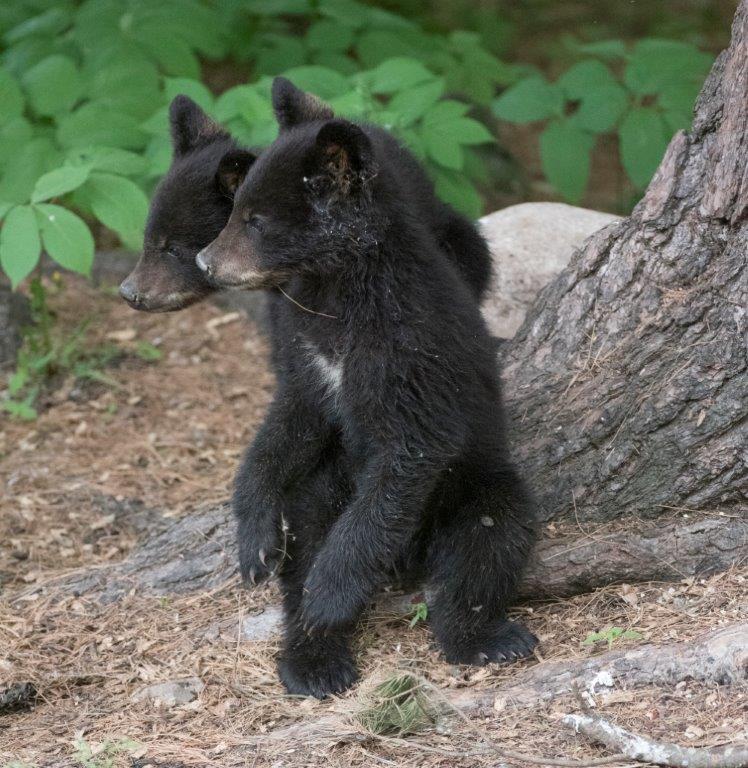 Daisy's cubs 6/7/17News from the forest: Annie still has all 5 of her cubs and they all look like they are doing well.
Thinking of names for cubs. Since this year marks the 50-year anniversary of my bears research (officially June 24), we want some of the cub names to honor people who helped start and continue my research. As a beginning, Daisy’s 3 cubs are named after Wally and Marylee Dayton, formerly of the Dayton Hudson Corporation and Target Stores. I’m glad to say that back when I was the chairman of 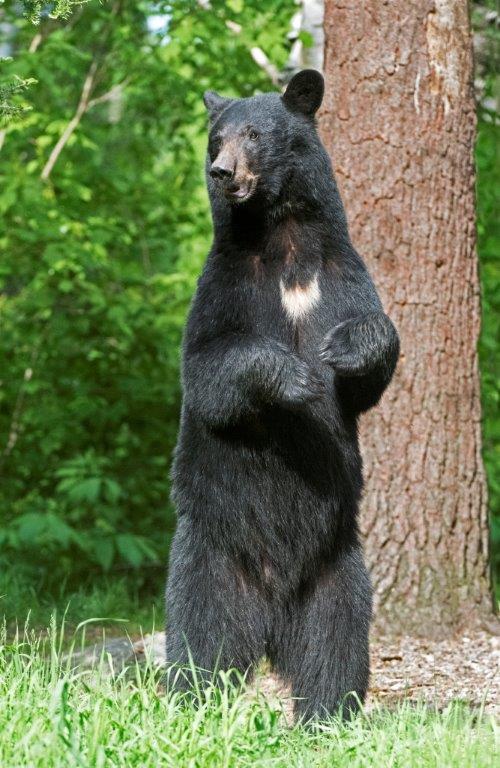 Daisy 6-7-17The Wildlife Society’s Minnesota Chapter, I had the honor of nominating him for the prestigious Minnesota Award and presenting it to him. In 1967, Wally and Marylee provided funding for Minnesota’s first major study of black bears. I was the one University of Minnesota selected to do the study. However, there were two problems. I still had my senior year to go at Michigan State University, and the funding was for a Ph.D. candidate. Everyone worked it out. They held the position until I graduated and fast-tracked me into the Ph.D. program when I arrived at the University of Minnesota in fall 1968. I will always be grateful. It began my career. The Minnesota bear study that I began in June 1969 became my life work. Daisy’s three cubs are Wally, Marylee, and Dayton. Ironically, Wally and Marylee Dayton started my work, and their nephew, now Governor Mark Dayton backed steps to try to end it. I will carry on Wally and Marylee’s dream to learn about bears, train students, and educate the public as long as possible. Lily Fans are part of that.
Thank you for all you do.
Lynn Rogers, Biologist, Wildlife Research Institute and North American Bear Center