
As Tasha continues to heal at the Bear Center, yearlings in the forest are spending extra time up trees as they learn to deal with independence. Their safest place is high in a white pine shaded from above and concealed from below by needles and branches.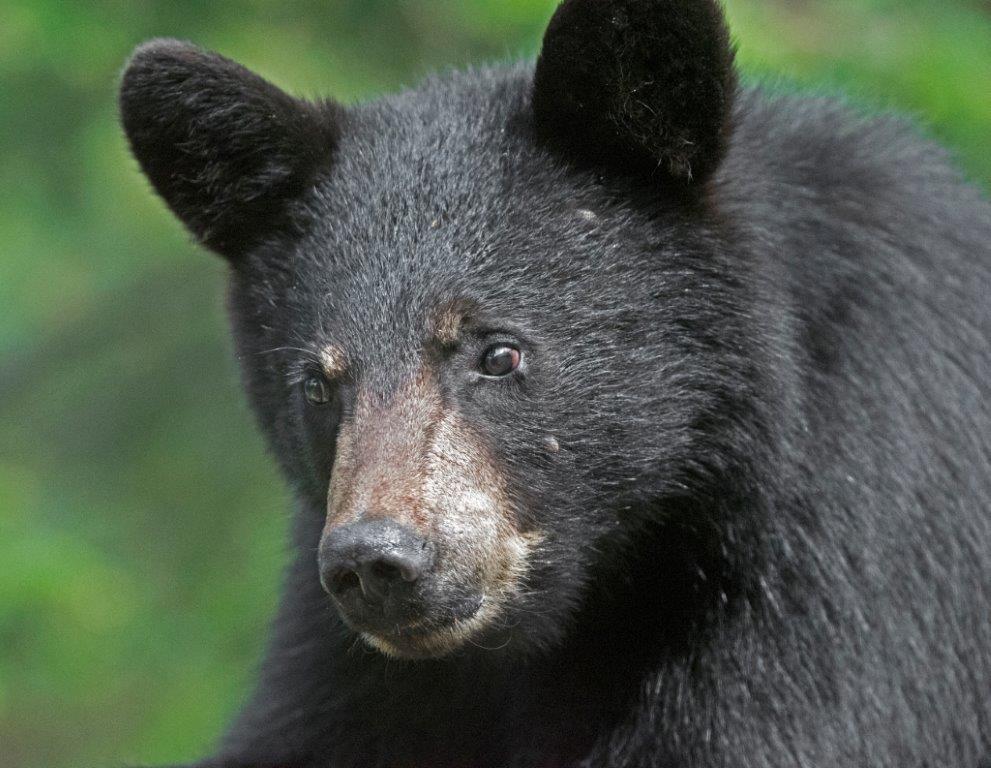 Samanthas male yearling
It’s beautiful today with Woods Lake set among shades of green and its water reflecting the blue sky and shoreline. Watching the water and a loon between sentences I was typing, I missed a yearling high in a white pine until it stirred at 9:45 AM. I suspect it spent the night up there. Shortly it came down for toilet duties and to be off doing whatever. 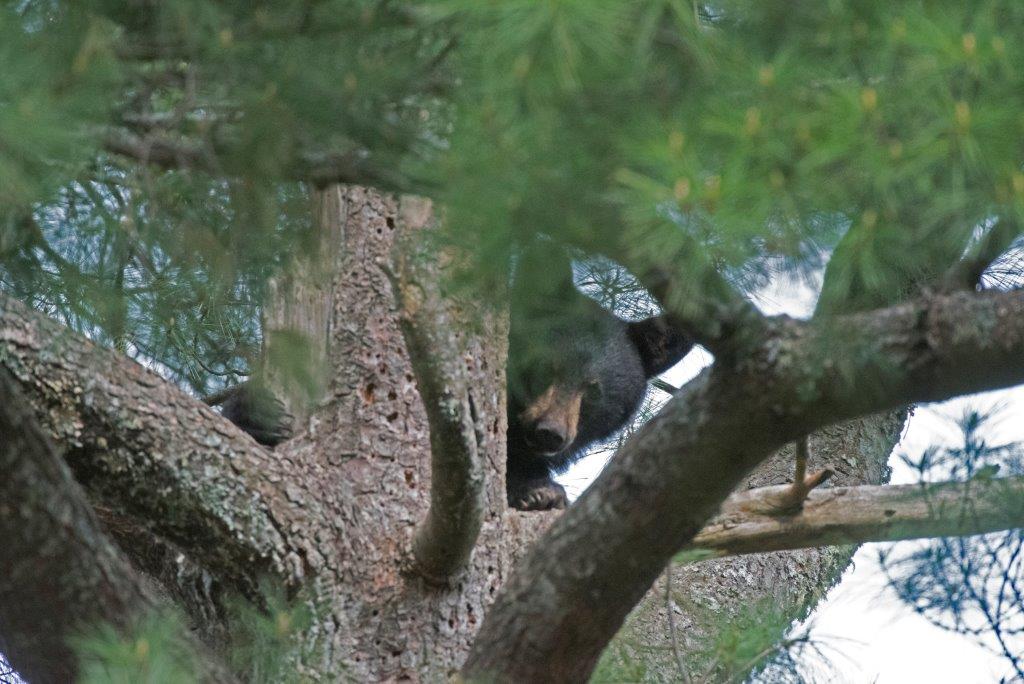 Samantha's yearling in treeWe never identified it, but from its size it is likely one of Samantha’s four. Yesterday, one of Samantha’s males was here, but it isn’t easy to distinguish between Ricky and Fred. Whoever it was, he probably misses Samantha’s daily tick removal service.
Nancy and Glenn reported that they are seeing Wendy and her 2 cubs (a male and a female), Summer’s independent yearlings (Cory and Callie), and the 3 or 4-year-old male Grizz who Summer seems to favor. Grizz, a non-clan cinnamon phase male, was chased off by a bigger male a couple days ago and is still limping from the encounter. Star’s 2½-year old daughter Veanna also seems interested in him. When the Black Bear Field Courses visit there with us, we’ll see how some of this is turning out. The bigger male has shown up again, so Glenn and Nancy’s bears might help Grizz spread some brown genes.
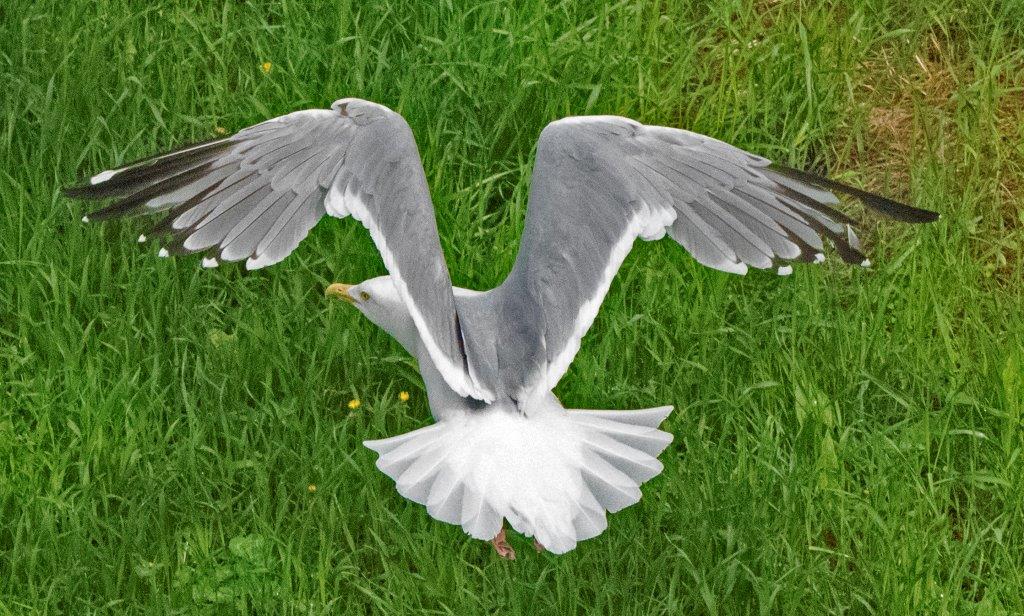 Speckles' Speckles'transparent tail |
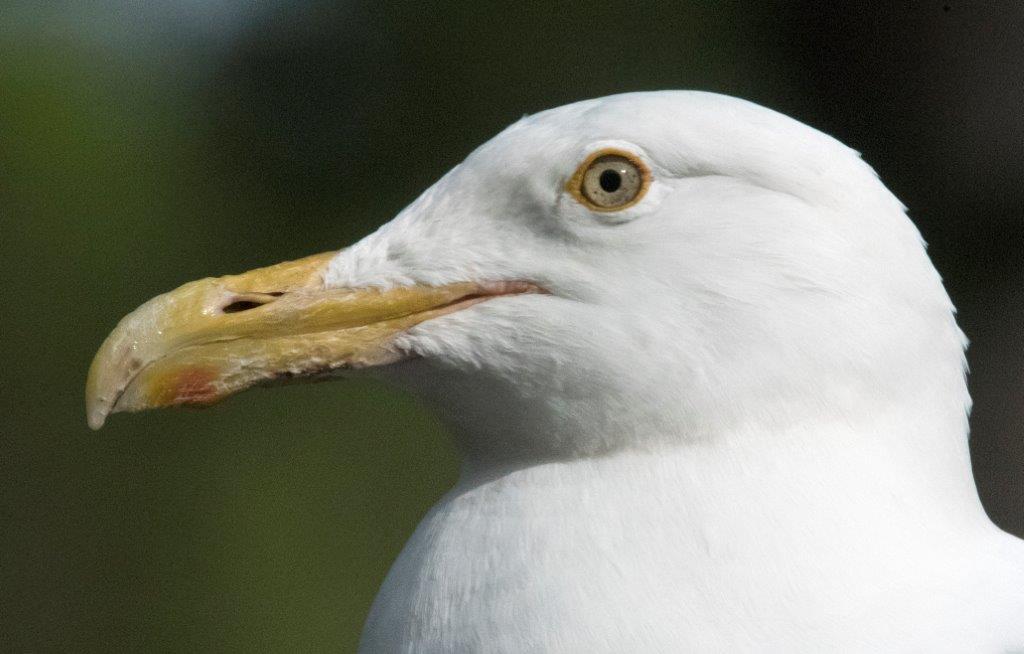 Speckles' battered bill Speckles' battered bill |
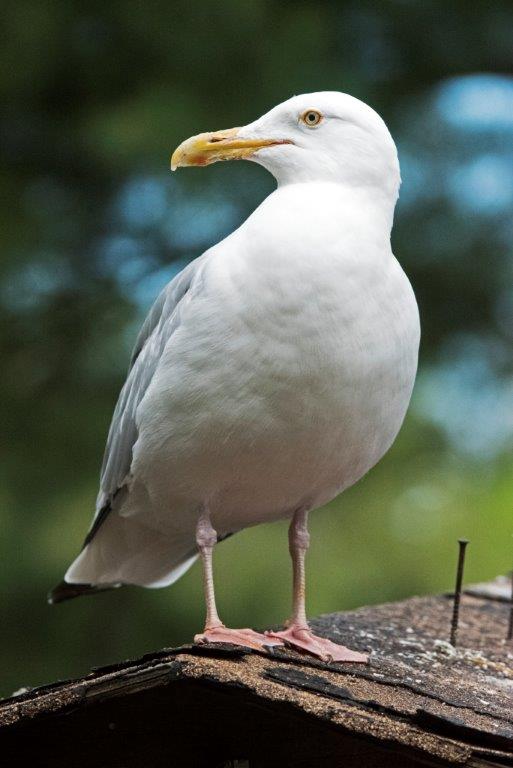 Speckles' lumpy breast feathers Speckles' lumpy breast feathers |
We wonder if Speckles (named for the speckles in his iris) is a very old gull. We can’t find any references about how to tell if a gull is very old. What makes us suspect that he is old beyond his large size is his rough and battered bill. His lumpy breast feathers also set him apart from other gulls, and his tail feathers look thinner and more transparent, giving his tail a gray look as he flies off. Google says herring gulls can live 30 years or more. I’m don’t know how many of them reach that age, and we’re wondering if he might be one of them.
Suddenly we have more ruby-throated hummingbirds today but still only one male, and he has taken to guarding the hummingbird feeder. Also, we had more gulls here today than ever before—as many as nine at one time. Word is spreading about our bologna.
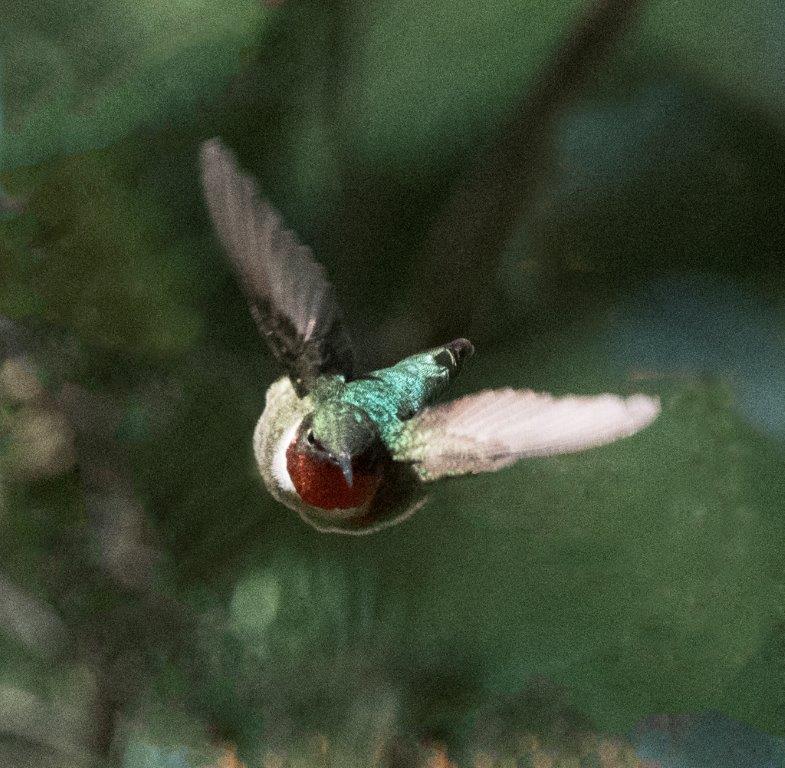 Male Ruby-throated Hummingbird on Patrol Male Ruby-throated Hummingbird on Patrol |
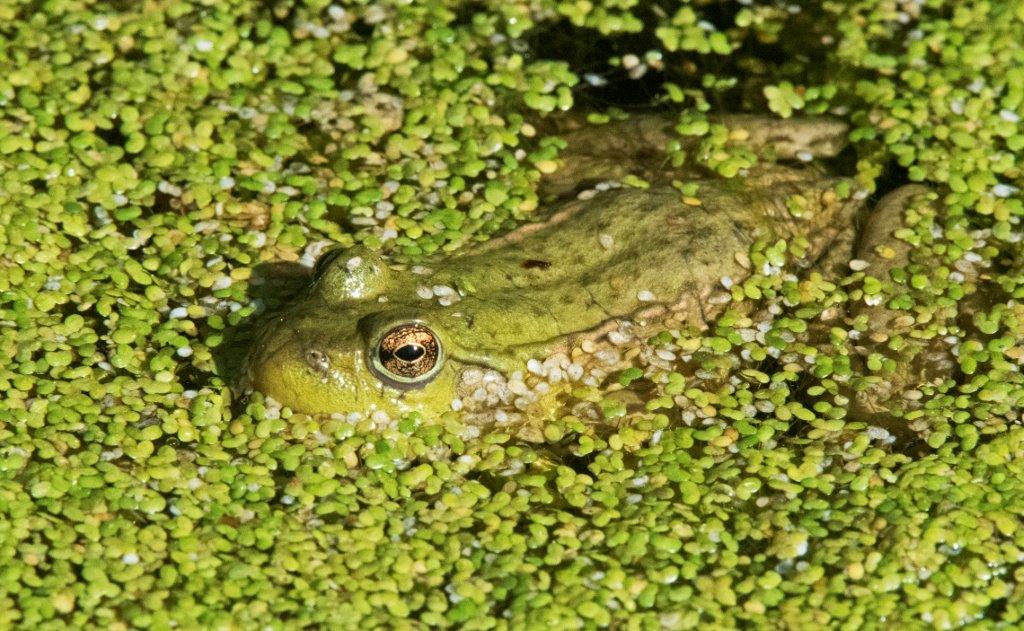 Green frog Green frog |
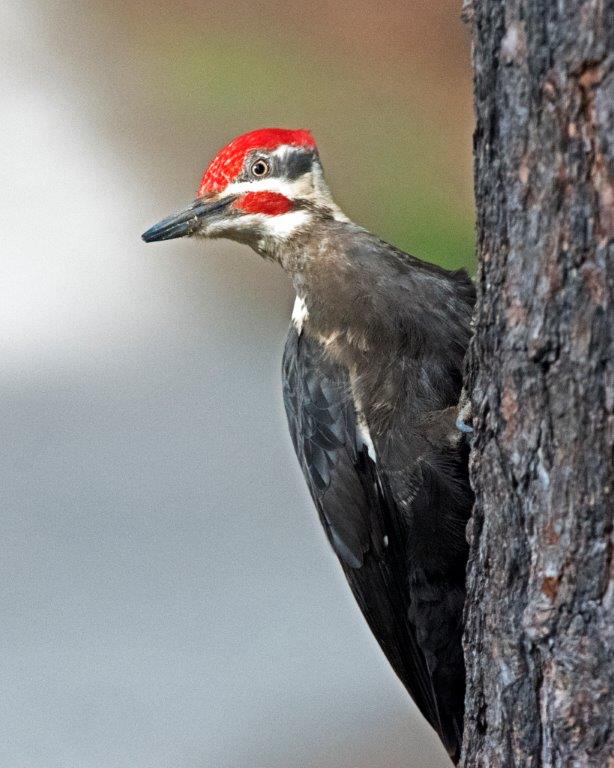 Pileated Woodpecker Male Pileated Woodpecker Male |
Daughter Colleen and her husband Nick and my grand-kids, Heinrick and Gabrielle, stopped by and explored. They not only found green frogs in the duckweed-covered pond, but their keen young ears picked up high-pitched animal sounds coming from the brush pile that the woodchuck often sits on or forages near. The male pileated woodpecker paid a visit. I hope they use their old nest hole that they explored a few weeks ago.
Thank you for all you do.
Lynn Rogers, Biologist, Wildlife Research Institute and North American Bear Center