
Inquiring minds want to know about Quill. A Lily Fan wrote: “Is it a good or bad sign he hasn't been back for 2 days? Did the other referenced orphaned cubs hibernate this late in the year? 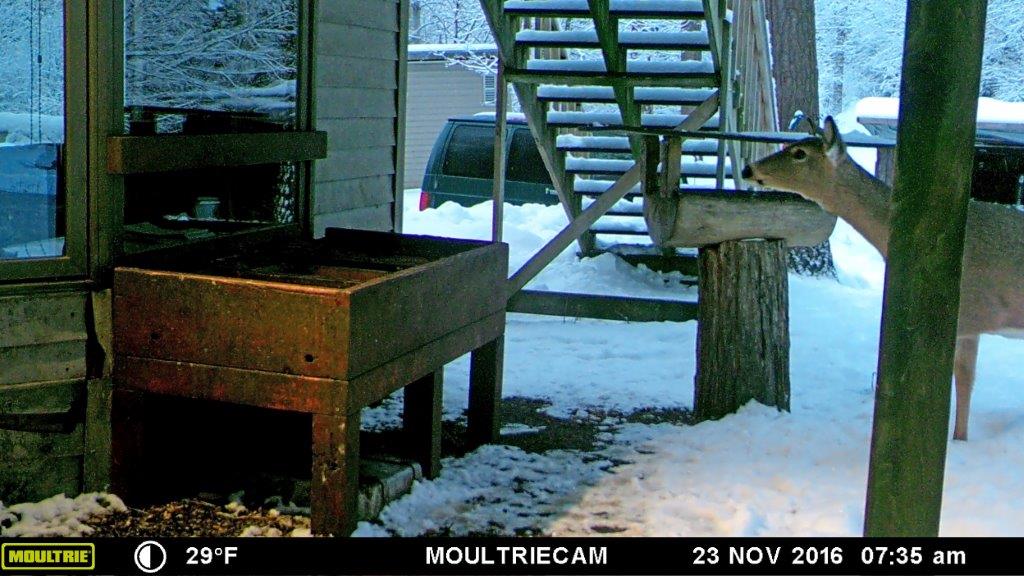 Deer at feederIs there an internal mechanism that made Quill stay alert and eating until he could survive with his bulked up weight? Would you have tried to keep Quill if he just kept wandering about deep into the winter? If you don't think a hunter shot Quill's mom, what kind of things could have happened to her?” To answer, I’d say it was just time for him. He stayed up a month or so later than usual to take advantage of an opportunity to get ready for hibernation. I figured Mother Nature or genetics would know better than I would. I think the internal mechanism you mentioned is genetics, which vary across North America according to regional differences in the annual cycle of plant growth and fruiting. I didn’t figure he would just keep coming; no bear ever has in this region. But in regions where there might be winter foods, genetics are different. Some bears stay up all winter to dig down through the snow for beechnuts, etc. My guess about what happened to put Quill on his own is a wild one. I imagined that every time he tried to nurse, his quills stabbed mom, making her push him away at a time of year when her milk was all there was for nourishment. Quill remembered the food at the WRI where he had been with his mother and sibling from mid August until September 21st.
 Deer at feederI don’t know how late the other orphans I’ve known stayed up because we weren’t feeding them and didn’t see them and didn’t want to check on them often for fear we’d disturb whatever they were doing to survive.
Research associates, Glenn and Nancy Krause tell the story of another orphan. “I have followed your updates on Quill from the beginning and hope he is snug in a den and will appear at the WRI in the spring. It makes me think of Lone Star when Cookie abandoned him the first of August at our cabin. His safe place was up in the Red pine, we would put food and water at the base of the tree and after awhile he became less fearful and soon we gained his trust and I was able to put a cub collar on him, our cabin seemed to be his home for August and September, venturing into the woods but never being gone too long. In October he began work on a den just a short ways from the cabin and actually spent a couple days in it (listening with the telemetry) then one night Glenn listened and Lone Star was moving away from us and by morning we had no signal. The next day we drove around trying to get a signal and we found him up on the Echo Trail in the same area he was born and had spent most of the summer with Cookie. He made a den and wintered over up there, I believe you and Sue snowmobiled and hiked to his den in early spring. These bears certainly wrap their paws around our hearts. Even though I have not seen Quill he has captured my heart and I will be anxious to hear about him in the spring.” To fill in about Lone Star, we saw him in a nicely made den on November 1 and removed his collar on April 3.
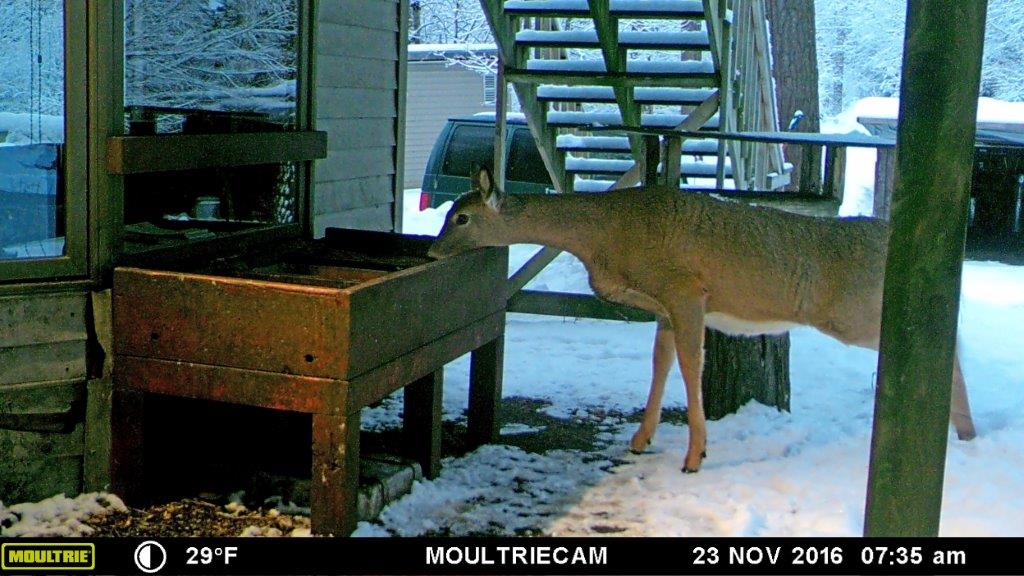
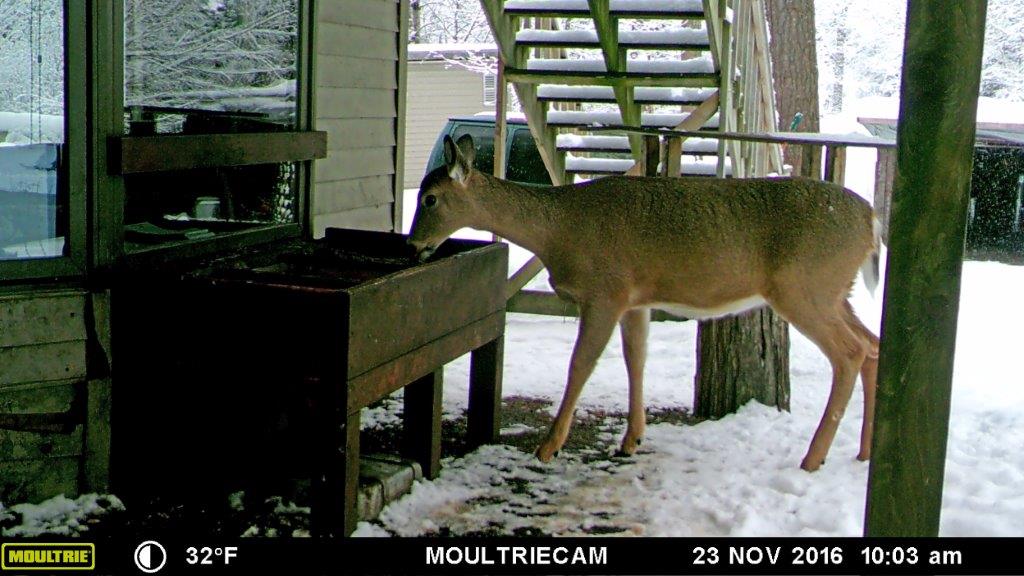 Deer at feederThe date mash is now attracting deer. With nearly a foot of snow, the grass they’ve been eating is covered up. So are the fallen leaves. It’s twigs or feeder food for them now. She was cautious at first. She stared at her reflection in the window. She strained forward to reach the date mash, ready to run. Then she came back a couple hours later and looked more comfortable.
We need more Bear Educator Volunteers. Bear Educators make a big difference in visitor experience. Wearing a red vest, Educators are visible and available to answer questions and show visitors exhibits on those topics. The Bear Center is growing. That means we need more Educators in the Bear Center, the Ecology Hall, and leading behind the scenes tours educating about the true nature of black bears. Working alongside the Bear Center staff and interns, Educators give our visitors a great learning experience while working with our 4 Ambassador bears. If you would like to volunteer, check out the volunteer page on bear.org to complete a volunteer application and you are on your way. For further information contact
Thank you for all you do.
Lynn Rogers, Biologist, Wildlife Research Institute and North American Bear Center