
We were premature in suspecting that Jewel headed for a den. She was back last night at her favorite feeding site where TV cameras were set up for her or Fern. They both came.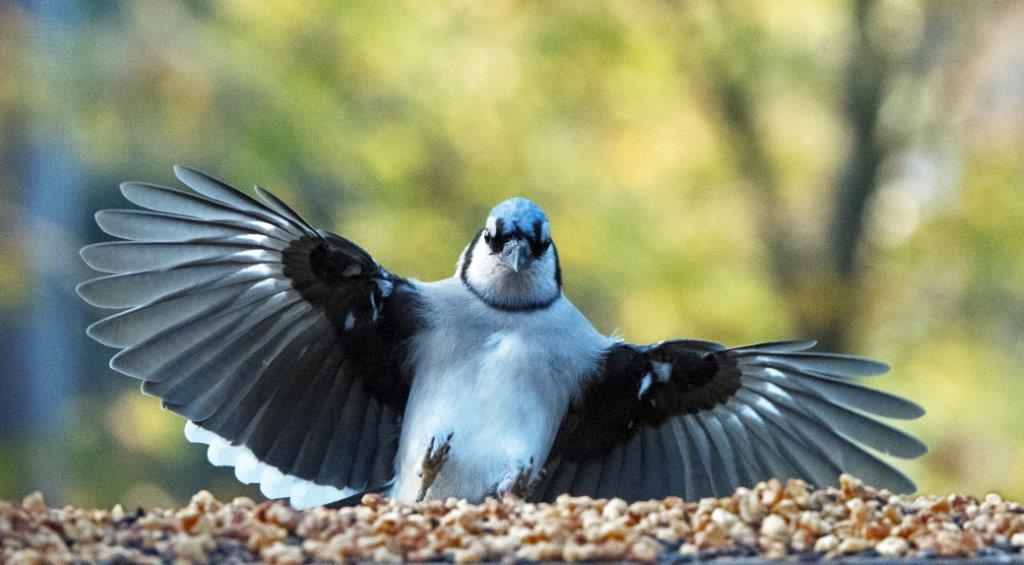 The landowner sent me a note:
"Thank you so much for hooking us up to have the bears filmed. It was a great experience for all! Brownie and 2 other male friends showed up on their best behavior. Jewel and the family came right to the exact spot that was ready for them. They were all very active, 1 cub walked up and put his nose right on the camera. The photographer was a little nervous, but more excited. She had never seen bears in the wild. A little later Fern and the family came in at the other end of the yard. There were males eating between her and Jewel. So, she came down to me and 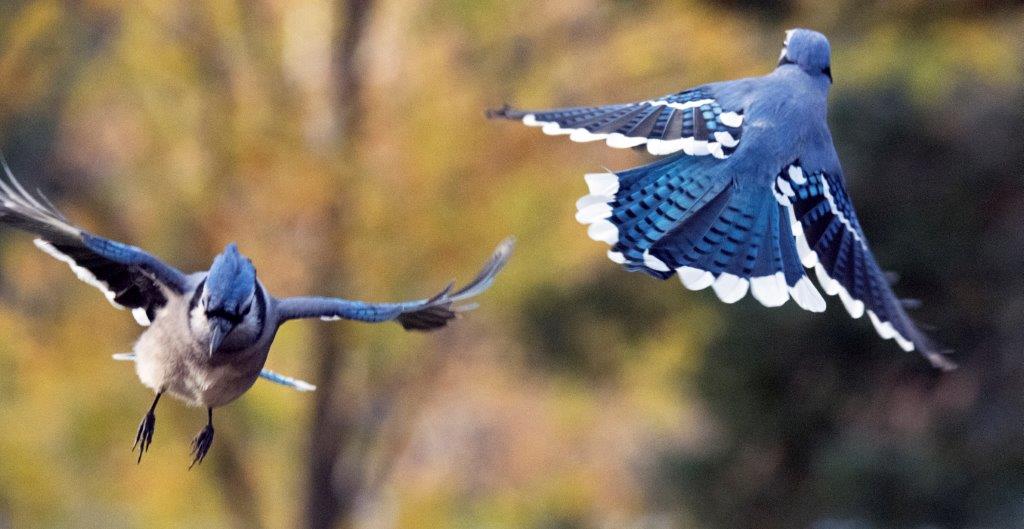 grunted, turned her nose and made another noise, turned and started walking back to her cubs. She wanted me to follow with food, and of course I did. It was a great day/night! Thank you so much for introducing the world of the black bears to me."
The filming the landowner mentioned will go with the filming earlier this spring of Lily and her yearlings at the deep rock den. They are getting a variety of nature shots from many areas about many animals for educational nature programs.
 Here at the WRI, Kimani and cubs came, and 2-year-old Sadie came and got on the scale--211 pounds. We're wondering if she will have cubs at 3 in January or wait another year. Knowing her weight, it will be interesting to see her next spring. In an earlier study in a nearby study area, prospective mothers had cubs if they weighed over 176 pounds in fall. So Sadie's weight is okay, but it's late for a pregnant female to be denning. So we'll see which data set (weight or date) is the better predictor of cubs.
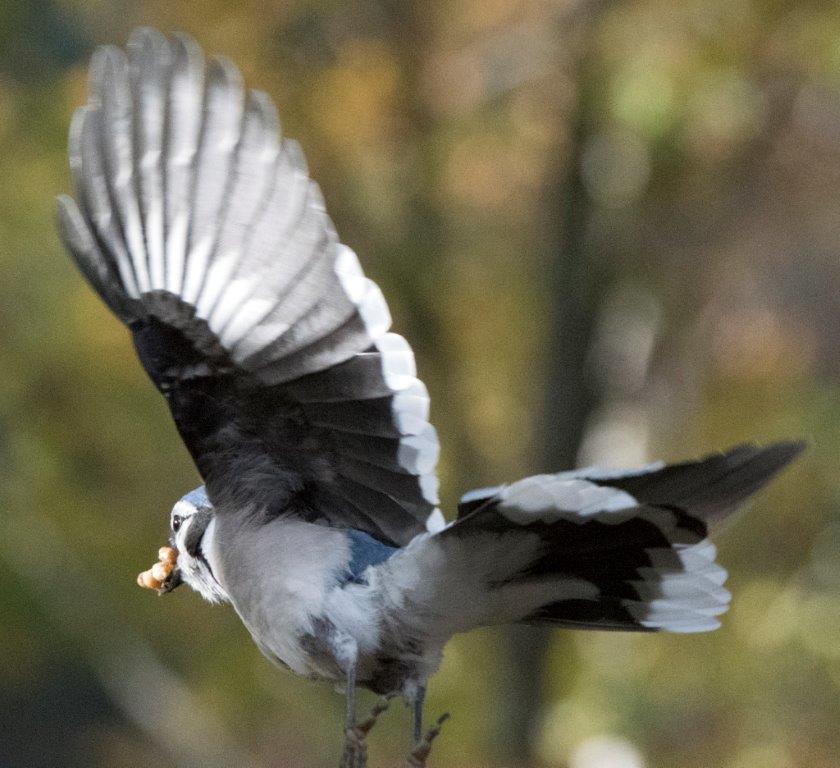
We didn't get any bear pictures in the dark (I was home sleeping), so it's blue jays again--through the window from my desk. One flew in for walnuts and flew off with a beak-full. That one, or another, soon returned to greedily try to stuff more in its beak and throat. Flying off, it passed one coming in.
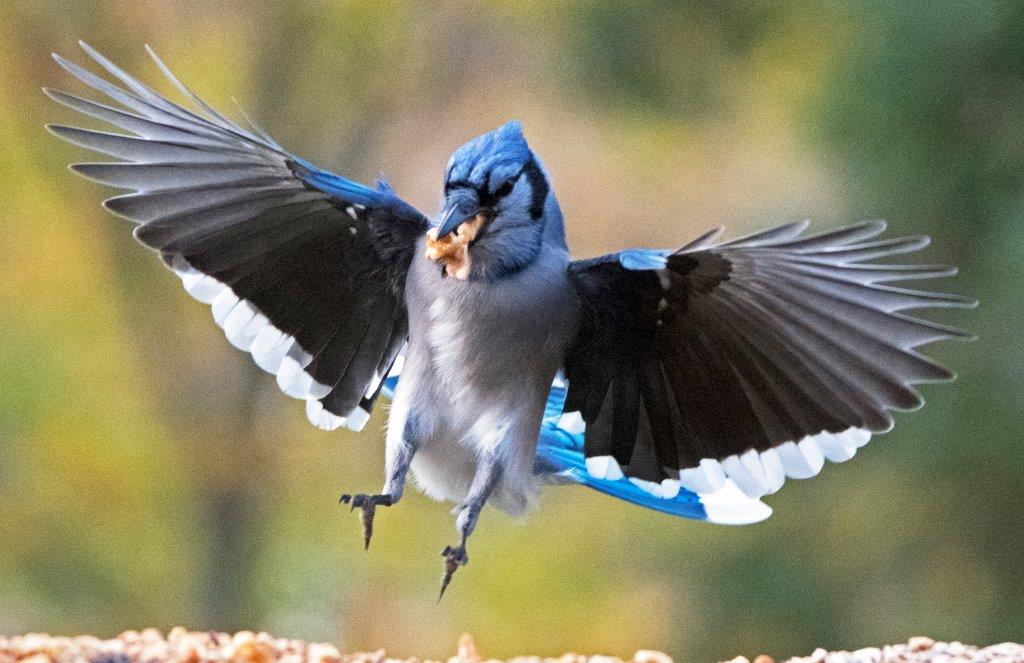 One thing the pictures show is how different their blue feathers look back-lit. Instead of blue coming through, it's black or light. I looked it up on Google.
It read, "We perceive blue jay feathers as blue, but they are actually black. So what phenomenon makes bluejays' feathers blue? Feather colors are determined either by pigments, called pigmented colors, or by light refraction called structural colors. When light strikes a pigment, it absorbs all the other wavelengths of the color spectrum except the color we see, which is reflected back to our eyes. Structural colors, produced by selective light reflection, are mostly the blues, greens and violets. Shimmering iridescent colors are produced when light bounces off the grooves and ridges on feathers. The distance between these surface irregularities influences which colors we see. 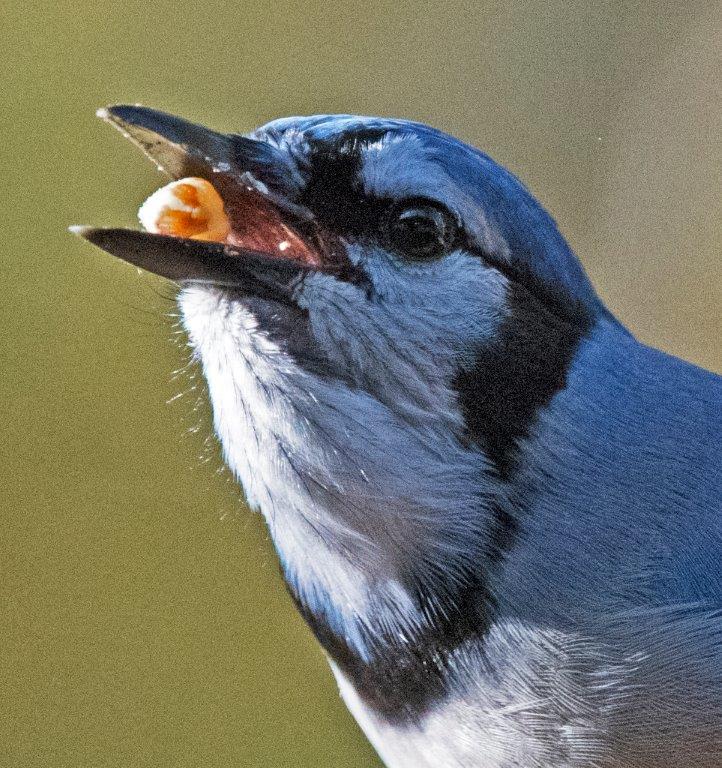 Most blue structural colors are produced when particles smaller than a light beam scatter light. John Tyndall, a British physicist of the late 1800s, first described how minute particles, usually less than 0.6 microns, absorb the longer red wavelengths of light but reflect or scatter the shorter blue wavelengths. This phenomenon became known as "Tyndall scattering" and accounts for the sky's blue color that is sometimes called "Tyndall blue. In bluejays, the color-producing units are found in feather barbs. When sunlight strikes a bluejay feather, the beam passes through the barb's transparent outer layer to the air-filled cavities that scatter the blue light and absorb the longer red wavelengths."
Thank you for all you do.
Lynn Rogers, Biologist, Wildlife Research Institute and North American Bear Center