
At the WRI, a brown phase young male we are calling Brownie for now was showing affection toward 2-year-old Sadie (daughter of Summer, and a great-great-great-granddaughter of Shadow) 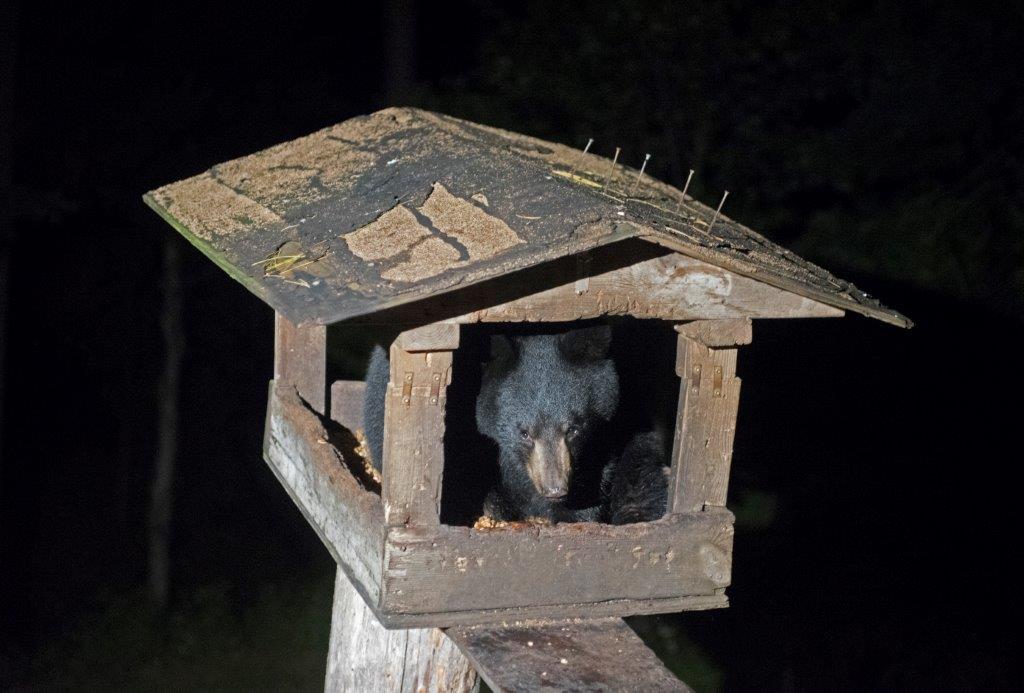 Kimani's cubnow kind of out of season. A few days ago he was making thrusting movements toward her. Today, he half mounted her and was gently mouthing her neck as bears do during mating. What does it mean? Our best guess from known situations is that mated pairs can remain friendly and share food nose to nose for months after mating. We'll be watching to see if Sadie has any brown cubs if she can have them this winter as a 3-year-old.
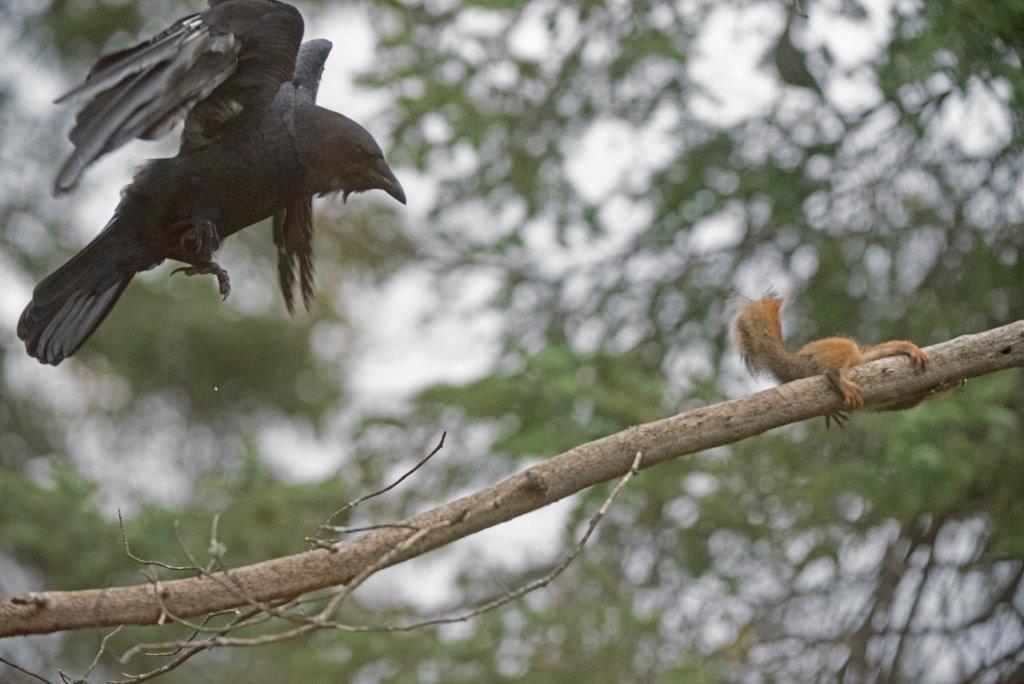
 Northern flying squirrelOut the window, two members of the clean-up team had a brief skirmish. A crow was cawing on a branch when a red squirrel rushed out onto the branch. This made the cautious crow jump up while the squirrel took partial cover under the branch after its show of bravery. The squirrel retreated and the crow landed, only to take off almost immediately. It was a little excitement to enliven a day at the desk with the camera handy and the outdoor microphone alerting me to action.
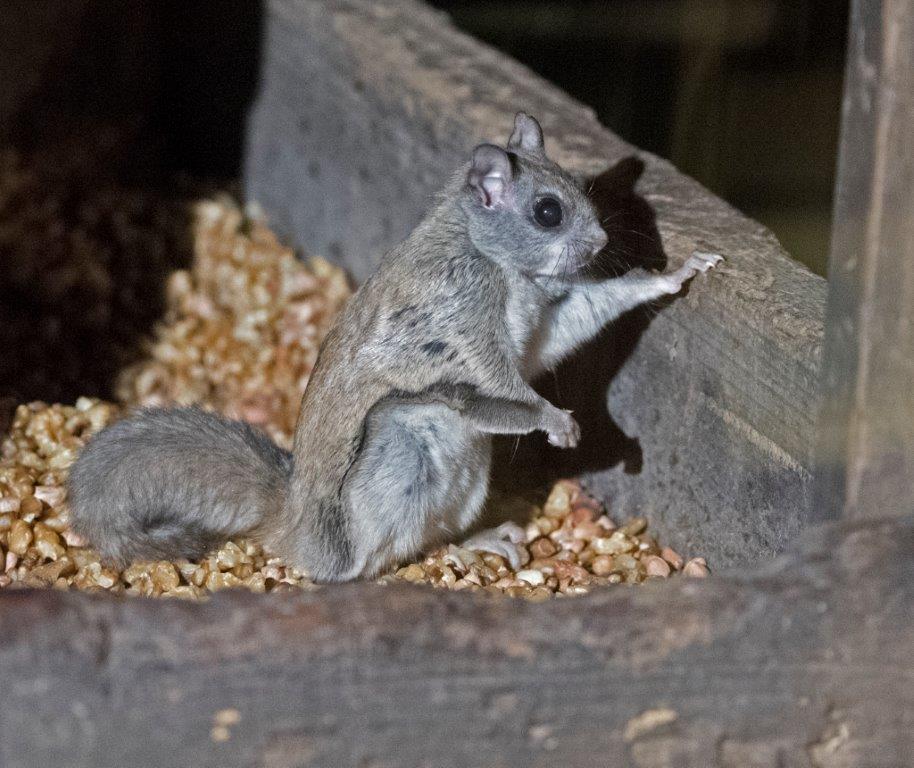
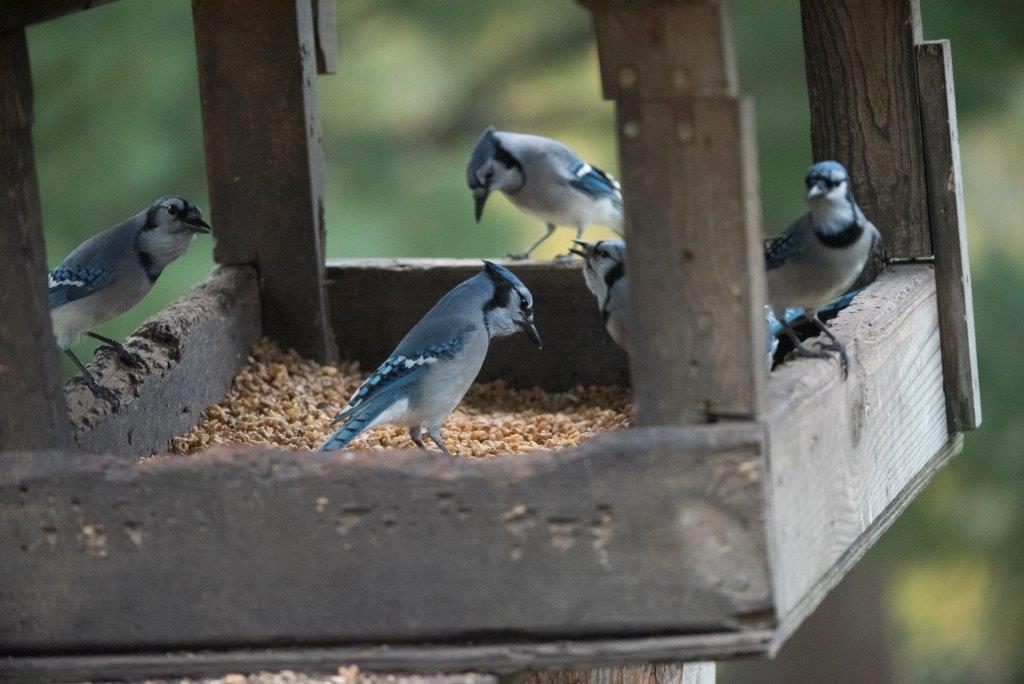
Blue jays loved the walnuts and were good to leave some in case any bears came. Kimani and her two cubs did come after dark, as did a flying squirrel. The northern flying squirrel was good to stand up and show the flap of skin that extends from the wrist to the ankle. When they glide, they stretch out their arms and legs to pull the skin tight. Notice how big its eyes are for night vision. With red squirrels, we get to know some of them and they can become tame enough to sit on your hand, but we are often surprised how close we can be to flying squirrels that we have never seen before.
 |
 |
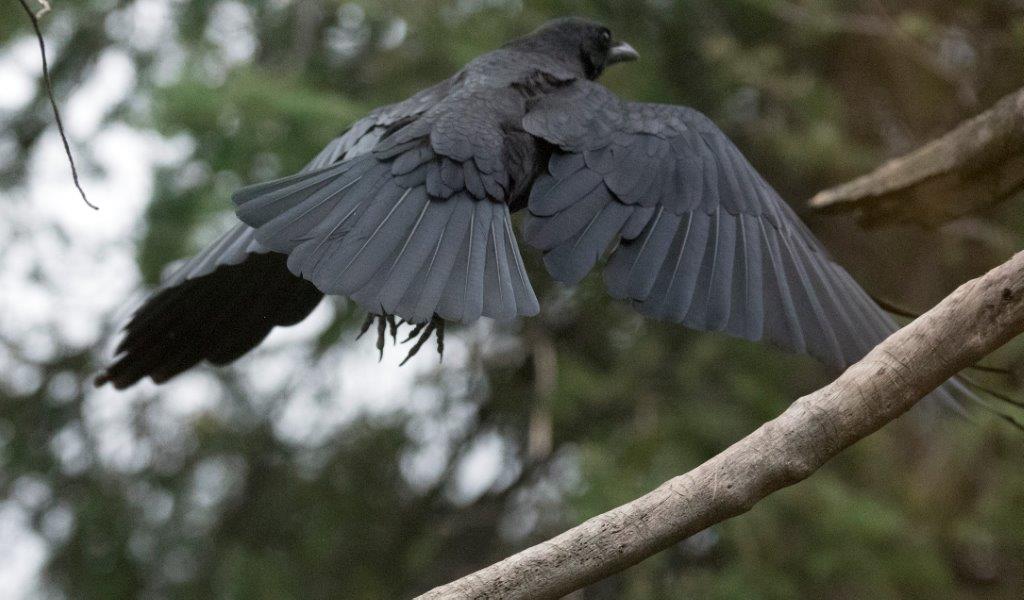 |
| Blue jays at the feeder | Crow VS Squirrel | Crow flies away |
All seems well but really no news about our 4 bears today.
Thank you for all you do.
Lynn Rogers, Biologist, Wildlife Research Institute and North American Bear Center