
 Red squirrel chattering awayAs bear sightings wane in the community, the mallard cleanup crew is being augmented by migrating white-throated sparrows. They come in two colors (morphs as they are called). There is the pretty white-striped morph and the more camouflaged tan-striped morph. As we cleaned an area of mostly empty sunflower seed shells, the sparrows gathered to pick it over.
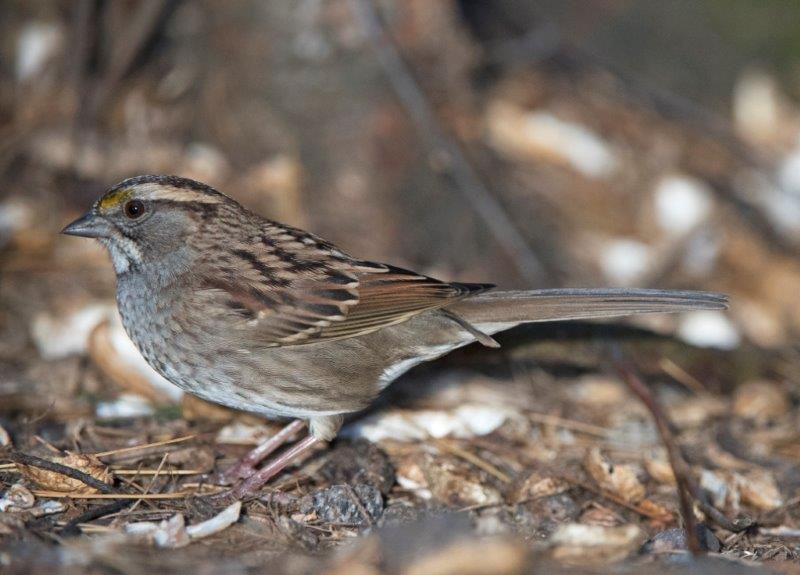 White-throated sparrow - Tan striped morphRed squirrels are looking for their share and finding little. I don’t know if that was what this squirrel was chattering about. I wish I knew the language of all the animals.
The mallard cleanup crew is still active. The two in the foreground are a pair. The male is in its dull fall plumage (eclipse plumage as it’s called) without the pretty breeding colors of spring. 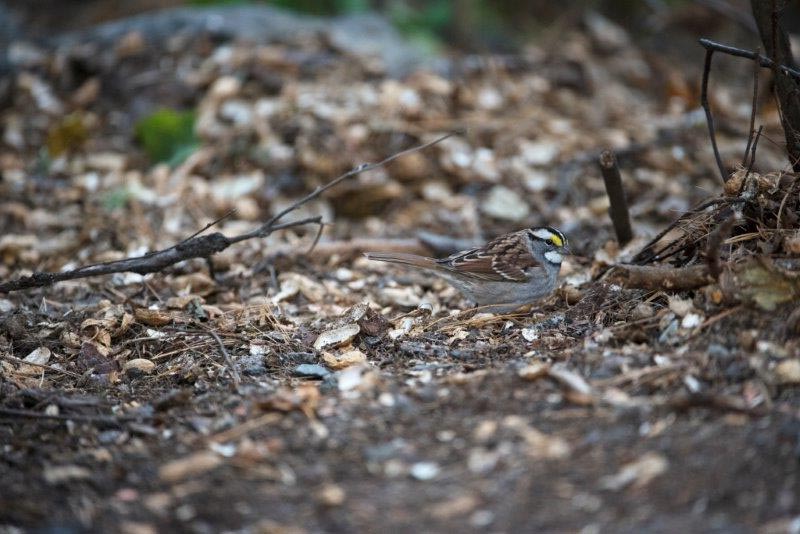 White-throated sparrow - White striped morphThe female (on the left) has a dark patch on top of the bill. Males’ bills are plain dull olive this time of year.
White-breasted nuthatches, uncommon in summer, are back this fall as usual. We usually see mostly the more trusting red-breasted nuthatches. White-breasted nuthatches wouldn’t think about coming to one’s hand.  White-breasted nuthatchNuthatches are masters at hanging head down, letting them explore places for food most other birds couldn’t reach, as the white-breasted nuthatch in the picture is doing.
Crows are always ready to eat, it seems. As they gather to migrate to Duluth and south for the winter, we’re seeing flocks of over a hundred that we’re trying not to feed.
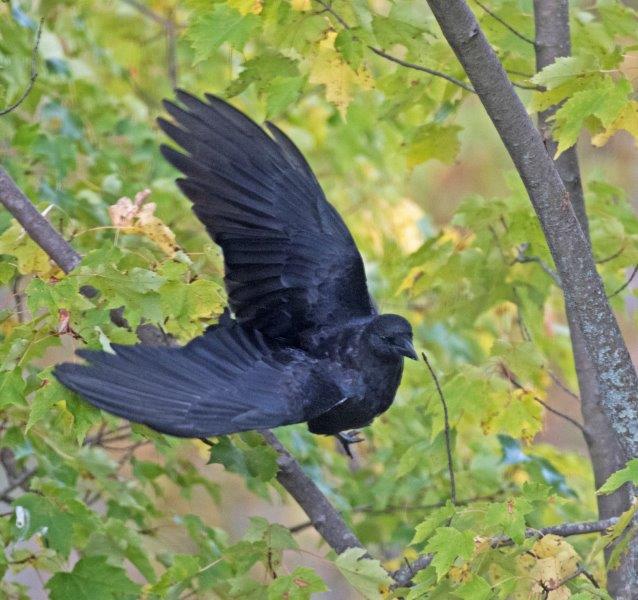 American CrowThe needles under a big white pine show what much of the forest floor looks like now after the shower of white pine needle clusters a couple days ago.
Bears sometimes use these as bedding. Centuries ago, ground fires would periodically burn up the needles so white pine seeds could take root in mineral soil while the big pines were protected by their thick bark and bare trunks that kept the fires from reaching the crowns. The natural system changed with settlement, logging, and fire protection.
 White pine trunk cone needlesThe old bear that was killed on the highway in front of the Bear Center might be a bear we’ve seen before. It might be a bear a lot of people have seen, considering his age. We’re looking for pictures of bears that have emptied bird feeders or sat by the fence when Honey was in heat to see if they match up with the bear that
 Deer looking at photographer was killed. More on that tomorrow.
Thank you for your much-needed contributions for bear food.
Thank you for all you do.
Lynn Rogers, Biologist, Wildlife Research Institute and North American Bear Center
All photos taken today unless otherwise noted.