
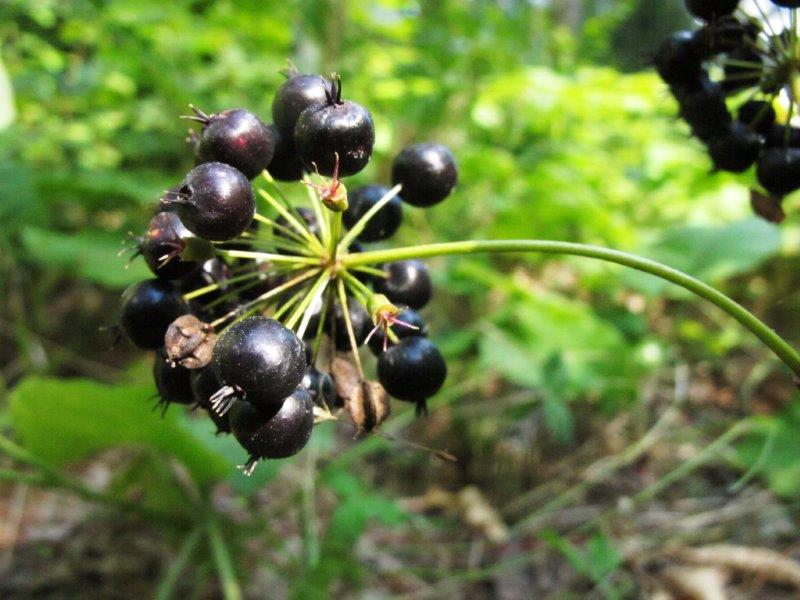
 Wild Sarsaparilla berriesNortheastern Minnesota bears are fully into hyperphagia, and that includes Holly whose eagerness was evident when I gave her a few handfuls yesterday. She likely has northern Minnesota genes as a result of the reintroduction of black bears into Arkansas from this area.
Droppings show that wild bears are taking advantage of a good crop of wild sarsaparilla berries (Aralia nudicaulis). For the 2-3 weeks these are available, bears forsake blueberries, going back to them when the sarsaparilla berries are gone.
Do you know anyone who has the skills and willingness to lead our established volunteer program? Changes in the lives of our co-coordinators mean they will have to step down at the end of August. For more information, go to www.bear.org/website/volunteer.html and email Myra or Terry at
A TV documentary that will show the good side of animals and should be very good for bears, chimps, gorillas, and elephants is materializing. Among others, it includes top people like Jane Goodall. Looking forward to it.
A telephone interview for hikers that went pretty well is summarized at http://gearjunkie.com/bears-safety-tips-bear-spray.
Of high interest to me is the outrage over the killing of a favorite radio-collared lion by a Minnesota dentist. Yet, here in Minnesota, as court records and written documents clearly show, the DNR works with hunters to kill valuable radio-collared bears like June and surround the WRI with hunters to kill as many other study bears as they can. This has nothing to do with public safety. It is a move to go beyond Judge Pust’s ruling and end the research and Black Bear Field Courses she said we could continue. As the commissioner personally told us and court discovery revealed, he started this mess because of his anger in 2011 over letters asking for protection of radio-collared bears. The loss of those bears and the damage it does to science, education, bears, and the economics of Minnesota is a story that should spur outrage.
Thank you for all you do.
Lynn Rogers, Biologist, Wildlife Research Institute and North American Bear Center