
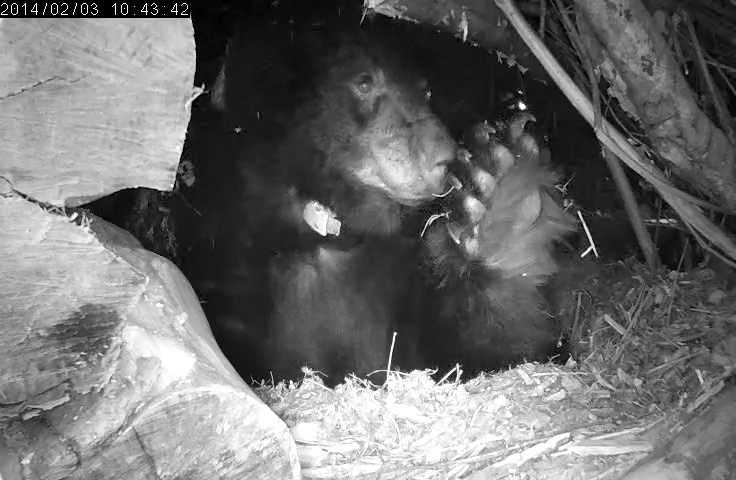
 Juliet - February 3, 2014In this 8½-minute highlight video there is action despite temperatures far below zero (low of 31 below F). At 10:43:46 Juliet gives a big stretch that includes stretching out an arm and stretching her claws. That was the beginning of a move toward the camera to eat snow for a few minutes. At 10:53 AM, she backed up partially out of her bed, presumably to urinate. At 10:58, she does a fair amount of raking. The sound acted up on this day, so it caused the video software to silence the end of some sequences.
YouTube: http://youtu.be/peK6DflBk6Y
Vimeo: https://vimeo.com/118664097
Archives: http://www.bearstudy.org/website/research/2014-juliet-archives.html
 FisherAt the Bear Center, we’d seen Ted raking, which we didn’t understand because he has over twice as much straw in his den than he has ever had. Thinking Ted knows better what he wants than us mere humans, we gave him another bale to see what he will do. We gave another bale to Honey, too.
While distributing the straw, Scott and Heidi tracked Honey’s walk of a few days ago. She walked up to the chalet den and lay down in it for an hour or so and then went back to her wooden window den.
Two statistics experts (one a Boeing Engineer and the other a college statistics instructor) ran statistical tests on the litter size data we mentioned a couple updates ago. Both used t-tests and both concluded that litter sizes in our present study area where bears have access to supplemental food are not statistically larger than those in our old study area without supplemental food. Lily Fans include a wide range of talents.
 |
 |
 |
| Beaver | Eastern Chipmunk | Great Horned Owl |
 |
 |
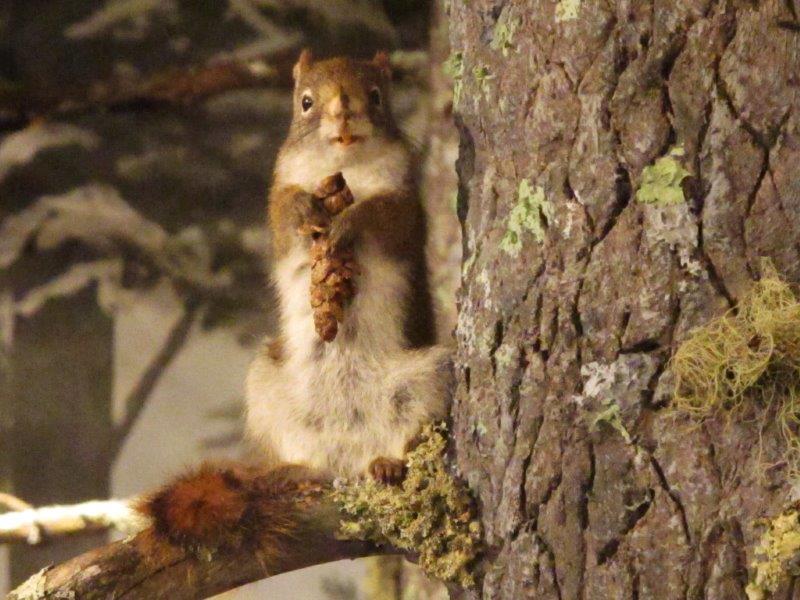 |
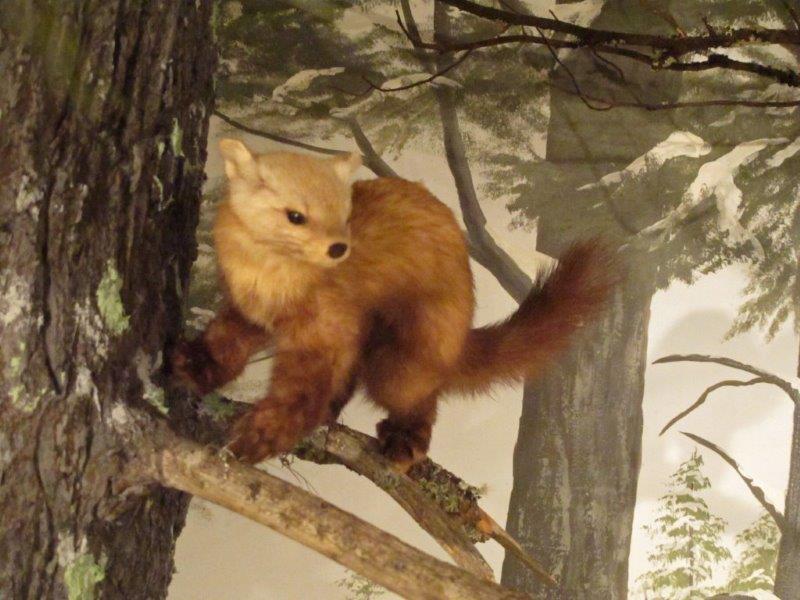
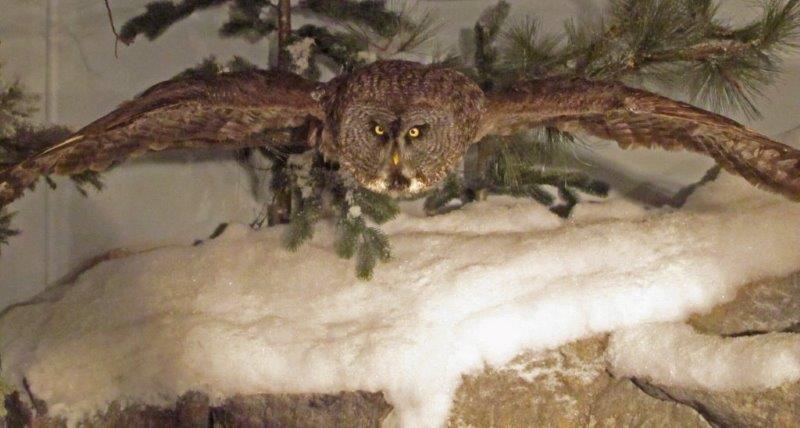
| Pine Marten | Great Gray Owl | Red Squirrel |
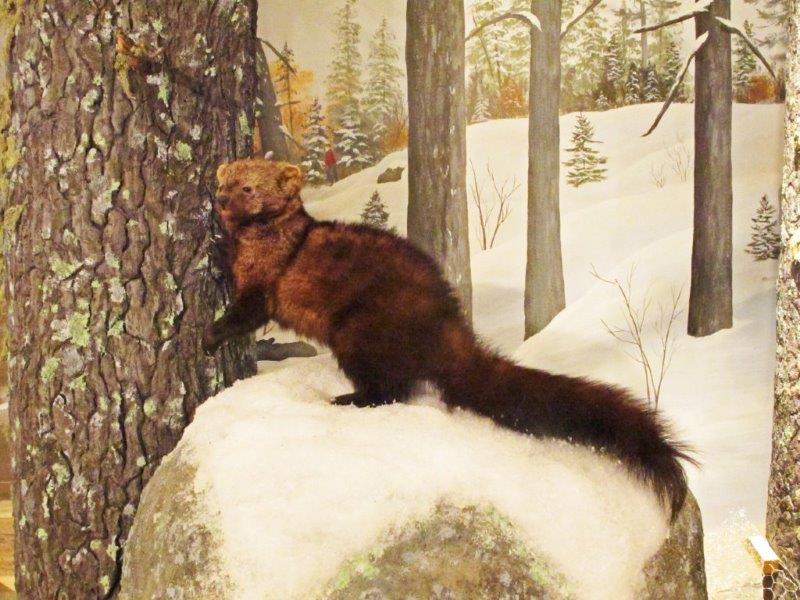
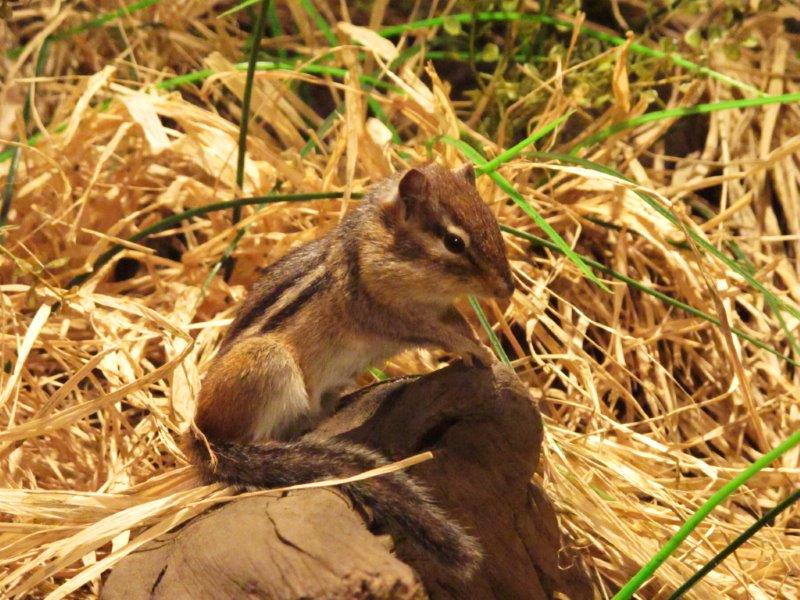
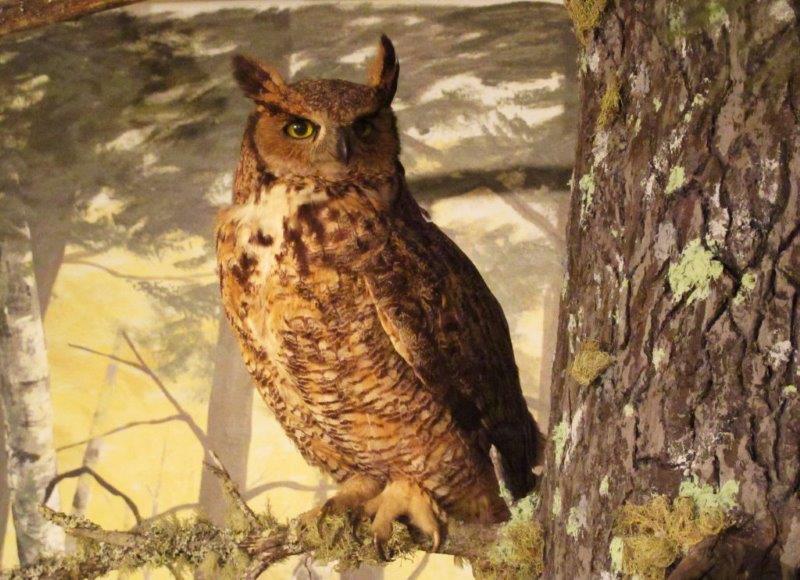
The Northwoods Ecology Hall continues to progress as these pictures and Judy Thon and Moe’s tour show. The beaver, the biggest we have ever seen, is sitting at the edge of what will soon be a beaver stream. Old beavers can grow to over a hundred pounds.
Thank you for all you do, including donating the prices of these mounts.
Lynn Rogers, Biologist, Wildlife Research Institute and North American Bear Center
All photos taken today at the Northwoods Ecology Hall unless otherwise noted.