
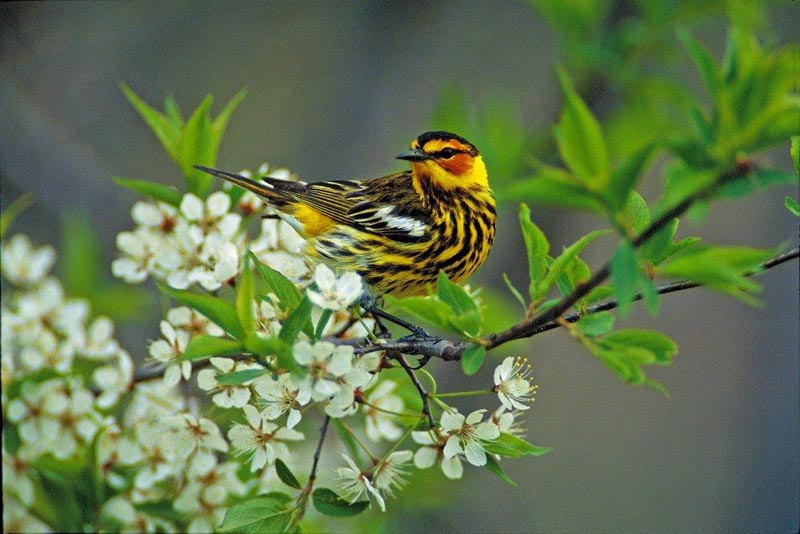
 Cape May warbler - WRI file photoAs Scott Edgett and I chopped ice around the pontoon boat (payment for not getting it up and out of the water earlier this fall), we talked about Holly’s den cam. The picture of her den is from before we had snow, but it shows the difficulty of securing a camera in her den when there are no trees nearby to anchor it to. Tomorrow, we’ll take a closer look on site to see what can be designed. Where there’s a will there’s a way. She hasn’t been out for days and seems well attached to this den, so it’s time to start watching remotely.
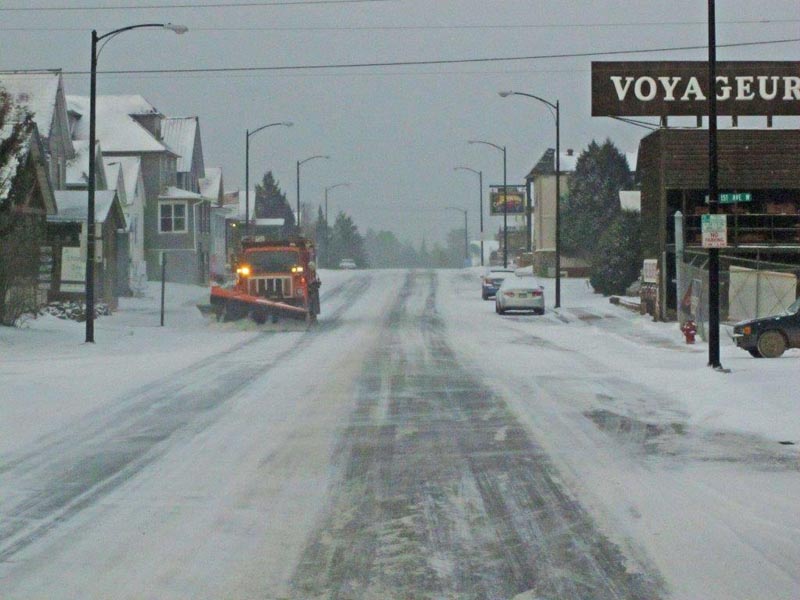 Sheridan Street in ElyLight, blowing snow continues to fall day after day. It’s still only a few inches deep, but snow that falls this time of year often stays until spring. Winter seems to be here. And birds are behaving like it. Driving in to the WRI this morning, I had a rare photo opportunity of a ruffed grouse (Bonasa umbellus) eating hazel catkins. Eating catkins is something grouse do every winter, but more often it’s aspen catkins in the treetops. This bird was only 8 feet about ground and didn’t fly away when I drove up. Low light meant a slow shutter speed and poor sharpness. I tried a shot through the windshield, but when I turned off the wipers snow made the photo worse. The grouse was on the right side of the road, so I wondered if I slowly opened the driver’s side door it would continue feeding. It did. I let the van inch forward until the grouse was only 20 feet away. It became watchful but stayed. Click. Then it resumed feeding but the motion was too much. I shut the door. The grouse noticed the motion and flew up into an aspen where there was no picture against the bright overcast sky. I felt lucky to record the event I’d just seen. Little nature moments are the way to start a day.
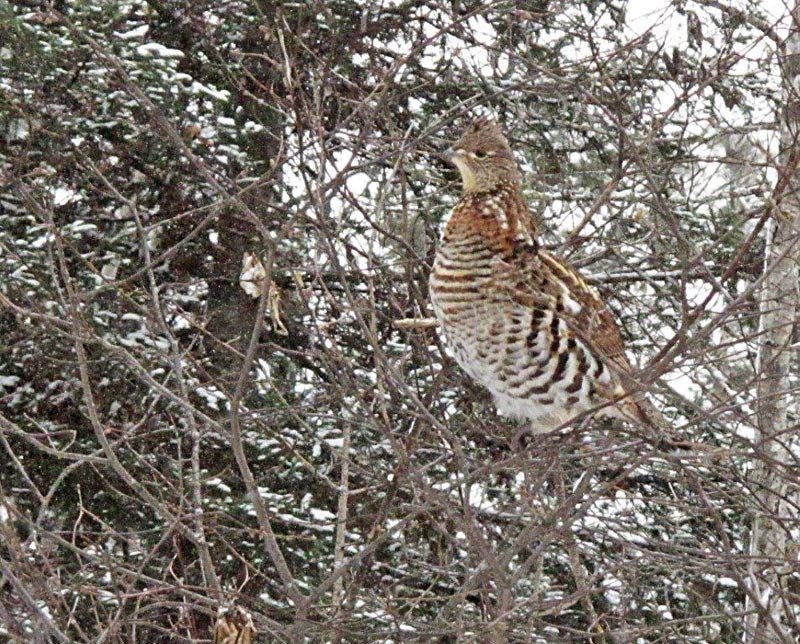 Ruffed grouseOther conversations through the day were about starting future days with nature moments. One was with Linda Gibson about creating daily videos from Juliet’s den cam of last winter.
Another was about the feasibility of a PTZ camera overlooking an area with likely nature action to show live on bear.org in addition to Holly’s den cam. We’re envisioning wolves, coyotes, foxes, fishers, pine martens, mink, ravens, deer, and maybe even a bald eagle. A migrant straggler snatched a dead fish floating on Eagles Nest Lake One today when Scott had just begun to chop ice, so we know eagles are still around.
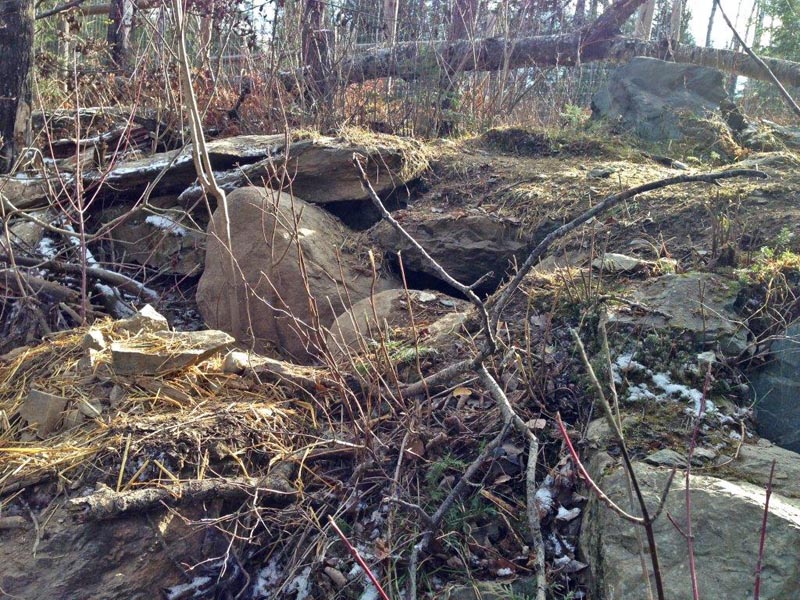 Holly's Rock Den - 11/2/2014Another was about volunteers capturing high definition video of nesting birds of as many species as local residents could alert us to in the area. We could use the videos in the Northwoods Ecology Hall, the Hope Learning Center, and in daily updates. Our focus will always be bears, but we also want to tell the stories of the wildlife that bears interact with, see, or hear in the Northwoods. Bears can hear the high-pitched songs of warblers and kinglets better than we can and can hear a wider range of sounds. Their big focused ears can likely hear fainter sounds as well.
Thank you for all you do.
Lynn Rogers, Biologist, Wildlife Research Institute and North American Bear Center
All photos taken today unless otherwise noted.