
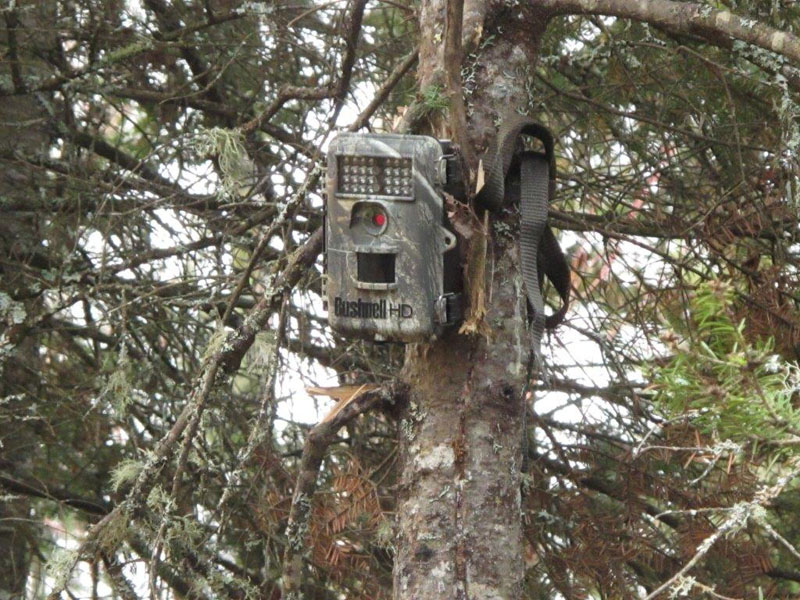
 Holly inside her denHolly spent the night in her den and didn’t want to be disturbed this morning. She greeted me with blowing, meaning I was unwelcome and making her nervous. She doesn’t know me as well as she does Sharon and Heidi. Judy Thon joined me and we quickly set up a Trail Cam and left. Holly acted like a wild bear, showing the same nervous behavior we see from Lily until she recognizes who it is. On the way in and out, we saw the trail of straw from Lucky’s den to Holly’s den. Holly looked snug in her wild den that just fits her, but to be sure she has enough insulation, the staff raked up bags of leaves and dumped them in front of her den. Holly immediately set to raking them in. Maybe she remembers last winter when she was glad she had a lot of straw.
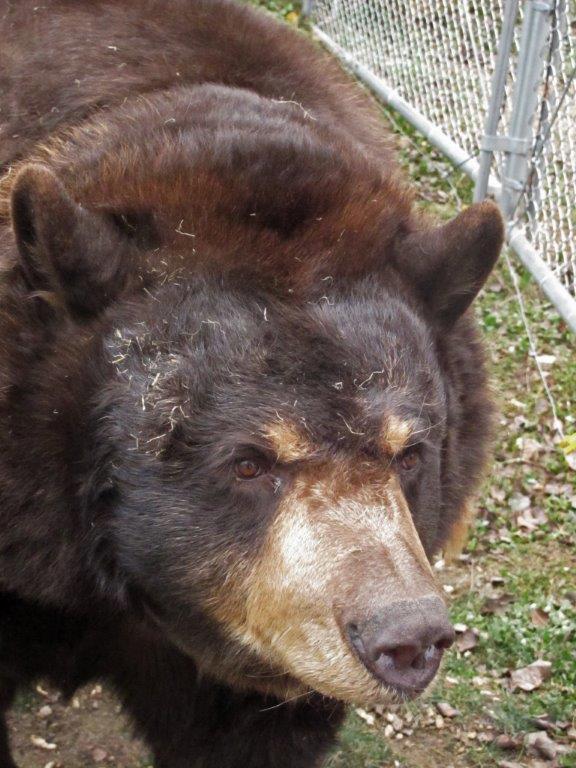 HoneyIt’s interesting that Holly is denning nearly on schedule for Minnesota bears. She is showing her Minnesota roots despite it being nearly a half century since the Arkansas population (where she was born) was augmented with northern Minnesota bears back in the 1960’s.
The video is of Holly raking yesterday at https://www.youtube.com/watch?v=Fq1j-zSpf-E&list=UUKOT9f3yvGIT8BW_ZHa3Bgg.
 Evening GrosbeakChecking Ted’s muzzle today, the swelling is further reduced. He immediately rose and came to the fence giving his warm greeting sound. Lynn went in and stroked his back while feeding him peanuts—long firm strokes from his neck to his rear that make some bears arch their backs with pleasure. When placing radio-collars on bears or changing their batteries, we often give a few of these strokes. Meanwhile, Heidi fed Honey down by the viewing windows, and Lucky (with northern Wisconsin genes) was content to stay in his den as is usual for him at this time of year. What a pile of straw he has!
 |
 |
 |
We spent most of the afternoon meeting with a technologist about setting up the up the 4 touch-screen kiosks we’re developing for the Northwoods Ecology Hall and the four we are developing for the Bear Center itself.
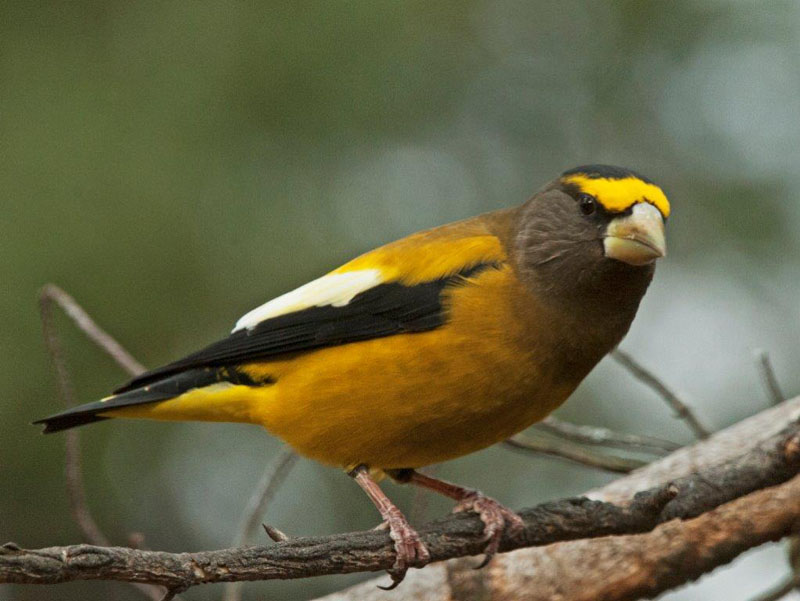
At WRI, nomadic Evening Grosbeaks (Coccothraustes vespertinus) put in their first colorful appearance of the fall.
Thank you for all you do.
Lynn Rogers, Biologist, Wildlife Research Institute and North American Bear Center
All photos taken today unless otherwise noted.