
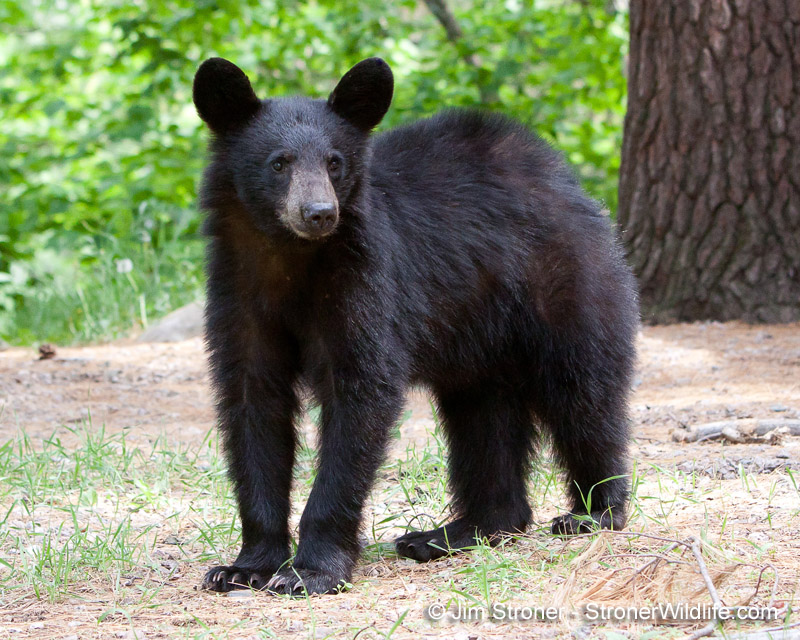
 Ty as a young bear - May 3, 2010With this volunteer group of self-starters and good organizers, the Bear Walkers are managing themselves, turning in data sheets, and downloading GPS records of trails—all the while logging hours on trails to record interactions with bears. So Lynn is focusing on the Northwoods Ecology Hall that the staff and many volunteers are helping move forward. That means being stuck in front of the computer or on the phone on this beautiful day (69F, blue sky).
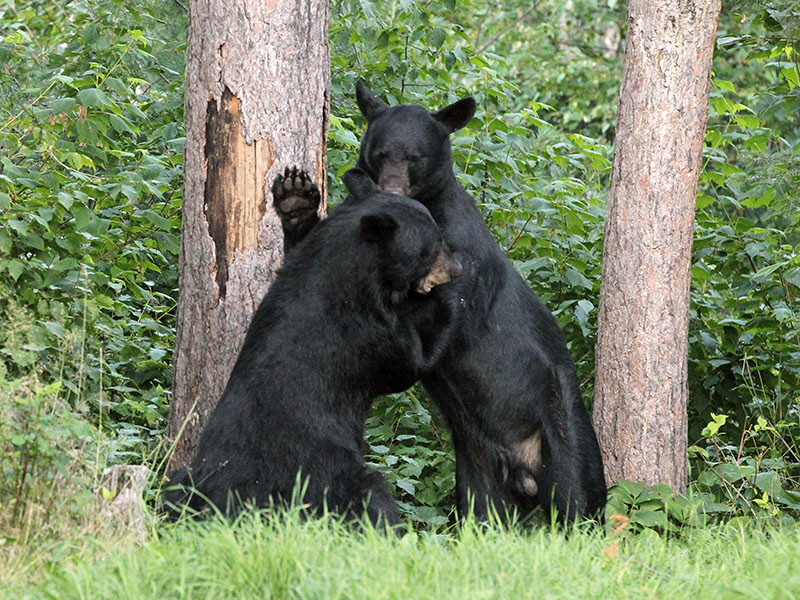 Guy and Ty playing - August 10, 2013A disappointment is the loss of 5-year-old male Ty (son of 8-year-old Bow, great-grandson of 15-year-old RC, and great-great-grandson of 27-year-old Shadow). Ty was a playful bear who had good rapport with many other bears. Ty was popular. Many bears knew and trusted him and frequently initiated play—or responded to his initiatives. His relationships extended to sharing food. He often fed with his nose peacefully touching the noses of larger or smaller males, even when the food was highly preferred hazelnuts. Seeing his relationships develop with the other bears this past year as he became a confident adult, we would have liked to better quantify those relationships, the amount of play, and how it contrasts with the behaviors of less accepted males. Part of Ty’s acceptance by other males may have been due to his calm, trusting demeanor that also extended to humans. We saw Ty’s picture posted as one of the bears killed on September 1—opening day.
 Trail Cam Capture - 9-3-14With regard to shooting after legal hunting hours, we saw a related article by Bill Marchel in the Minneapolis Star Tribune at http://www.startribune.com/sports/outdoors/273995501.html. It said, "Given the lack of enforcement, ethical behavior is usually left to the individual hunter. The DNR restricts hunting hours to daylight hours for most species (one half-hour before sunrise until one half-hour after sunset for deer). Safety is the main reason, but so is the welfare of the game being hunted. Shots taken in low light are more likely to wound an animal making recovery extra difficult.”
 Trail Cam Capture - 9-5-14Wounding loss is one of the biggest problems in bear hunting, which is a reason we can’t support the Maine referendum coming up. We would fully support it if it just did away with trapping and hounding bears. We have stated our position on those issues before. But doing away with baiting means wounding loss will go up, perhaps drastically as it did in Oregon. The result is more bears slowly dying after bear season with no one to help them or put them out of their misery. Baiting is not sporting, but whenever sport is a part of bear hunting, it means more wounding loss. Baiting gives opportunities for clean, quick kills with minimum wounding loss. When a bear escapes wounded, it may recover or slowly die.
 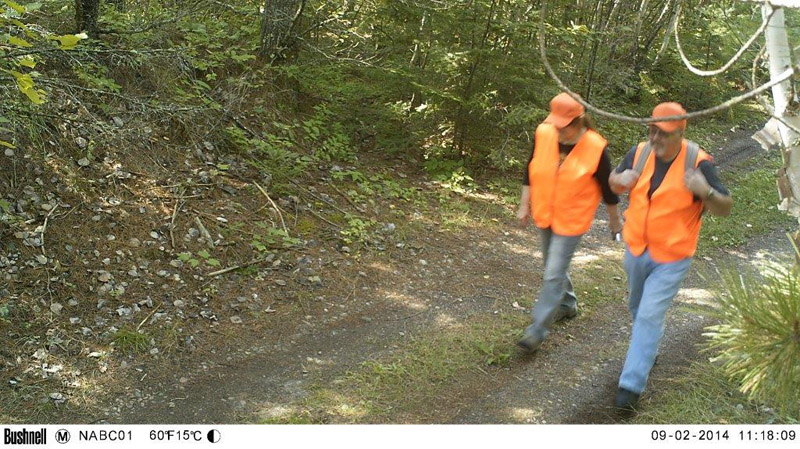 Trail Cam Capture - 9-2-14Meanwhile, the hunter is free to go on wounding until he makes a clean kill and fills his tag. The number of bears killed is best controlled by the number of licenses, not by making hunters take fleeting shots. We made this objection when well meaning Maine residents put a similar referendum on the ballot some years ago. Now it’s back and not good for bears.
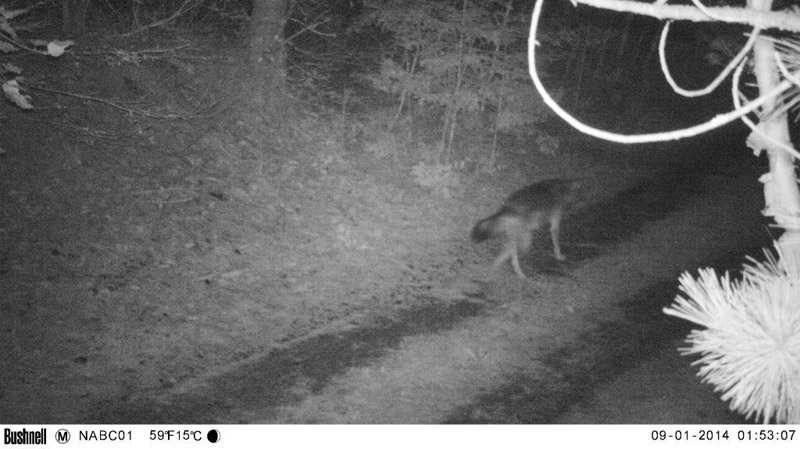 Trail Cam Capture - 9-1-14Ted enjoyed his outing today as he showed off his coat that looks better every day. Soon the last tufts of old fur will fall off as his new smooth coat becomes fluffy and deep.
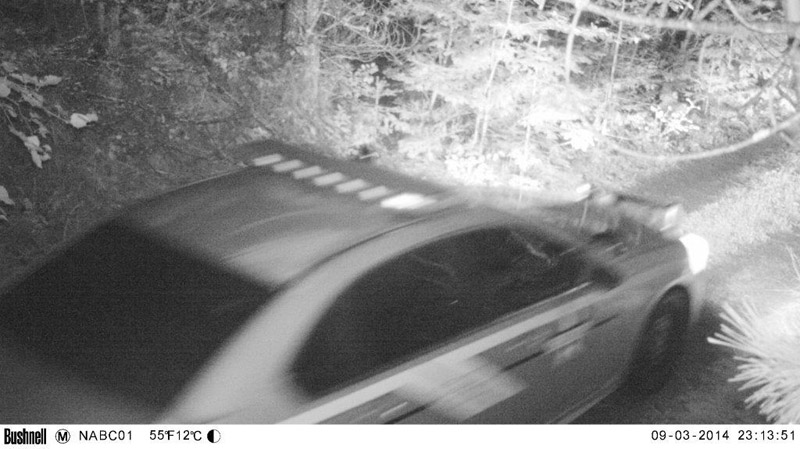
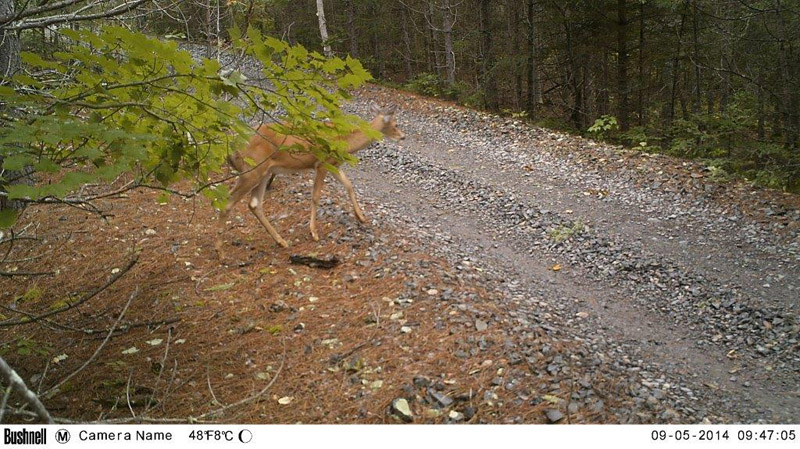
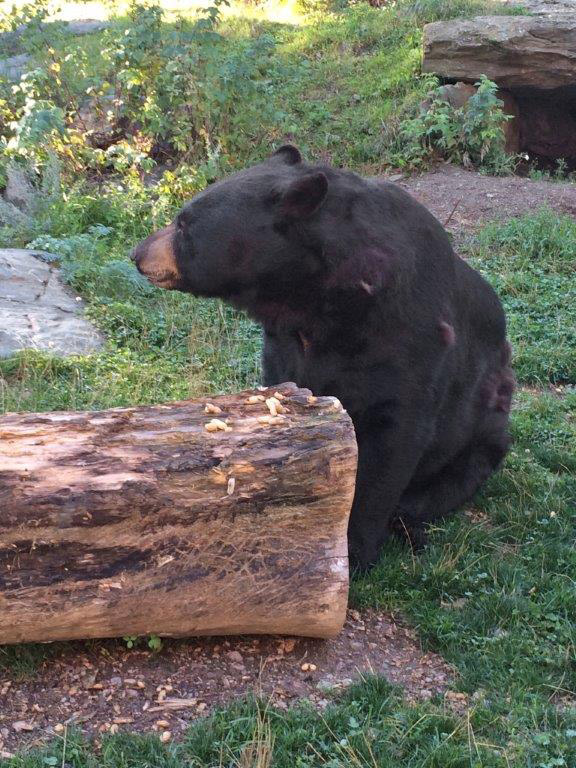 Ted's fur sleeker yetA trail cam showed two of the volunteers walking a forest road after coming off a trail and showed the sheriff’s cruiser driving that road to check on the late night shot we reported. It also showed wolves at night and deer by day.
Thank you for all you do.
—Lynn Rogers, Biologist, Wildlife Research Institute and North American Bear Center
All photos taken today unless otherwise noted.