
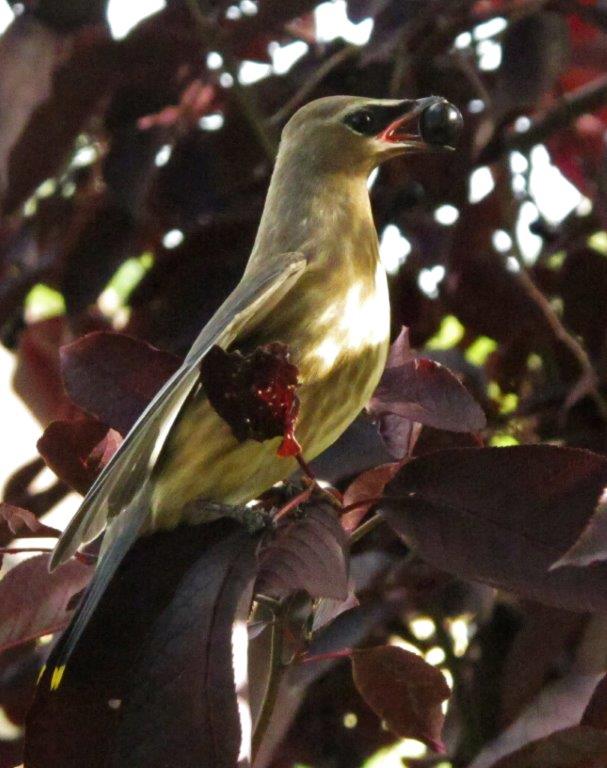
 Cedar Waxwing Juvenile eating cherriesThis was a day of catching up. While some walked bear trails, others did chores or caught up in various ways. Some went to the Laundromat. Others did shopping, including grocery shopping (a big thank you to Lily Fans who are helping with that), and Lynn caught up at home with Donna.
A highlight for Lynn and Donna was watching the biggest flock of Cedar Waxwings (Bombycilla cedrorum) they have ever seen (~50) devour most of the cherries on a decorative cherry tree in their yard. They had only their little cameras, which meant they had to be within 3-4 feet of the birds to snap a picture. That meant standing very still, holding the camera ready to click. The birds adapted and eventually ignored them. They hovered to snatch cherries at ends of branches. They tilted upside down or stretched up to reach others. Typically, they ingested two cherries and flew off with a third in the beak. Some flew high against the blue sky, finally disappearing a block or two away. Then they or others flew in for more. Most were juveniles with streaked breasts. Some had the yellow breasts of adults. Families flock together for the fall migration that is already underway.
The day ended with pairs of volunteers walking the bear trails hoping for bear encounters to record. Sightings have been almost non-existent in midday walks.
What a fun group the volunteers are—and fast learners. Several who got lost in the beginning have said how proud they are to be walking the trails now with confidence. One of the people who got lost is taking a new step tonight—doing it in the dark to increase chances of bear encounters. The pairs hit the trails just as hunting hours ended so as not to disturb legal hunters.
Lily Fans asked if we reported shooting after legal hunting hours. Yes, just as any ethical hunter would do. The sheriff came and took a report and checked it out best he could.
Thank you for all you do.
—Lynn Rogers, Biologist, Wildlife Research Institute and North American Bear Center
All photos taken today unless otherwise noted.