
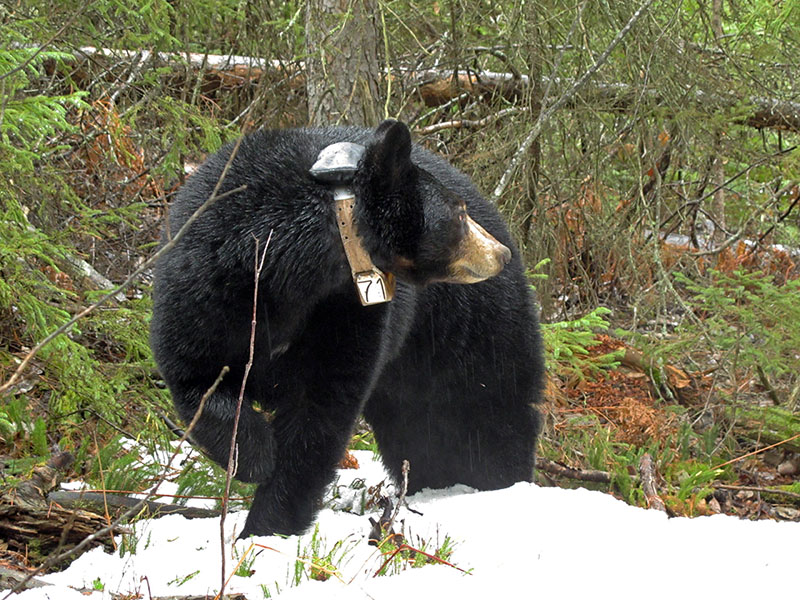
 Lily pauses mid-step Light rain and 34F. Lily’s GPS batteries expired, mandating a visit. From a snowy hill, we could see a white pine in the direction of her telemetry signal. At the tree, we couldn’t see the cubs but spotted gentle Lily nearby.
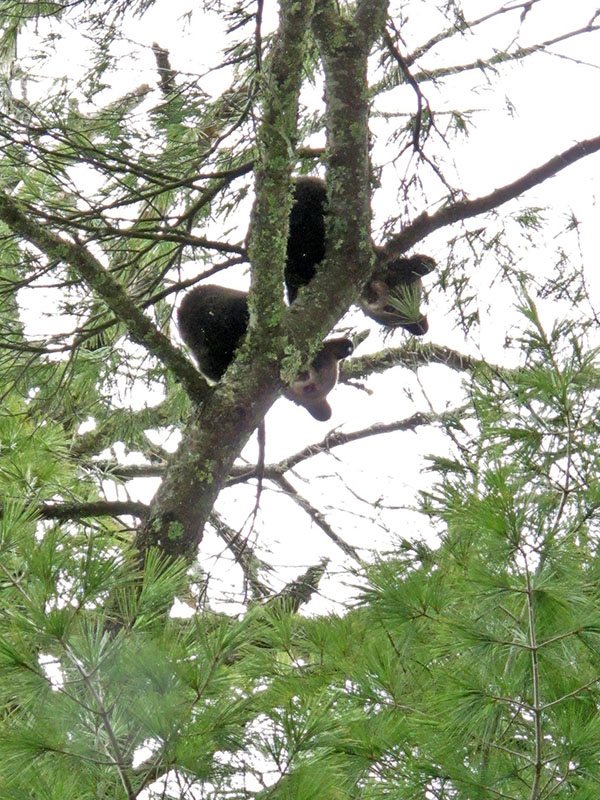 Lily's cubs in white pineWe quickly changed her batteries, giving her a handful of pecans (donated by supporters, thank you) in exchange for access to her collar. Then we gave her the ‘open hands’ signal that feeding was over. We hoped she would show us where her cubs took refuge from our disturbance. Grunting sweetly, she went to the white pine where we had first looked. Still no cubs visible, but then they walked out on a branch. White pines not only are easy for cubs to climb, but they can hide cubs as well.
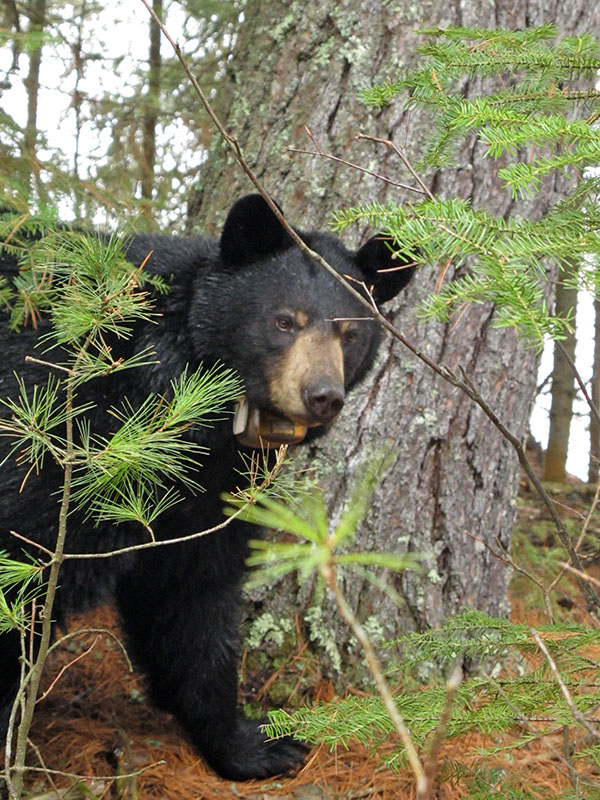 Lily at base of white pineLily focused on something in the distance and trotted double time to a dense balsam fir thicket. After a few minutes, she resumed her sweet grunts, returned to the white pine, and lay down. It felt good to be ignored. Her attention was toward the direction she focused on before trotting away except for glances up the tree.
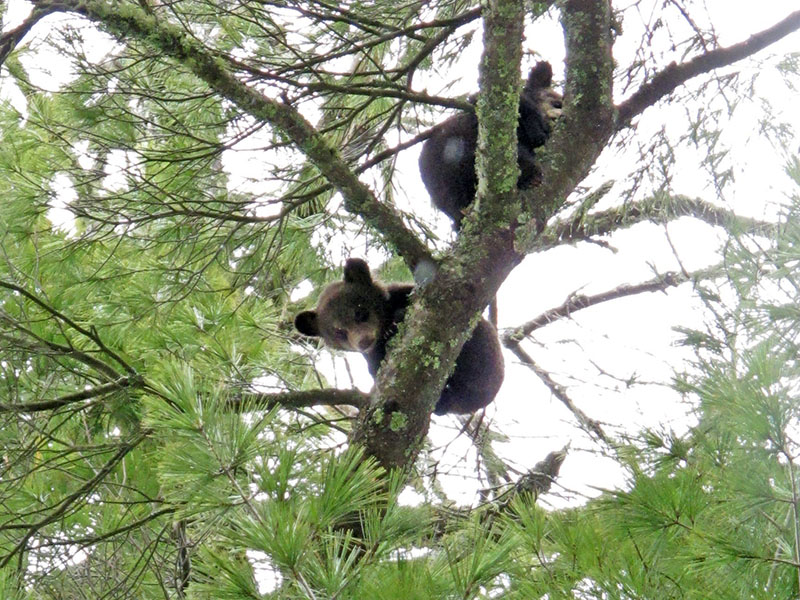 Lily's cubs in white pineWe checked around the area for sign of her activity. A scat near a larger white pine some 80 feet away looked like snow fleas and aspen catkins at first glance. We collected it to analyze it more thoroughly. A torn log probably meant foraging for grubs. We’d been in this exact area with her 3 years ago when she was with Hope. We said “Thank you bear,” and left.
 Lily's cubs in white pineAlthough the ground was white again this morning, signs of spring keep arriving. A Yellow-bellied Sapsucker tapped its distinctive sound with 3-4 slow taps after the burst. A pair of Hooded Mergansers found a 5-foot diameter patch of open water. Common Grackles appeared.
We’re headed into a week that promises warm weather—temps into the 70’s. Snow piles will melt, lakes will open up, and our first Black Bear Field Study Course will be here to witness the exciting transition.
We’re still looking for taxidermy mounts of Northwoods wildlife. Perhaps a supporter has a mount or knows of one that needs a home. Maybe someone knows a taxidermist who might help. Please email
Thank you for all you do.
—Lynn Rogers and Sue Mansfield, Biologists, Wildlife Research Institute and North American Bear Center
All photos taken today unless otherwise noted.