
 We and the bears are checking the developing berry crop, wondering how good it will be. Berry crops are unreliable here on the Canadian Shield, an area of shallow soil over granite. The shallow soil dries out with even mild droughts, reducing berry production. We can see that a lot of berries escaped the late frost and the recent rain helped the berries grow. We are encouraged as the bears may be, too. We see them looking at the developing berries and even pulling down branches to check them.
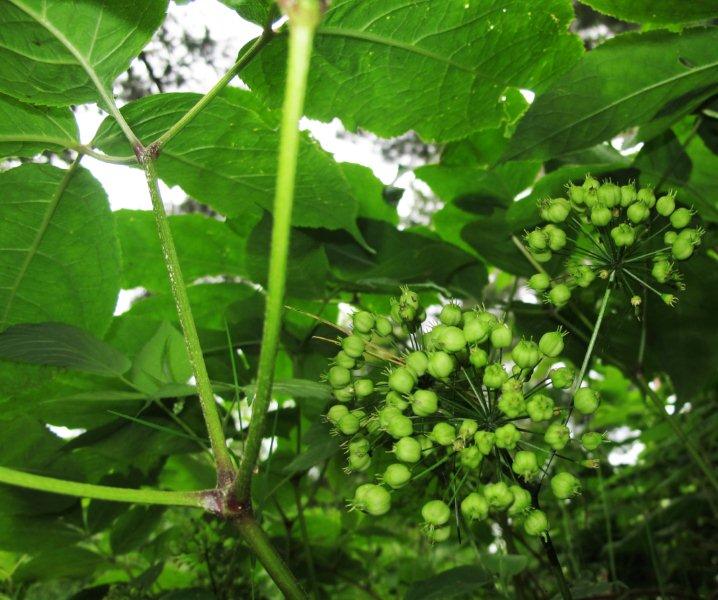
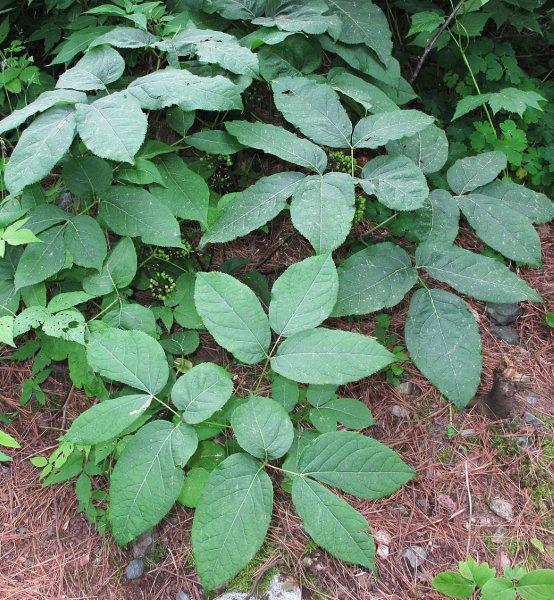
We wonder if they are excited to see how good the wild sarsaparilla crop is looking. Wild sarsaparilla berries are favorites. They ripen in the middle of the blueberry season, ripening in late July and lasting into early August. For the 2-3 weeks of wild sarsaparilla berries, bears hardly touch blueberries. When the sarsaparilla berries are done, they go back to blueberries for the rest of August if it is a good blueberry crop. Wild sarsaparilla is an herbaceous plant maybe a foot tall. The berries grow on a separate stalk under the leaves and are dark purple. We noticed today how much they have grown with the rain.
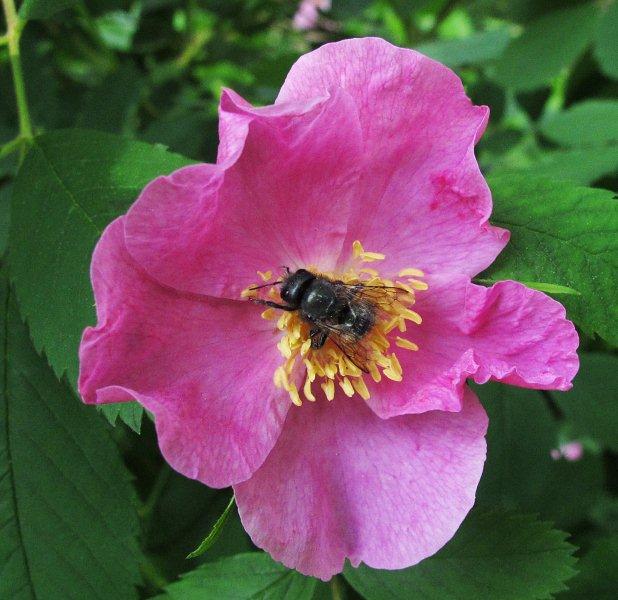
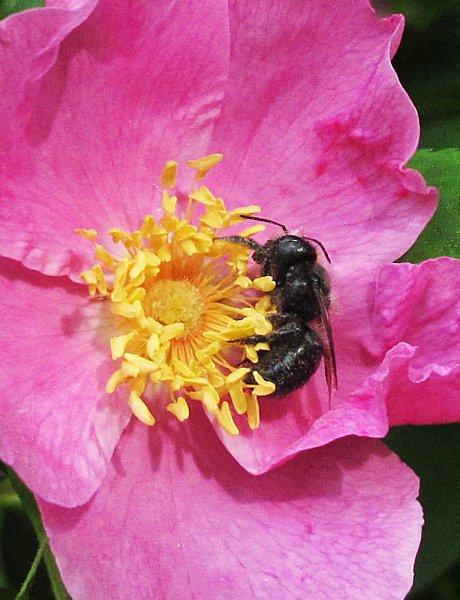 Pollination around here is by wild bees. We never see honeybees. The male orchard mason bee (Osmia lignaria), shown on the prickly wild rose flower (Rosa acicularis) is famous for being a super pollinator. They are busy bees, making more trips to flowers than most other bees, and going through the flower parts with a swimming motion made more effective in pollinating by their many hairs. They are peaceable bees that hardly ever sting anyone. They are a solitary bee that finds a hole and builds mud partitions around each egg and its store of food.
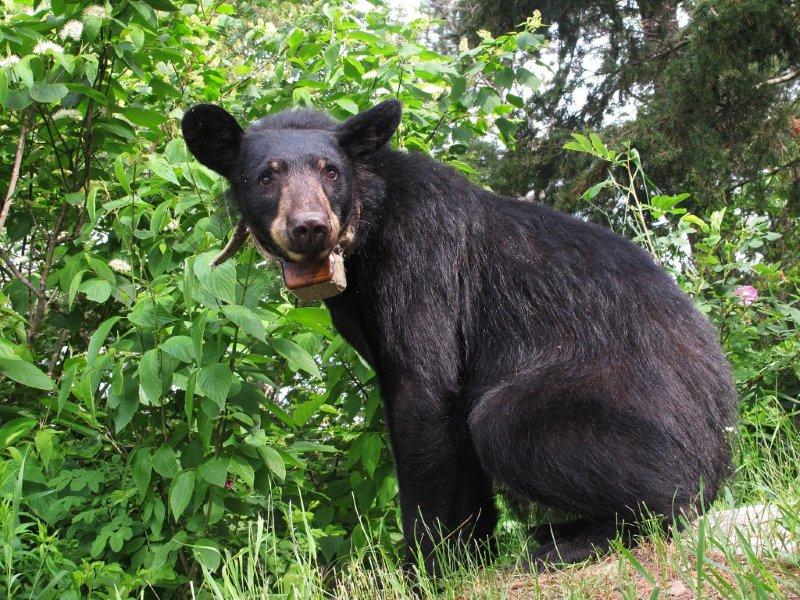
Jo and her cub have had us worried with their being seen on the edges of Tower and Soudan, but today they are deep in the forest and safe. We were able to run into Jewel and were again impressed with how long and narrow her head is. It’s normal for 2-year-olds, but hers looks even longer and narrower than others we’ve seen.
We are excited about what an expert GPS person is doing with our tons of GPS data. He is showing us how to put the locations in motion to show a bear's travel through the year. It makes a great show. We hope the publication of the data can do it justice. The GPS locations tell an amazing story of how movements change from emergence to mating season travels in spring to foraging in summer and denning in fall. Stringing June’s locations together show that she moved a minimum of 740 miles last year in an area 10 by 18 miles, including extraterritorial travels during mating season (she was without cubs in 2010). Her core territory was 5 ¾ by 4 ½ miles. An interesting thing is that although her movements surround Bear Head Lake State Park campground, she has never gone into it (knock on wood). Of all the bears in the study, June is the most comfortable with people, yet she spends most of her time in the boonies and is the bear we see the least.
Today, NorhtlandOutdoors writer Sam Cook wrote a nice article in the Duluth News Tribune at http://www.duluthnewstribune.com/event/article/id/202677/. In it, hunter T. R. Michels announced the $5,000 drawing that will be held for local hunters if no radio-collared bear is killed or injured during hunting season. The prize and the idea were supplied by an anonymous couple who saw the value of the bears to science and education.
Thank you for all you do.
—Lynn Rogers and Sue Mansfield, Biologists, Wildlife Research Institute and North American Bear Center