
Hope is growing
May 10, 2010 – 9:09 PM CDT
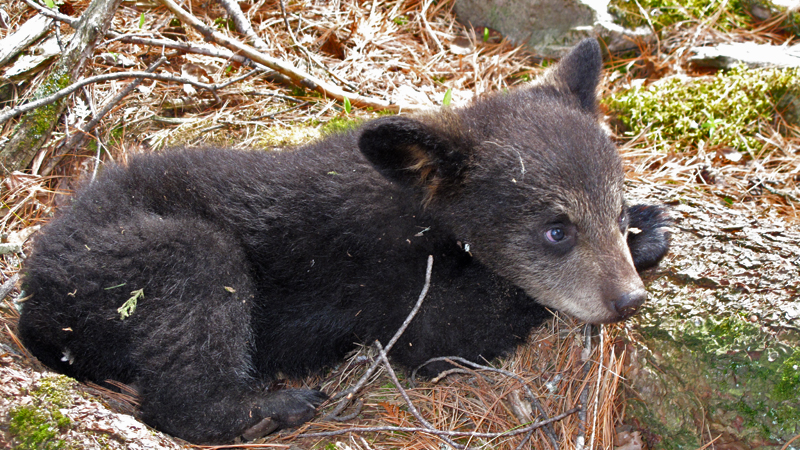 In just the last week, Hope’s face has changed noticeably. Her ears are longer. Her nose is longer. At the same time, her legs are getting longer. She is running and climbing better. Not unexpected, of course. We usually think of cubs becoming very mobile and their mothers leading them all over creation in the last week of May. Hope is well on her way to doing that. Meanwhile, Lily continues to confine her activities to small, out-of-the-way places until Hope is fully capable of running, climbing like a squirrel, and escaping quickly.
Today we posted a short video on http://www.bear.org/website/lily-a-hope/den-cam-video-clips.html of ‘precious’ Hope from April 2. It made us realize the small day-to-day changes we’ve seen over the past 5 weeks have really added up! Compare the picture below from April 2 with the one above from today.
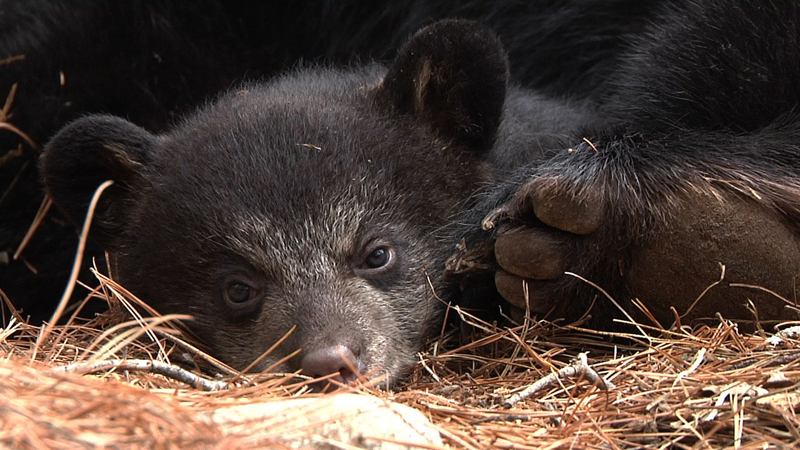 It’s amazing how fast cubs’ ears grow, becoming disproportionately large. No wonder. Hearing is the bear’s first line of defense. Hearing a rustle in time to leap for a tree and climb like a squirrel can mean survival. Mothers help by parking cubs at the bases of the trees with the best bark for making fast escapes—not by trees with flaky bark where cubs risk falling during quick climbs. Favored trees also have big branches cubs can use for napping.
On the ground, mothers provide another margin for safety. Cubs sleep snuggled up by mom and are free to fall into the deep sleep of infants. Mothers sleep more lightly, alert to the tiniest rustle of potential danger. Problems arise on windy or rainy days when it sounds like danger in all directions. Many bears then sleep high in refuge trees.
In this region, those trees are big white pines. 92% of the beds of mothers with cubs are at the bases of these trees. Mothers pass by thousands of other trees to make beds at the bases of white pines. Each kind of tree in the forest has its value to wildlife. The big scattered white pines that remain in this region are very important to black bears. They have the right kind of bark and branches. Bears can hide high in the crown. The needles provide shade for the black bear’s dark, heat-absorbing fur on sunny days in spring when deciduous trees do not yet have leaves. Black bears know the values of these trees and know the locations of them so well that when danger threatens they can run past many trees to reach a white pine that is out of sight. This says something about how their minds work.
The Bearwalker DVD’s have all been mailed and some of you have received them already. We think this documentary can make a difference for bears. We hope you share them with your neighbors. This is one of the most honest pieces ever filmed about bears. It shows what they are like, the challenges they face, and that they are not the ferocious animals usually portrayed. The BBC took a chance with this program. All too commonly, TV producers think they have to stress danger and scare the public to draw audiences. This is so bad for bears. People will not coexist with animals they fear. Scaring the public gets many bears killed by homeowners and by public officials worried about liability problems. ‘Bearwalker of the Northwoods’ shows how black bears live, shows their temperament, and reveals how we can misjudge their harmless bluster as threats that often get bears killed. Thank you to all who ordered the DVD. The further we spread this honest view of bears the more willing people will be to coexist with Lily, Hope, and their kin.
Thank you so much for your donations and memberships.
—Lynn Rogers and Sue Mansfield, Biologist, North American Bear Center