
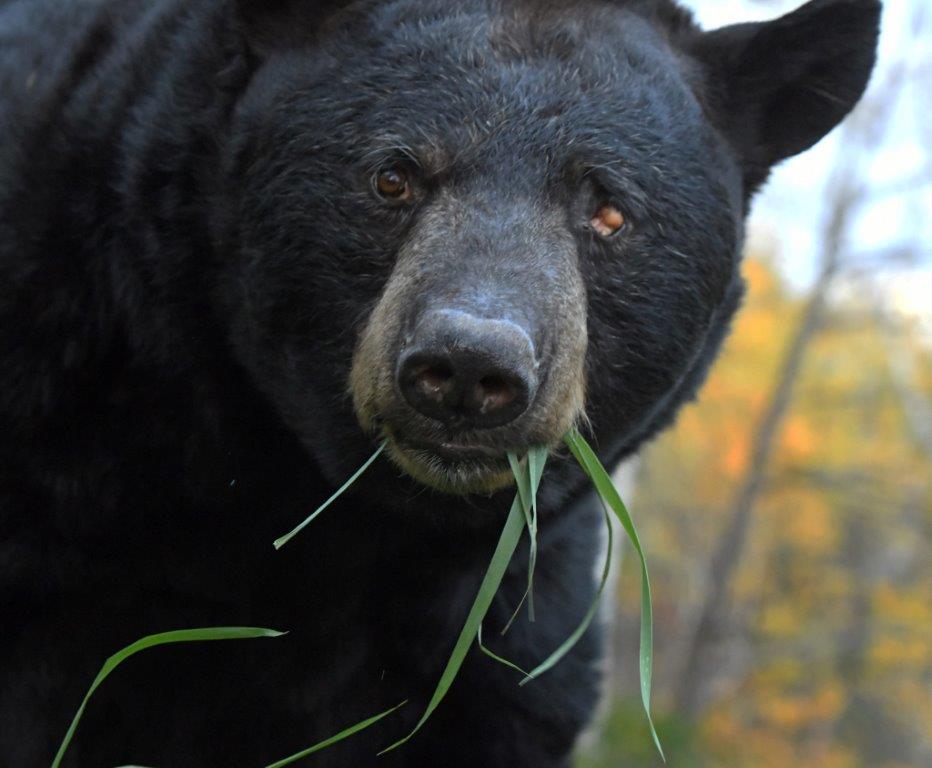
The big excitement of the day was getting called that Jack was spotted. We hurried to the spot and caught him eating clover, dandelion greens, and grass. His bad eye looks different with the yellow bulge on it.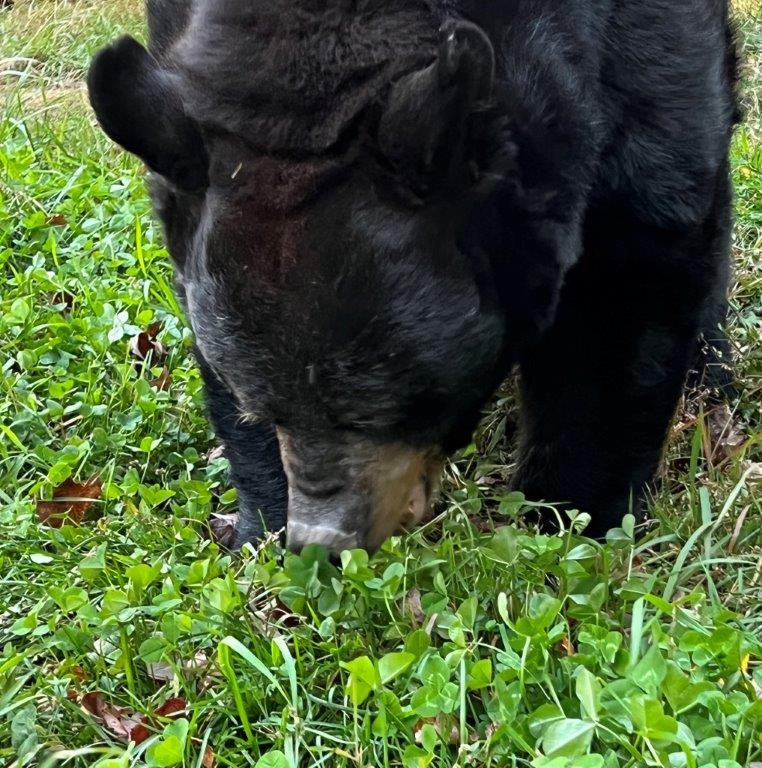 Eating clover If anyone knows what that is, we’d like to know. It was good to see Jack and have him feel comfortable with us as he went about his life eating greens. We want him to come back to the WRI year after year. We’re estimating that he is 24 now. He is the favorite of many. We told him to stay safely out of sight for the next four days.
Here at the WRI, Pixie and her cubs are still coming.
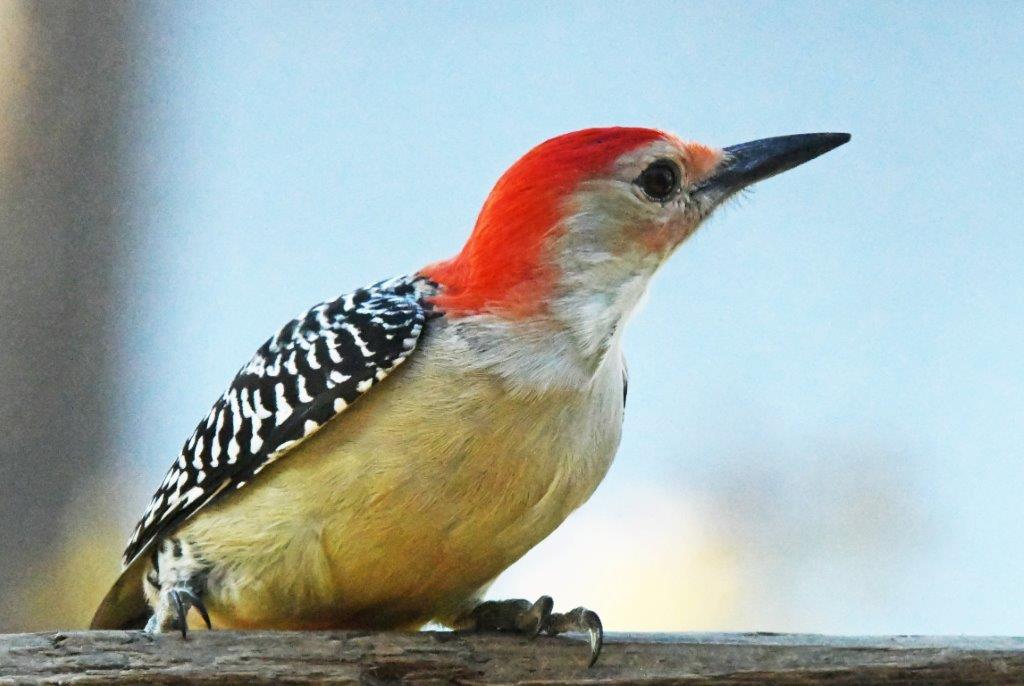 Male red-bellied woodpeckerA bit of excitement that paled with the call about Jack was seeing the first male red-bellied woodpecker in 29 years of keeping records on the WRI property. We saw only two others, both females, on May 22, 2003 and May 3, 2021. This was the first to have the full red crown and nape that says male. Red-bellied woodpeckers are common across the temperate forests of the eastern United States but are rare here in the Northwoods. I don’t know why they call it a “red-bellied” woodpecker when it’s only the head that’s really red. Maybe the name red-headed woodpecker was taken by then.
Thank you for all you do,
Lynn Rogers, Biologist, Wildlife Research Institute and North American Bear Center