

Puffy redpoll
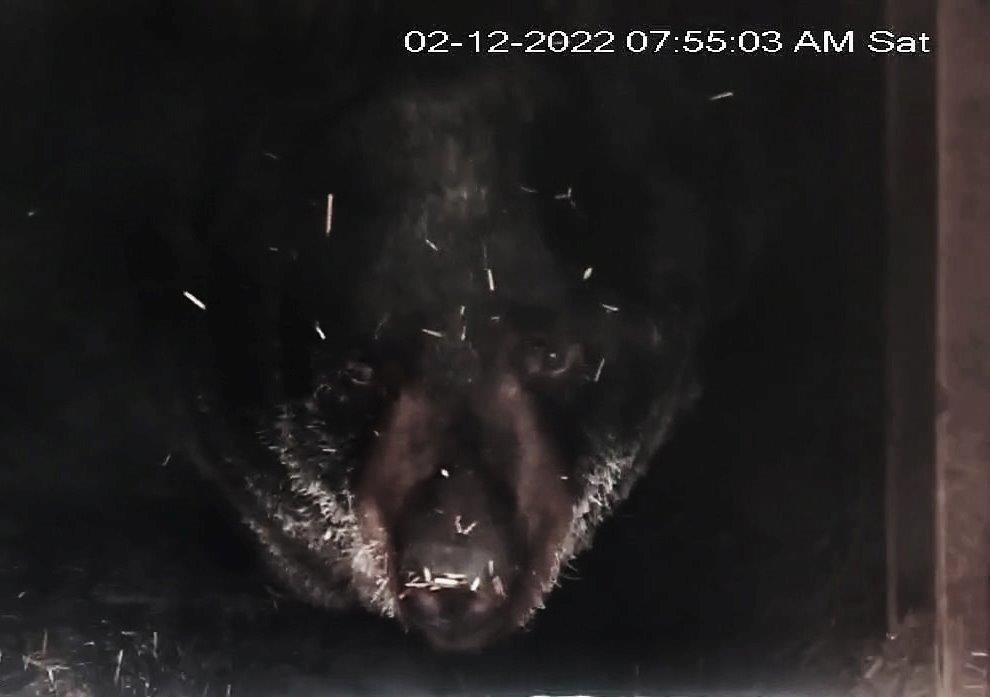 Frosty TedToday, "Happycub" did what I couldn’t do yesterday—get a picture of Ted. This morning with the temperature down around 25 below zero, "Happycub" got this picture of Ted’s face frosted like he had his head partly tucked under his chest with his breath freezing on his face. Good picture.
I have to admit to taking an hour off work mid afternoon when I saw 12 redpolls mostly just sitting in a birch tree making me wonder what they do when they are not gobbling sunflower seeds. They made me get my binoculars. Two were acrobatically clinging to small supple branches pecking at birch catkins (which a couple chickadees also did later, one of them having a catkin pull free so it could hold it on a branch with its feet to peck at it.)  Frenzied morning redpoll feastAnother of the redpolls pecked at a patch of snow on a branch, presumably to ingest snow like bears do for water this time of year. The other nine redpolls were sitting unmoving as if half asleep. I suspect that they were full up on sunflower seeds with their muscular pouches called diverticula in the esophagus full of seeds and ready to digest for body heat. They can hold up to 10% of their body weight of seeds in their diverticula. I wondered how these little birds can survive cold like we’ve had lately and read that they sometimes burrow into soft snow. We’ve had a lot of that lately. The last four redpolls were still resting in the birch when I finally went back to work. I was glad to see them resting as if they were plenty full.
 Redpoll on fresh snow
Earlier, out my window, a redpoll stopped eating, half closed its eyes, and puffed its feathers out bigger than I’d ever seen, even bigger that I’d photographed a couple days ago thinking that was big. Still learning.
Thank you for all you do.
Lynn Rogers, Biologist, Wildlife Research Institute and North American Bear Center