

Jewels old den
With the group today, we had a surprise—recent action at Jewel’s den of 2013. That’s the den where we watched her with yearlings Fern and Herbie. A bear has enlarged the den and thrown a lot of dirt out the entrance. The track in the sand looked big enough to be a male. This makes me hope for another den cam in the den of a male. It’s hard to find males in dens because we don’t put radio-collars on males. The collars would be have to be tighter than we will do. Male necks are closer to the size of their head and wouldn’t be loose enough to easily tuck its head under the chest in winter. It was this time of year in 2004 when June enlarged a den where she gave birth to her first litter (Pete and George) six months later.
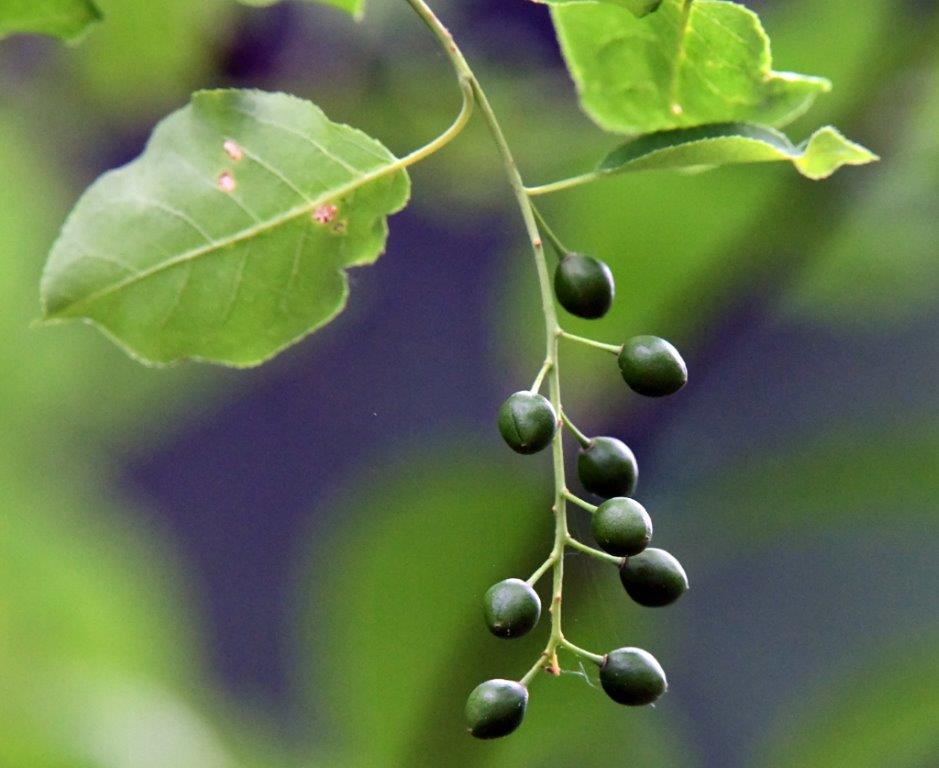 Chokecherries Chokecherries |
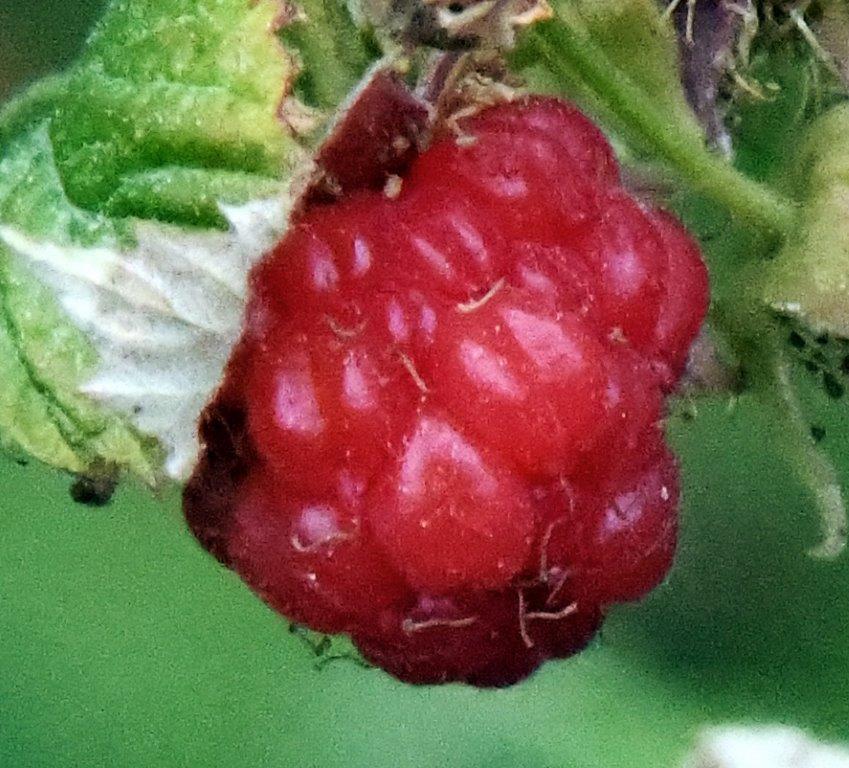 Raspberry Raspberry |
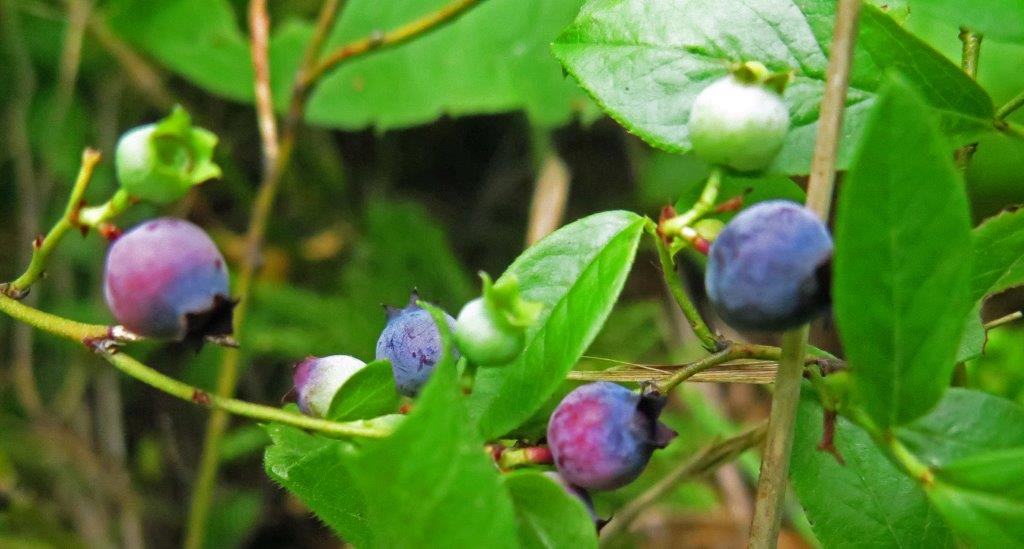 Blueberries Blueberries |
The month of June here was a month with only a quarter (27%) of the usual rainfall—1.1 inch compared to the average 4.05 inches. It was a spring with a late frost when temperatures each night during May 5-8 were between 21 and 25°F. Checking how berries and hazelnuts are doing after finding two scats containing juneberry (a.k. a.Serviceberry) seeds, we didn’t see many berries on the bushes we found. One bush had a good number, but they were smaller than usual due to the lack of rain.
Chokecherries are coming along okay but are still green. Same for wild sarsaparilla berries.
Blueberries were doing better than we thought after the frost, but they are very small because of the low rainfall.
Hazelnuts are a moderate crop that bears are finding. One bush that a bear pulled down had a pair of husks where the bear had eaten the nuts. The bush also had a nice healthy pair that the bear had missed.
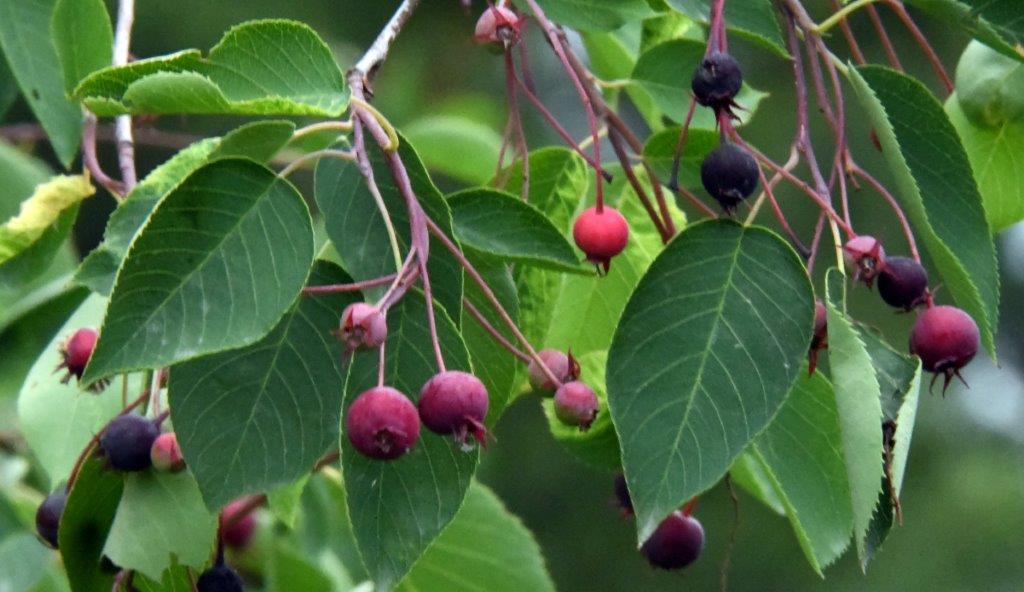 Juneberries Juneberries |
 Hazelnuts Hazelnuts |
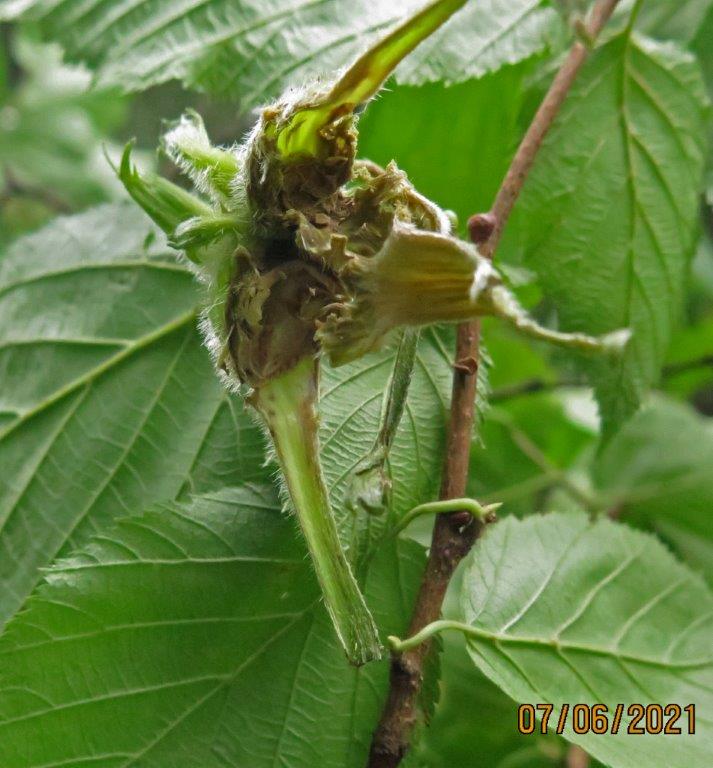 Hazelnut husks Hazelnut husks |
Raspberries are ripening, which they do throughout the summer, but these berries are hard for bears to pick efficiently because they are spaced so far apart.
Thank you for all you do.
Lynn Rogers, Biologist, Wildlife Research Institute and North American Bear Center