
Lily and her cubs are still active. We’ll see how long her hungry cubs keep her up. It always seems like cubs want to stay up and eat longer than their mothers who become more lethargic in fall and probably already have a good weight for hibernation. 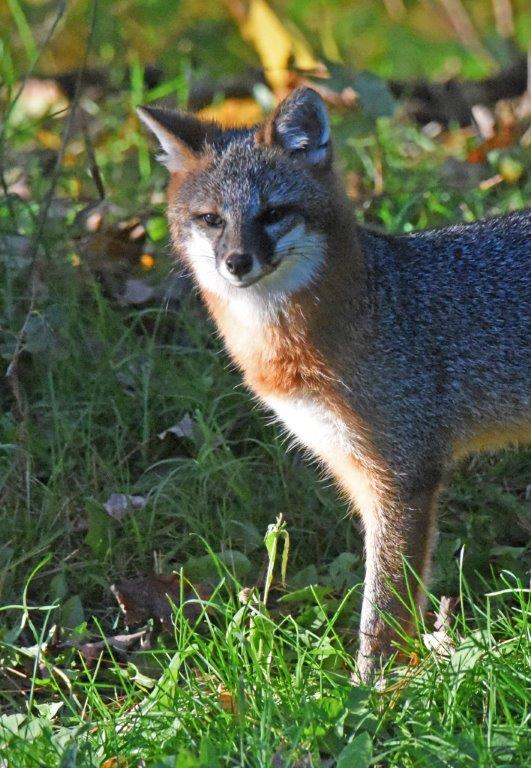 Gray foxBut cubs have a job to do and that is to eat, sleep, and grow as fast as they can. They are not hibernating. They are functioning at a high metabolism to grow quickly in the natal den and be able to follow the mother out into the world and wherever she leads for food. In fall, their continued drive to eat and grow becomes especially evident again when they remain more active than mom and sometimes leave her to independently visit a feeding area.
One-eyed Jack is probably calling it a year. He spent 9 days at the feeding station 9 miles away and left, just like he did last year. We’ll see him next year.
Jack’s life tells a story—actually several stories. One that I’m thinking of right now is about the idea that hunting helps protect the public by making bears wary of people. I doubt that because dead bears don’t learn anything and, being mostly loners, they don’t teach other bears. That still leaves the possibility that wounded bears learn to fear hunters, which may occasionally be true. Bears differ. But they have to associate the pain with a human to make that connection. I wonder how many times they do that. If they hear the sharp clap of a rifle shot when they feel the pain, will they make the connection. Do bears know what a rifle is? And how is that sharp clap of a rifle different from a sharp clap of thunder from a nearby lightning strike like they have been hearing all their lives. Does the rifle shot make them afraid of people or afraid of thunder? Another argument is that other bears could find the gut pile of a hunter-killed bear that is tainted with the smell of a human or the smell of gun powder on the bullet. But bears smell humans all summer long in larger numbers during the hiking and blueberry picking season than in hunting season when most vacationers have gone home and loud children are no longer running the forest trails. And would a bear recognize the smell of gunpowder as danger any more than it would recognize the many other smells as a sign of danger? And how much smell would cling to a bullet? Jack probably was looking at the man who shot him in the left eye, but did he associate a human, of which he had seen many, with danger? The man shot him for impudently looking at him rather than running. Jack heard a clap of thunder from the rifle and a stinging pain in his eye. Bears often associate events with a location. Jack moved about 6 miles away 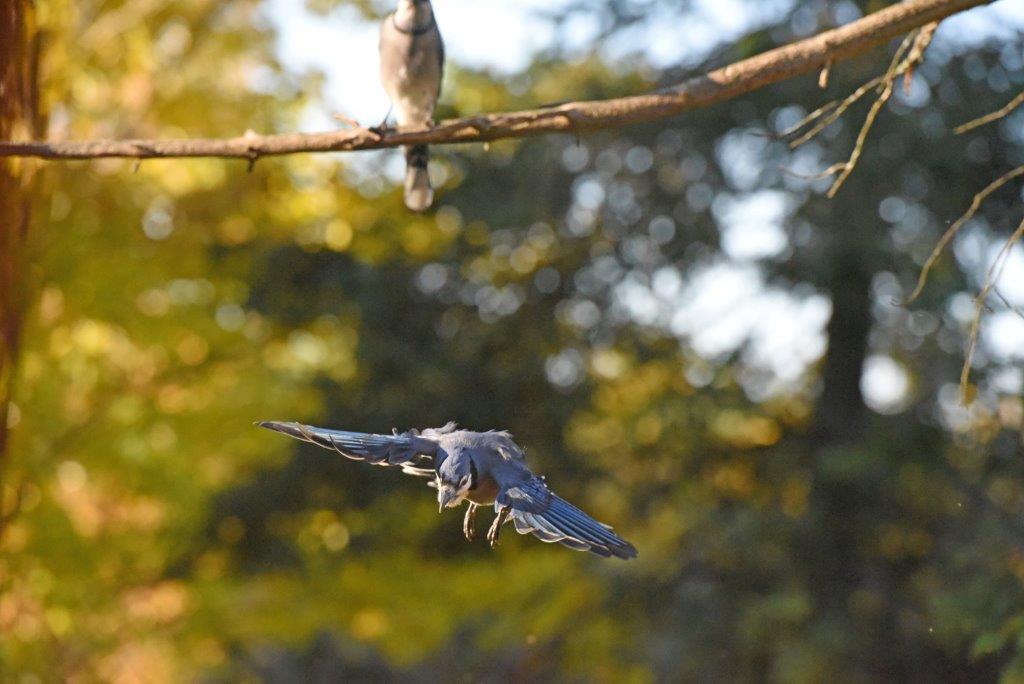 Blue jaywhere a family saw him and he saw them. According to the idea that he should have feared people after being shot, he should have feared the family. They had a different attitude toward wildlife than the man who shot Jack had. This family welcomed Jack and put food out for him. I’ve got to talk to the family again to learn just how friendly they and Jack became, but he continued to visit them for months, at least. Jack eventually continued his travels and discovered the WRI. He was wary at first, but an autistic participant in our very first Black Bear Field Course back in 2003 was persistent with Jack and eventually fed him by hand. How could Jack allow that after being shot. Does hunting really make bears fearful of humans? Bears differ, and a person can never say never, but Eagles Nest Township is the best example I know of a community where bears are willing to coexist with people despite being heavily hunted. Jack is the prime example. He is totally trusting of people where he has learned people are trustworthy, but he is seldom seen away from those areas, which is how he has survived for some 20 years or more to become one of the oldest bears in the area. The oldest, of course, is Shadow at nearly 31, but I don’t know that she has ever been wounded like Jack was. June was another example. We walked with her and learned from her. She lived in a heavily hunted part of our study area. She accepted us nevertheless. Most of the foraging videos in the Bear Center are of her foraging for wild foods with a researcher video-taping within a few feet. She continued to accept people where she was accustomed to seeing them, but when she saw a hiker approaching on a trail in the forest, she and her cubs fled with the researcher running along with them. Any question about wild bears quickly become complicated by differences among bear personalities and by their different experiences, but as far as I can see, the arguments that hunting makes bears afraid of people don’t hold up in my experience. Jack is a good example.
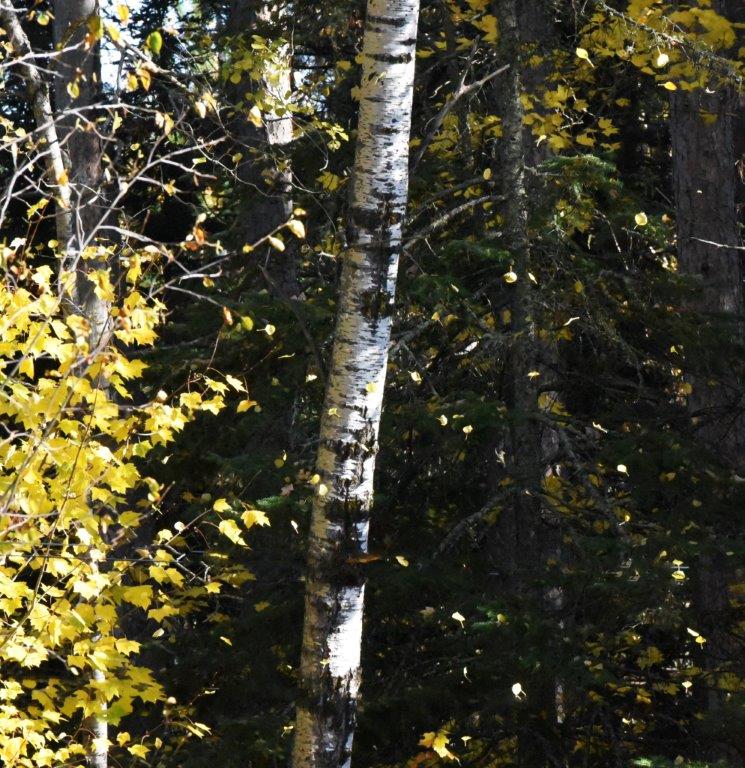 Aspen leaves fallingWhen I visited the Bear Center today, I had the opportunity to greet Ted nose to nose. Made my day. Nearby, blue jays and gray jays put on a show as interns tossed peanuts in the air for them to catch.
Back at the Wildlife Research Institute, a gray fox appeared outside the window just before the sun went down. I stepped out onto the second floor deck. He seemed wary. I tried not to move and cause him to leave. Then I realized he was fully aware I was there but was wary of other sounds and movements. Like the bears, he has become accustomed to seeing people here.
I feel blessed to live among wildlife surrounded by beauty. But the bright yellow colors will be gone in a week or two. Every breeze brought a shower of aspen leaves.
Thank you for all you do.
Lynn Rogers, Biologist, Wildlife Research Institute and North American Bear Center