
On this sunny, blue-sky day, I let myself be distracted by the beauty of fall and feeling blessed to live in an area with so much nature. I feel that way in spring when waves of warblers arrive with their colors and songs. 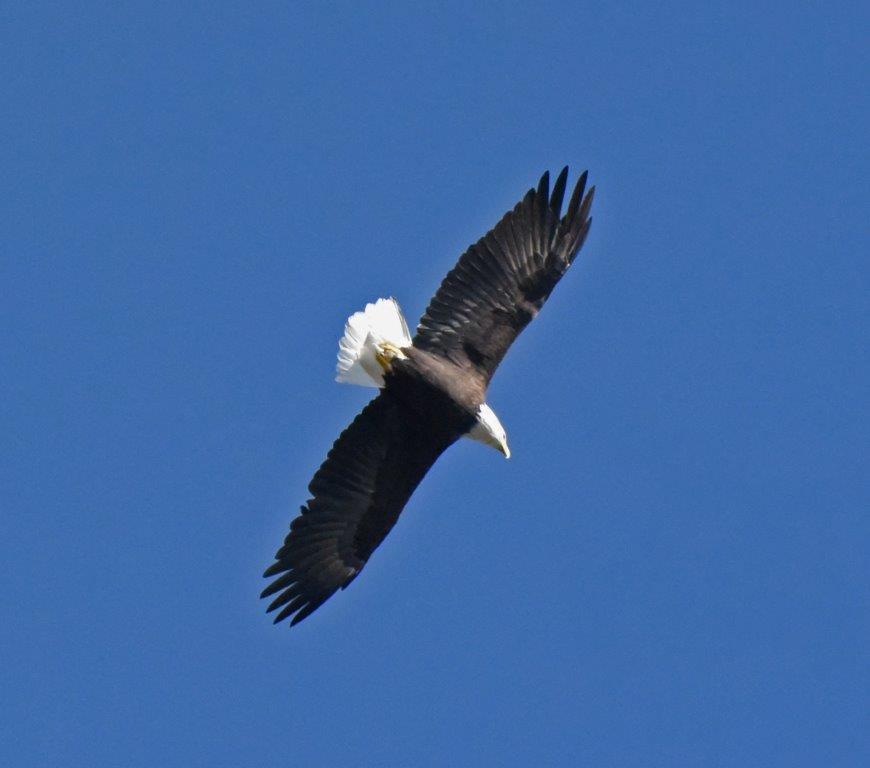 Bald eagleBears make me feel that way all the time—seeing them in summer and in winter, knowing they are in dens having cubs. But today it was hard to stay in front of the computer when there was so much color outside. I got in the van. I checked the side by side red maples, one of which was yellow and the other red last fall. I wondered if they would have those same colors again. I’d spent too much time behind the computer lately, and the leaves were gone. Maple leaves are dropping fast. At the same time, quaking aspens are now glowing bright yellow, framed by surrounding conifers, and big-toothed aspens are showing their orange-tinged leaves. On the ground, the colorful blue aster flowers are gone, replaced by seed.
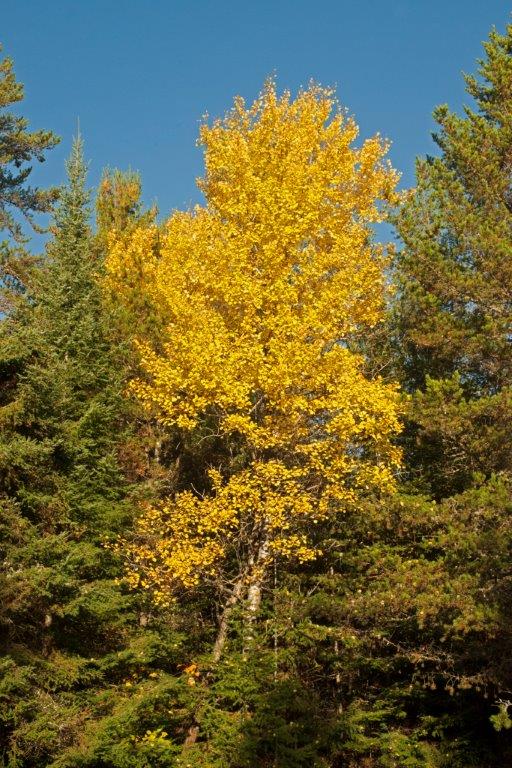 Aspen surrounded by conifers Lowbush blueberry (Vaccinium angustifolium) bushes have lost their blue berries but gained bright red leaves. Overhead, the black and white symbol of our country sailed higher and higher, riding an updraft without a flap of the wings, finally to sail off on its way south.
One view had a clump of magnificent white pines standing as a remnant of the pine-logging boom that peaked locally between 1893 and 1937. The beautiful aspens and birches beside them are an example of habitat changes over the last century. The big pines and the colorful aspens and birches represent two different times, two different industries, and two different ecosystems. 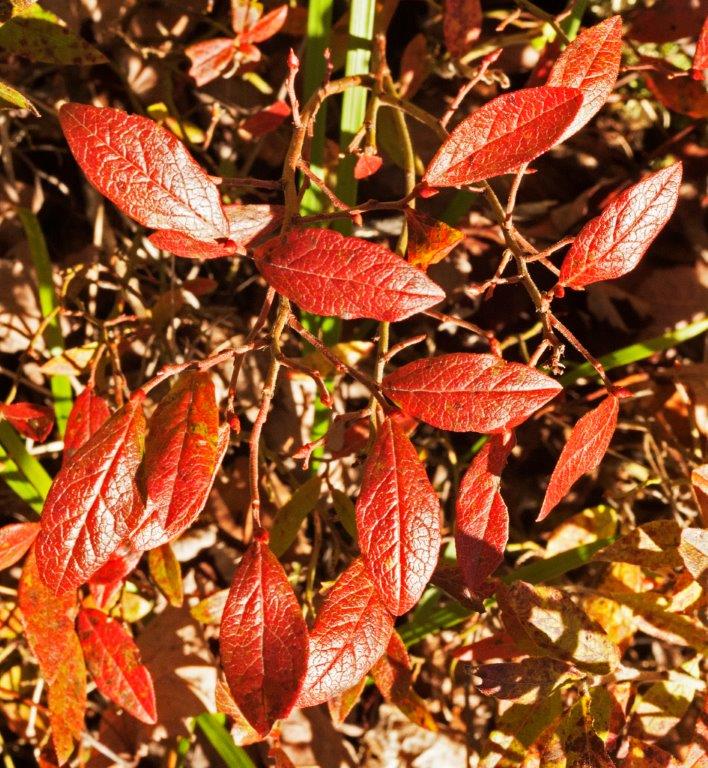 Lowbush blueberry leavesThe pines represent the forest of the past and the logging boom that brought people to northern Minnesota to produce white pine lumber for building Chicago and much of the Upper Midwest. The big pines represent a time when woodland caribou and moose, not white-tailed deer, were what people saw. When the big pines were cut, only two percent came back. The windblown seeds of aspen and birch re-seeded the area, creating ideal habitat for white-tailed deer. White-tails expanded northward, carrying the brainworm parasite that is harmless to them but lethal to caribou and moose. White-tails became the main prey of the timber wolf as the wolves continued to prey on caribou and moose whose health was now hampered by brainworms. I saw an example of that while studying moose back in the early 1980’s. A moose with brainworm let us walk up to it and change its radio-collar while it stared off into the distance, ignoring us. Caribou disappeared from the area, and moose declined due to habitat, hunting, wolves, and brainworm. As the habitat changed, the local logging industry shifted from pine lumber production to pulpwood production for making paper, primarily from aspen.
The beauty continues. The forest continues to support more breeding bird species than anywhere in North America. The forest is still diverse. It continues to include components of the temperate deciduous forest to the south and the boreal conifer forest to the north, including the wildlife from both those areas.
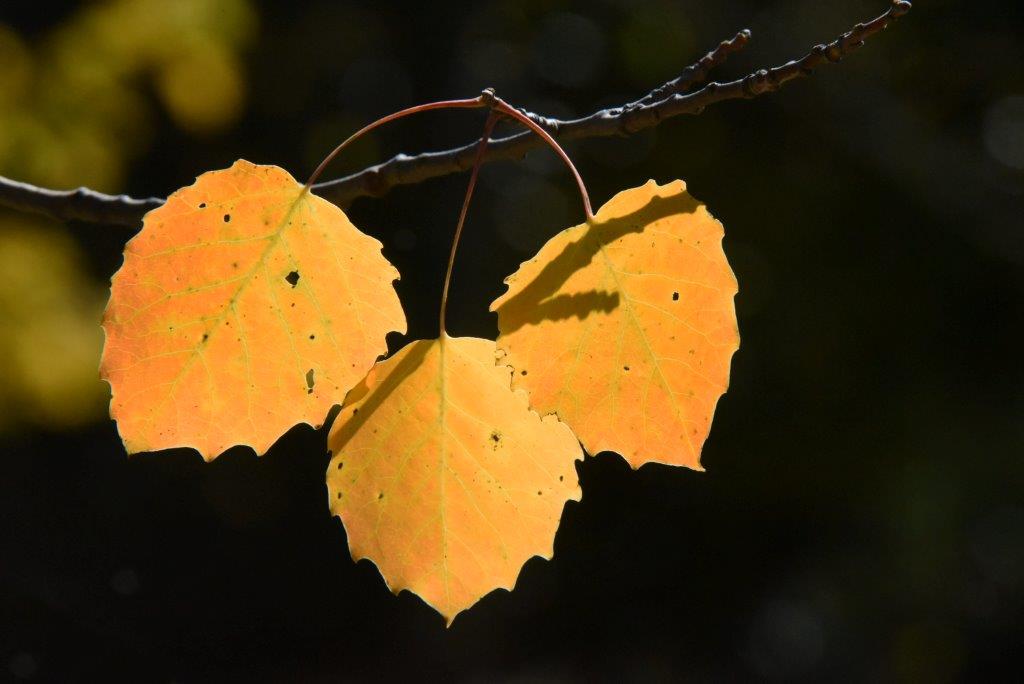 Big-toothed aspen leaves Big-toothed aspen leaves |
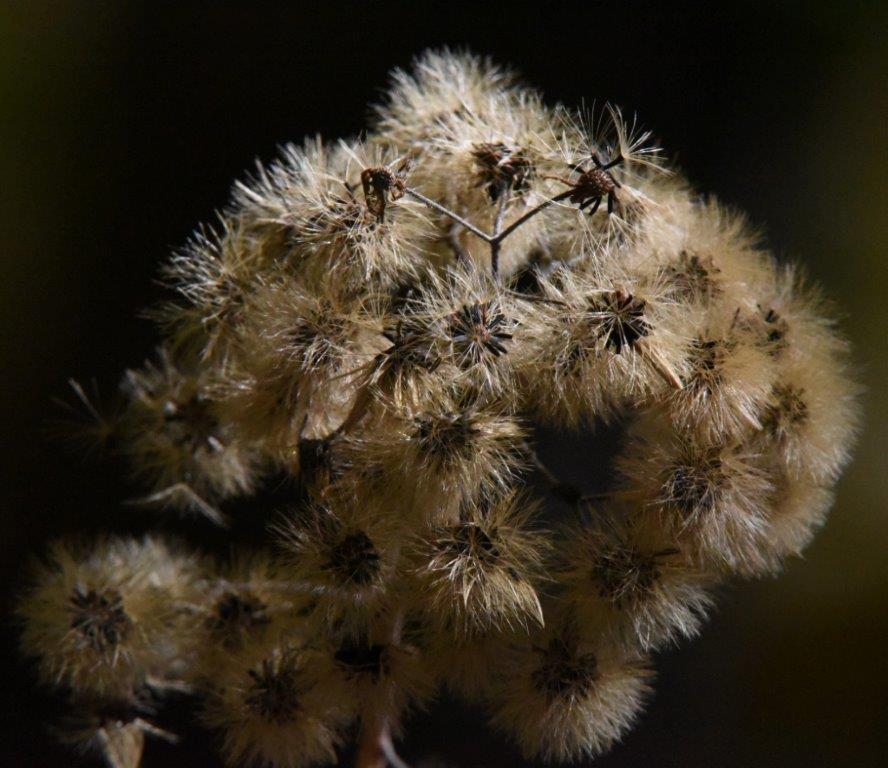 Aster seeds Aster seeds |
Back to work. It was a great day.
Thank you for all you do.
Lynn Rogers, Biologist, Wildlife Research Institute and North American Bear Center