
While Lucky and Holly moved slowly and Holly didn't bother to eat her treat, Tasha was active and playful--with Sharon and a ball.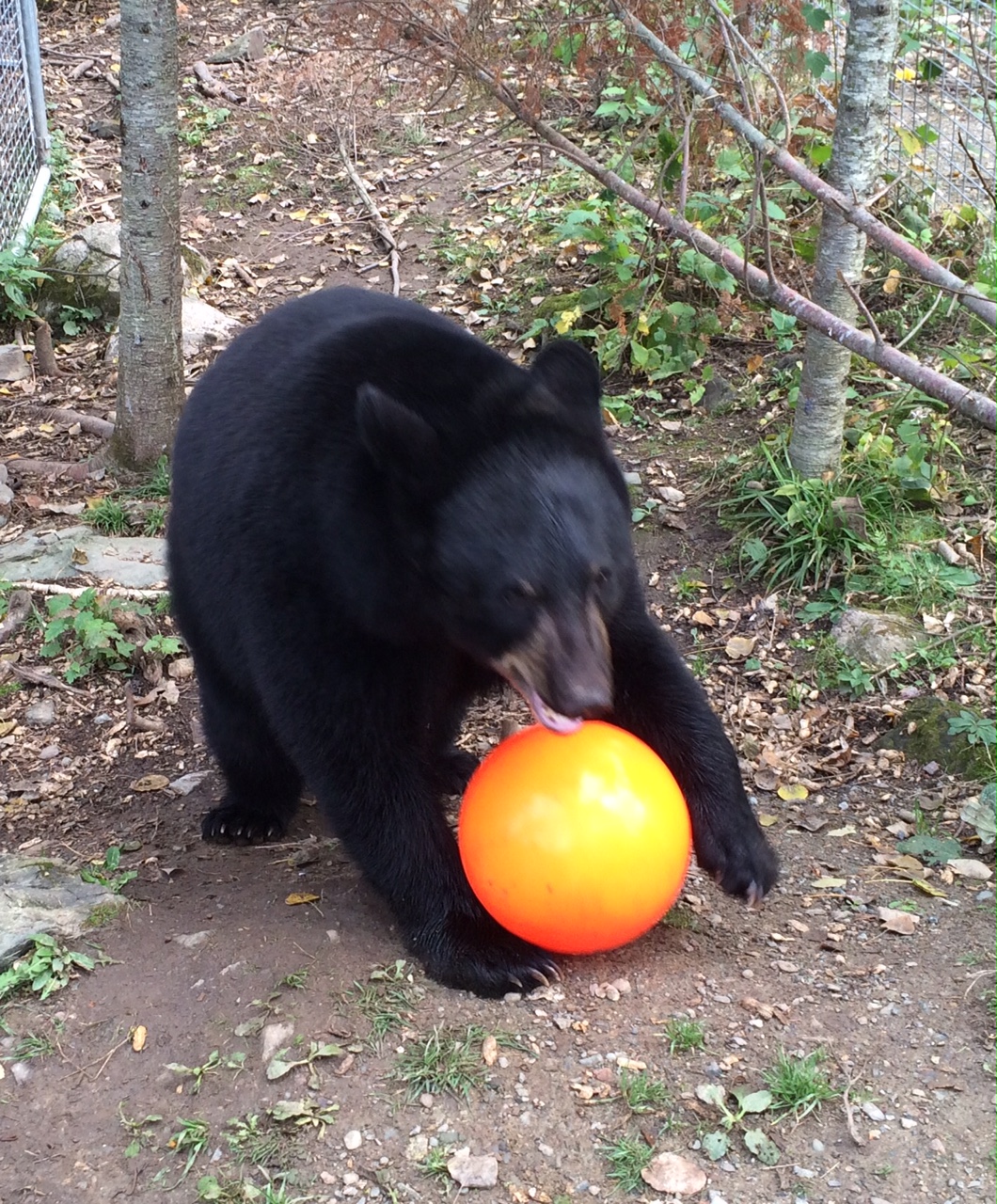 Playful Tasha
At the WRI, a few bears, including Samantha and Kimani and their six playful cubs, are still coming but are mostly nocturnal. The only bear in daylight today was an adolescent male who eventually walked off through the ever more colorful trees that now include aspens turning yellow.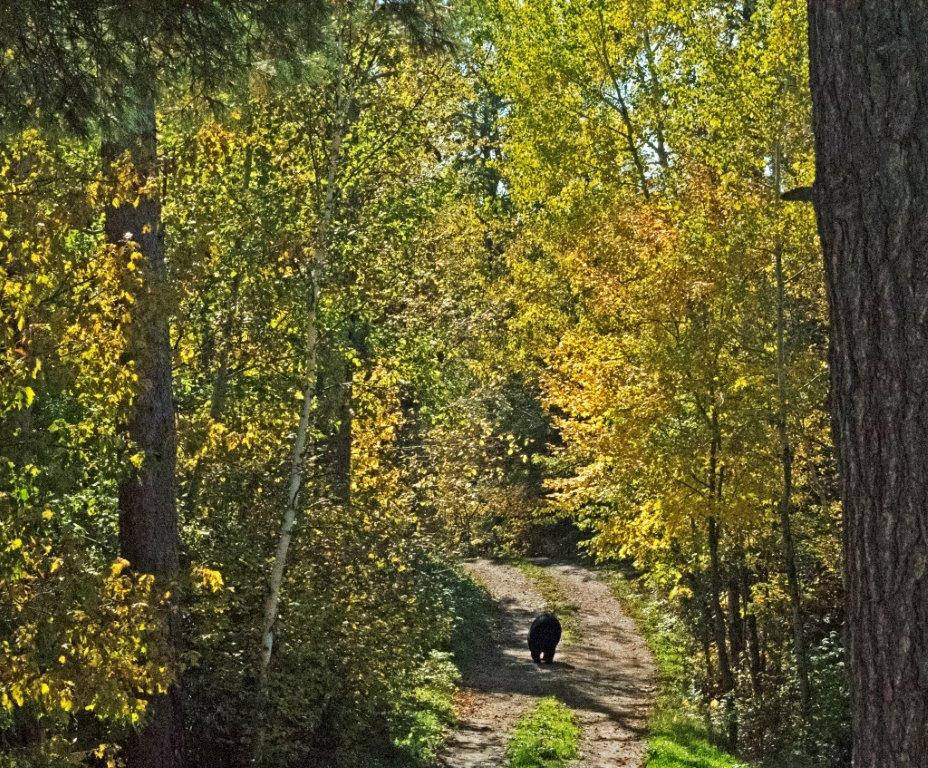 Bear in fall colors
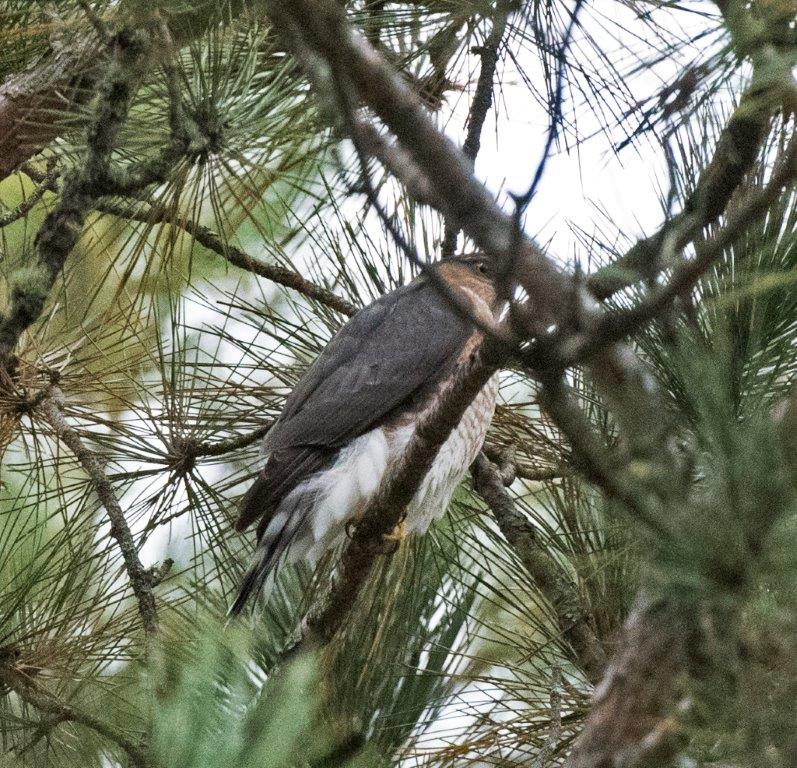
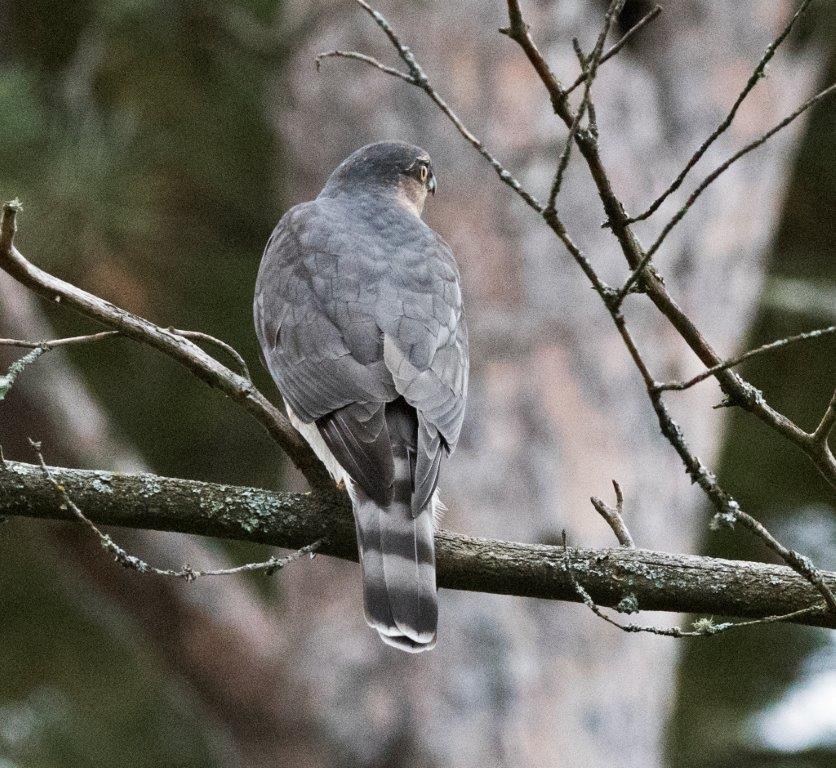
Out the window, sharp-shinned hawks have been putting on a spectacular flying show for the last several days. With as many as three sharp-shins chasing blue jays at once we are amazed at the fast flying hawks and the agile blue-jays. It's a show we've seen each spring and fall now for 20 years. When the hawks are here, there is a new chase every few minutes or seconds. But with all the fast dashes and sharp turns as the hawks fly off high perches or flash out from leafy cover, we have never seen one catch anything or found a pile of feathers. How many chases does it take to make a capture?
 |
 |
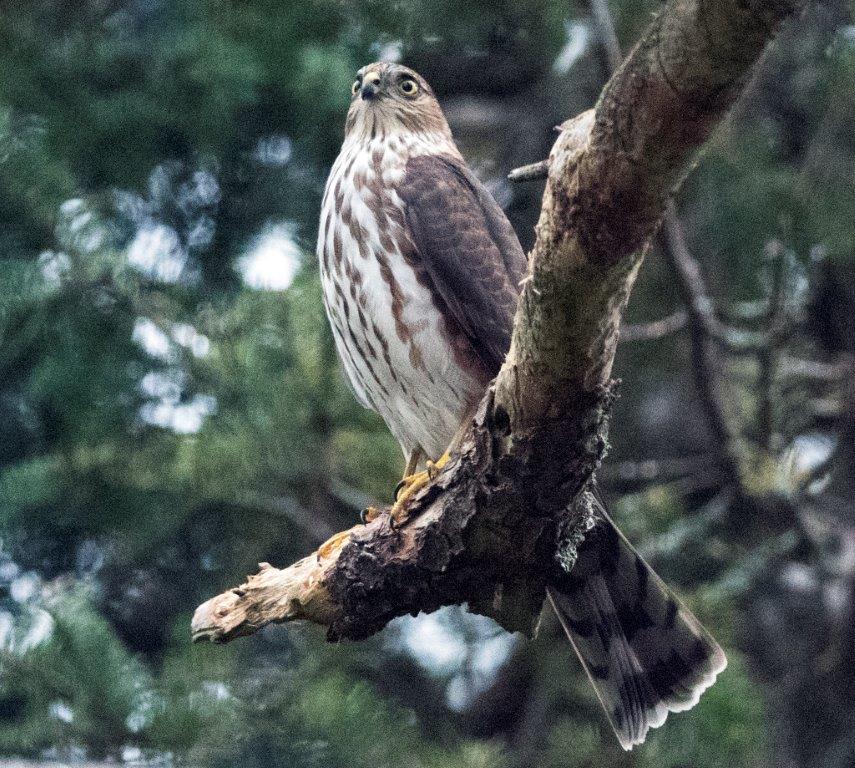 |
| Sharp-shinned hawks | ||
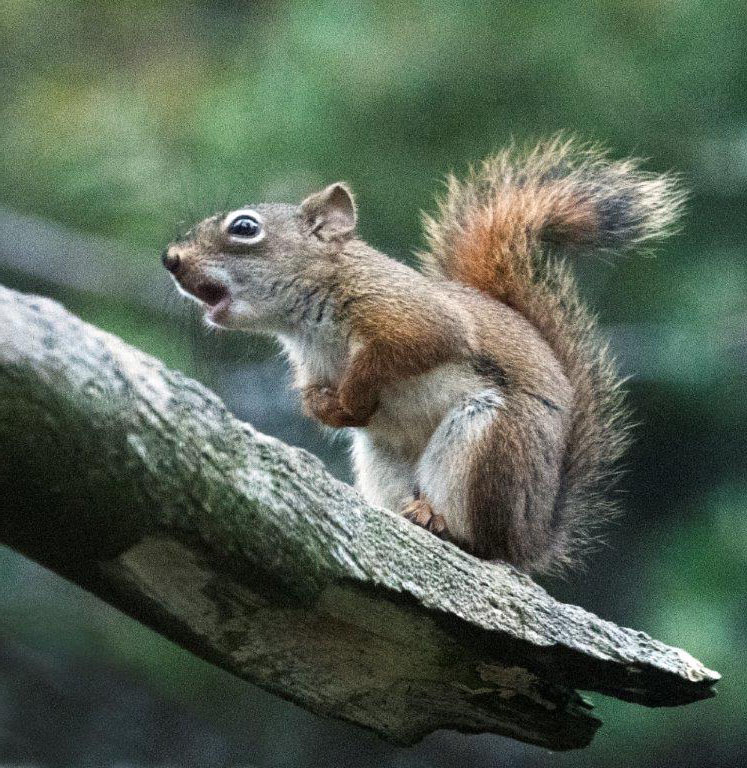 Red squirrelDecades ago in another location, I saw a hawk drop on a sparrow that was on the ground. Another time, a sharp-shin carried off a pine siskin and ate it. But here, the blue jays dodge and zip into conifer cover with complete success in my observations. They confidently but watchfully continue eating bear food as their brethren squawk while dodging the hawks.
A red squirrel called nervously as sharp-shins swooped past, but I haven't seen a sharp-shin try for a red squirrel--just blue jays and the occasional futile chase after the much larger crow. Could sharp-shins enjoy the thrill of the chase. 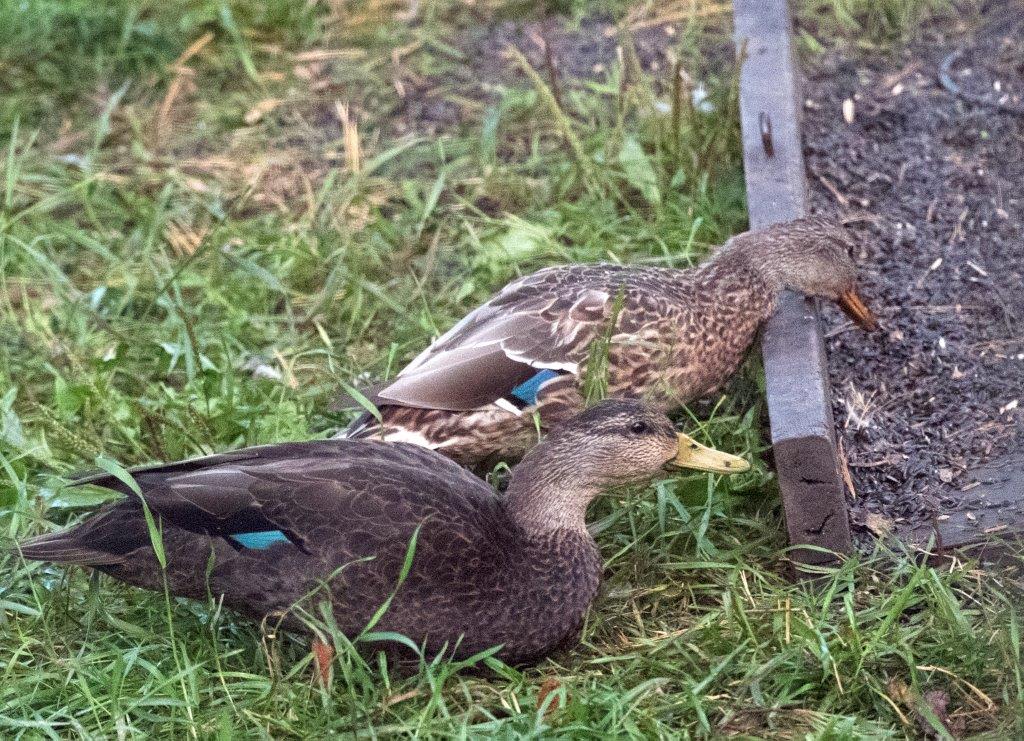 Black duck maleCould the urge to chase be like the play-fighting of bears that some consider a form of practice? We see these futile chases by both adults and juveniles. The chases seemed fewer today, but I was at the Bear Center for several hours talking to a great group of students and professors from Norway.
A male (yellow bill) black duck joined the 18 mallards that help themselves to the bear food (wildlife food?). No gulls have been here for 3 days now. No hummingbirds since about September 11.
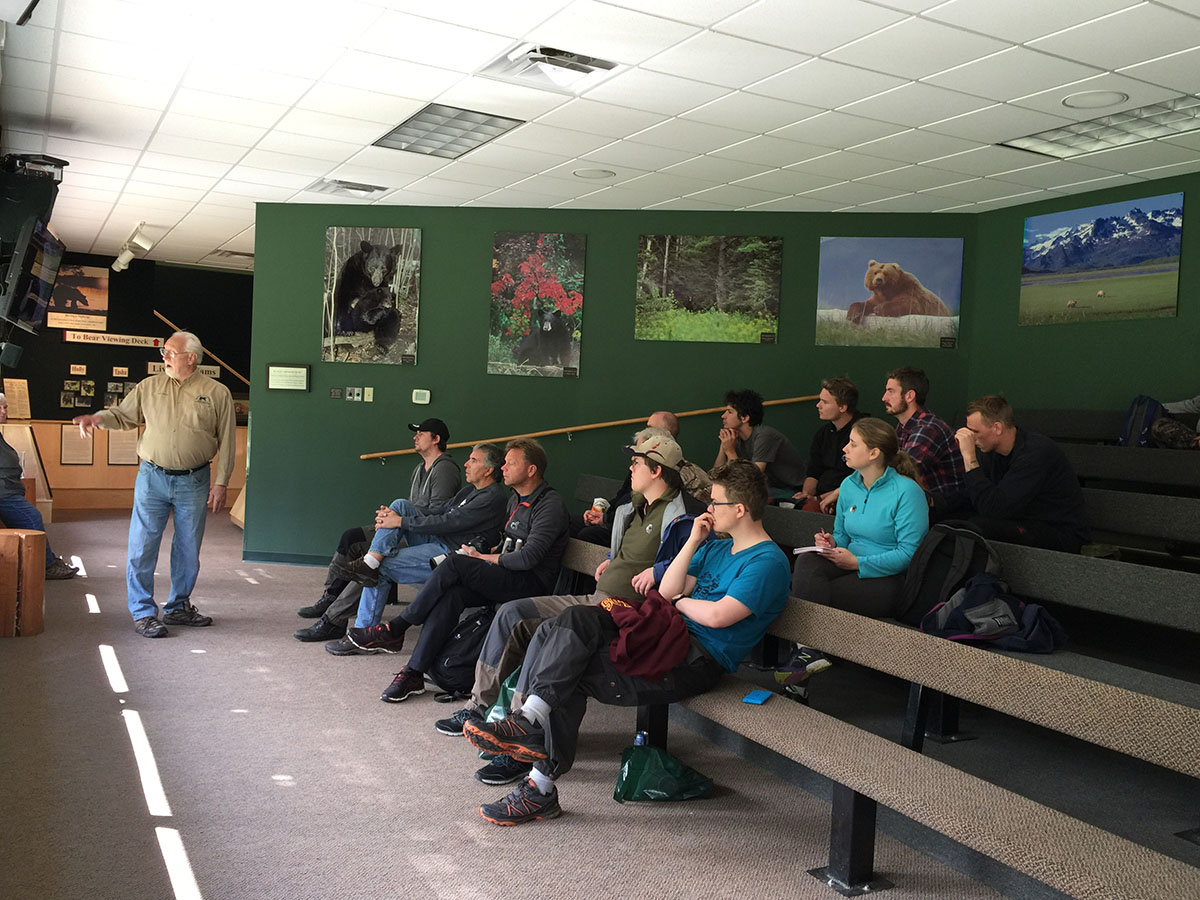 Professors and students from NorwayThe Minneapolis Star Tribune did an article on the 2.7 billion-year-old rock that might get moved to the Bear Center to be an outdoors part of the exhibit we are developing about the glacial and geological history of the Ely area. http://www.startribune.com/ely-s-volcanic-wonder-turns-into-a-hot-issue/395480271. We'll know more next week.
It was a beautiful calm day with color reflecting in the glassy smooth water of Woods Lake out the window.
Thank you for all you do.
Lynn Rogers, Biologist, Wildlife Research Institute and North American Bear Center