
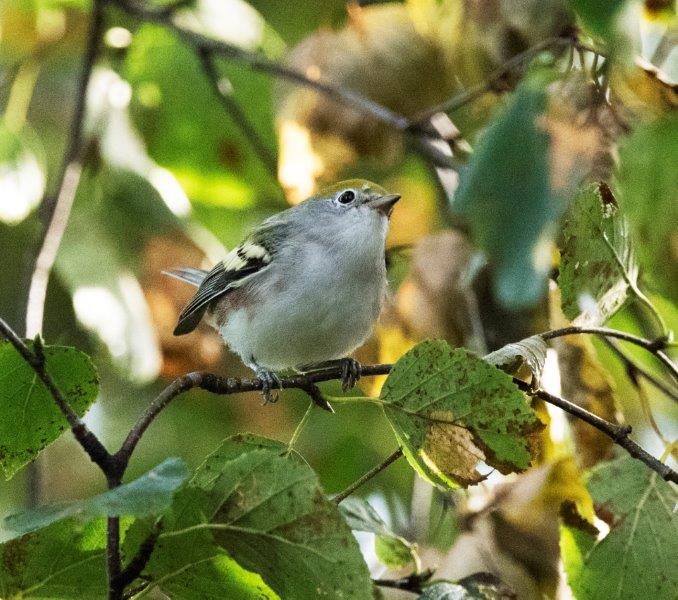
Warblers that arrived back from Central or South America in late May now have young on the wing that are busily looking for insects. They’re adding fat to fuel the southward migration that 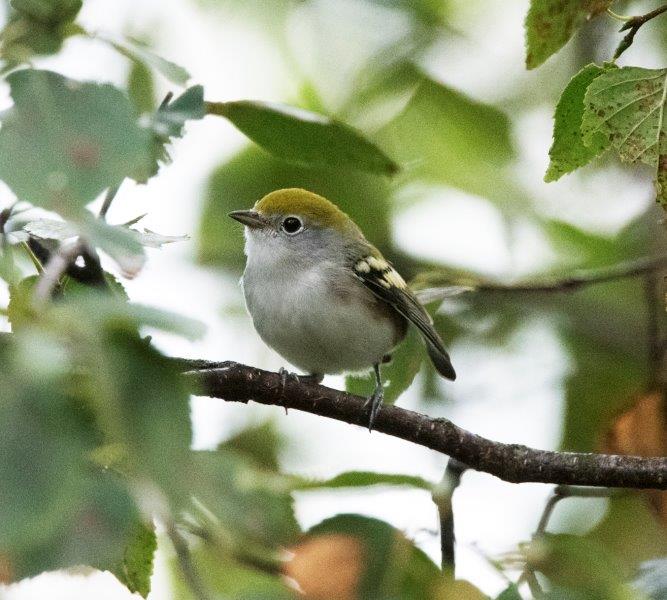 Chestnut-sided warbler imm.starts a little over a month from now. This immature chestnut-sided warbler (Dendroica pensylvanica) took a little over 3 weeks to go from a newly laid egg to leaving the nest. Placing their nests head-high or lower in bushes and shrubs, chestnut-sided warblers are the most common warblers at the WRI. Saying “Pleased to MEETCHA” and weighing only a third of an ounce, a foraging individual hardly stays in one spot long enough for a person to aim and focus a camera. They can live 7 years or more, so I might see this little bird when it returns in spring with chestnut sides, as in the picture of an adult taken some years ago.
 |
 |
| Chestnut-sided warbler imm. | Chestnut-sided warbler |
Thank you for all you do.
Lynn Rogers, Biologist, Wildlife Research Institute and North American Bear Center