
Honey may have more than unshed foot pads. Curator Sharon Herrell gave Honey her doses of Prednisone and Tremadol today and will do the same tomorrow morning. 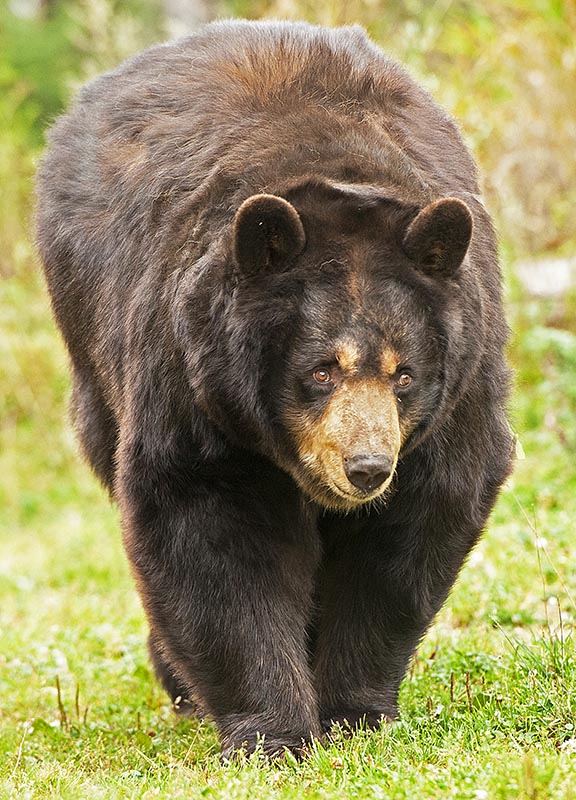 Honey on 9-23-15, also an upper wall photoThe veterinarian is hoping to see improvement tomorrow afternoon.
Out the window at the WRI, the trusting herring gull from last year needs to meet more people. At ocean beaches, people tell of gulls that will take food from anyone who offers it, flying down and plucking it from a hand while in flight. The gull here hasn’t seen enough people to generalize like that yet. I want the gull to interact with anyone, including Bear Course participants, in that location. I feel good when the gull shows trust and carefully plucks the bologna without getting fingers. Today, I learned that getting fingers is not bad, either—no pain, no mark. Judy Thon stopped by. I wondered how the gull would react if she acted exactly like me. She went out the door with a half slice of bologna in her fingers, extending her arm toward the gull, walking slowly. The gull flew away when she stepped out the door. She went inside. It circled back and landed. She tried again. Same story. I tried. It started toward me as I came quickly to it, but then it retreated and began clucking. Judy told me what happened. The gull retreated when it saw her standing in the door window. When she moved out of sight, the gull came as usual. The gull left. Another one landed, but this one immediately flew when I started out the door with bologna as I did for the other one. It flew away several times before I gave up and resumed writing captions for upper wall pictures. The trusting gull also started slowly and has come a long way. We’ll see how long it takes for the trusting gull to generalize to everyone who comes out that door.
I heard that the remaining ice on the lakes disappeared on this sunny day in the mid-fifties. At the feeders, no redpolls came today. Many purple finches and pine siskins were here instead. No bears here yet.
Thank you for all you do.
Lynn Rogers, Biologist, Wildlife Research Institute and North American Bear Center