
I received the first community bear sighting today—14-year-old Braveheart and her 3 yearlings (Geneva, Stratton, and Porter). Good news. They showed up at one of 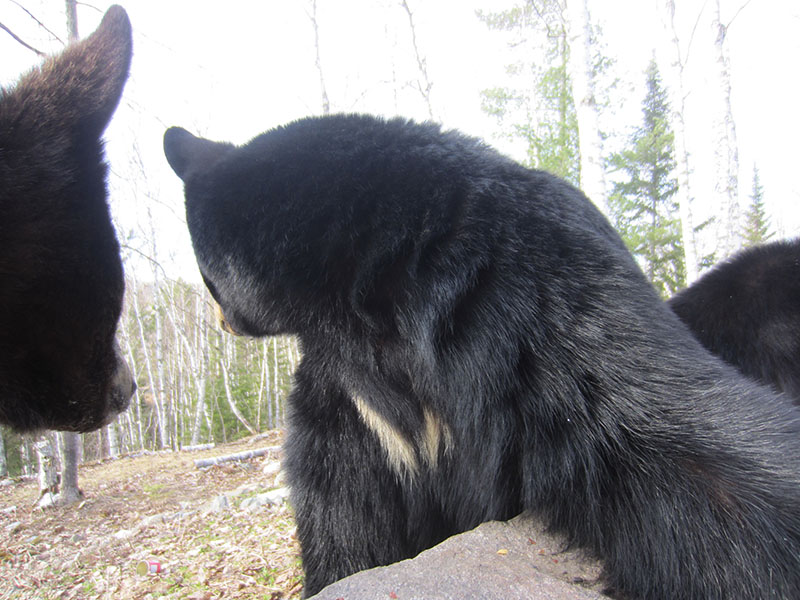 Braveheart and her cubs pay a visitthe community feeding sites where the landowner snapped a picture of Braveheart’s signature chest patch.
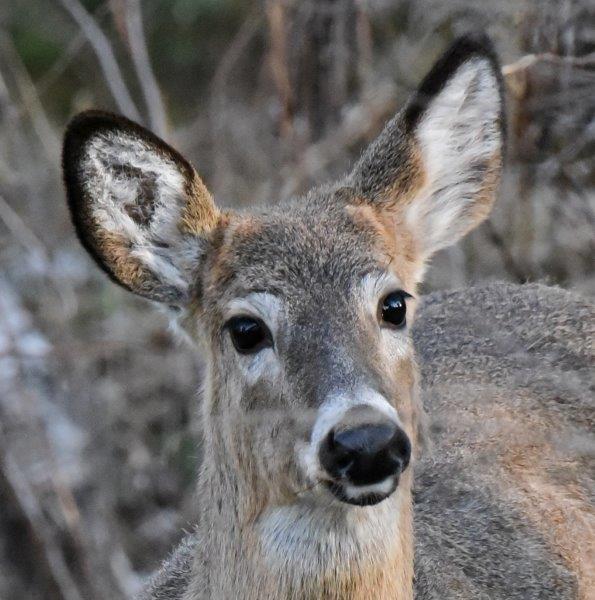
Deer faceI checked Lily’s den and she and her 3 cubs Frannie, Francis, and Frankie are gone. I figured they would be long gone with the nice weather melting the snow. Lucky and Holly are active just like the wild bears.
Ice is melting fast on the black ice lakes. The island on Eagles Nest Lake One shows the progress. On this beautiful sunny day (63°F), colors seemed more intense, especially the greens of pine needles.
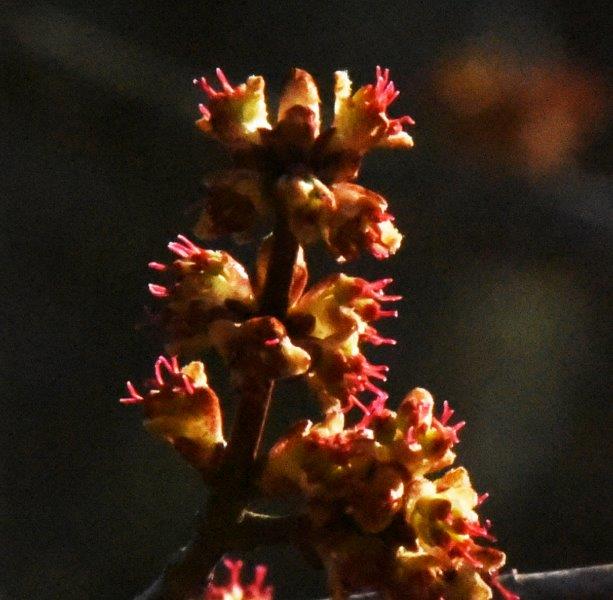
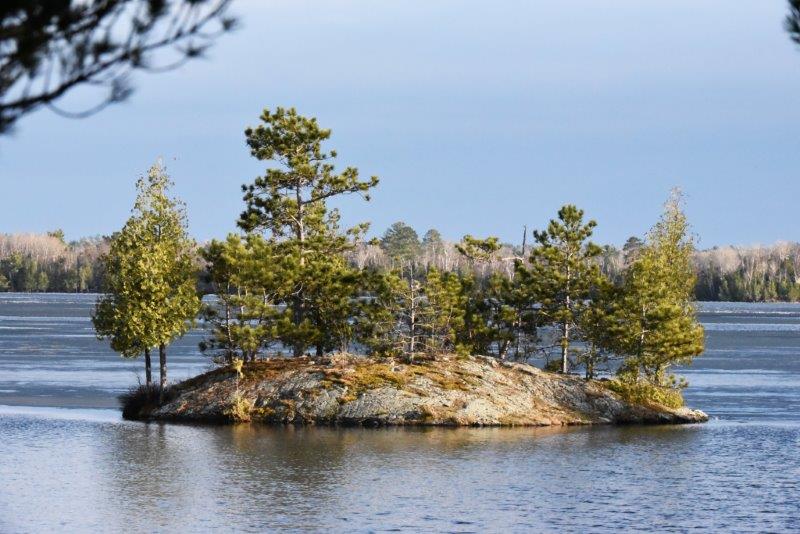 Less ice surrounding islandBear foods are blossoming. Willows are covered with catkins. Red maples are flowering. Both are bear foods.
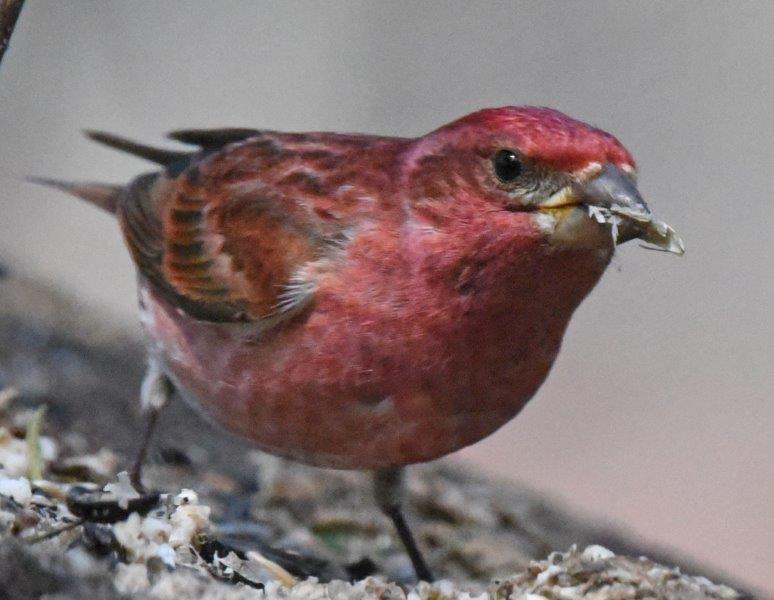
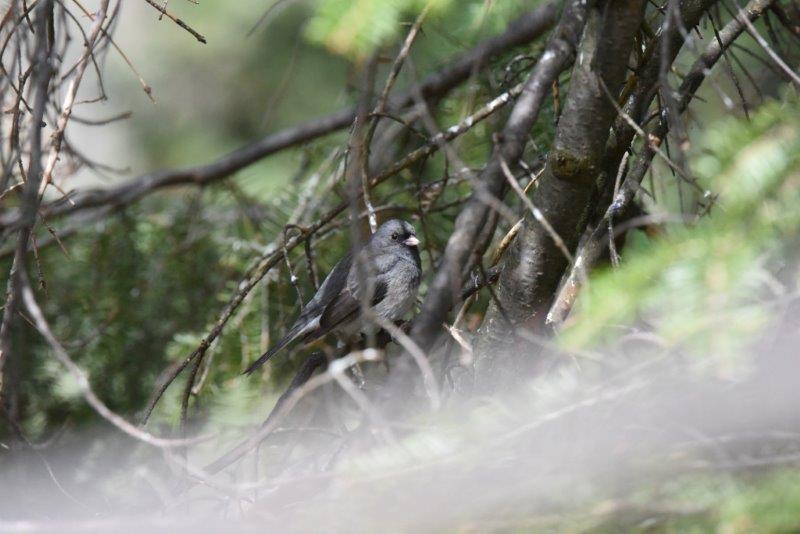
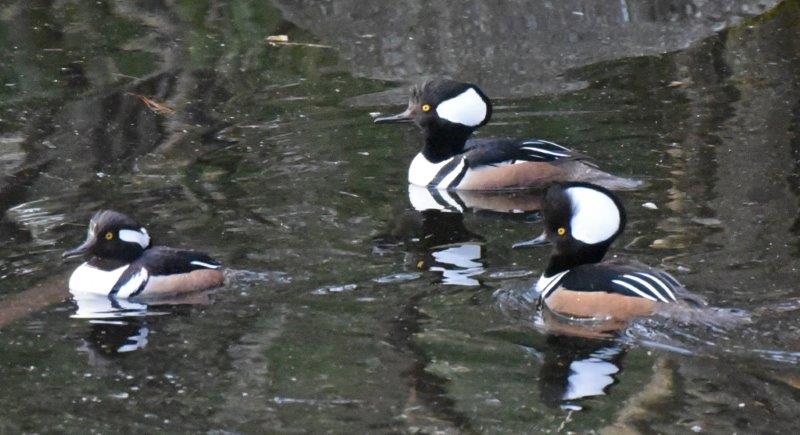
Birds are coming back in number. The great blue heron is standing in its usual spot beside the stream that drains Woods Lake. A purple finch added color to the birds at the feeder. Dark-eyed juncos are still here in number before scattering across the boreal forest of Canada. The day started with a tight flock of hooded mergansers flying past the window headed toward the merganser nest box. I was too slow to get across the room to see her enter, but a telltale feather was on the entry hole. The 8 males that were following her landed on the pond strutting their mating plumage with different degrees of crest erection.
 |
 |
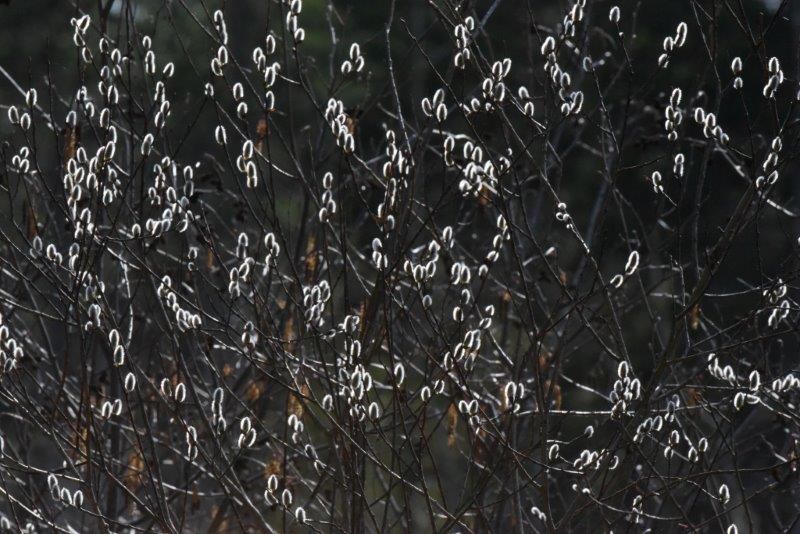 |
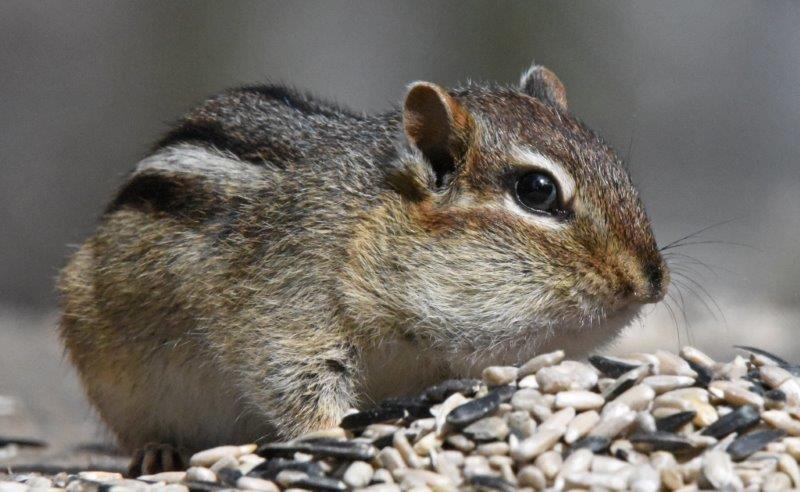
| Red maple leaves | Eastern chipmunk | Willow catkins |
 |
 |
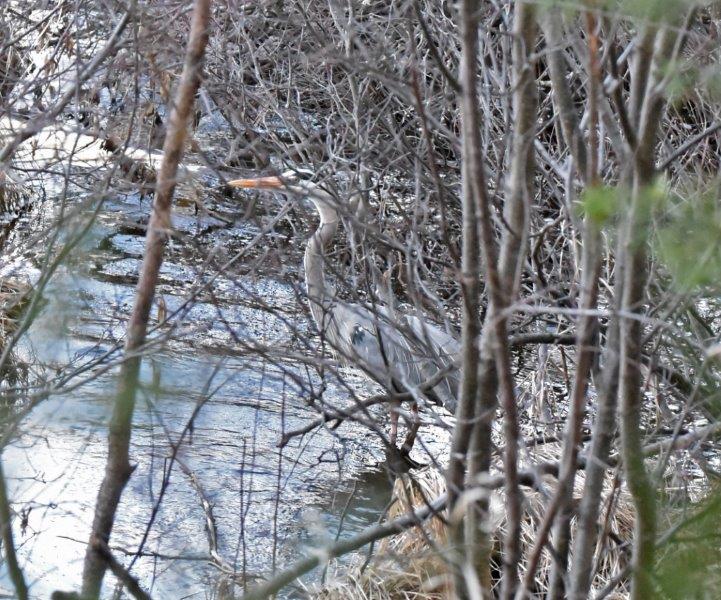 |
| Purple finch | Dark-eyed junco | Great blue heron |
 |
 |
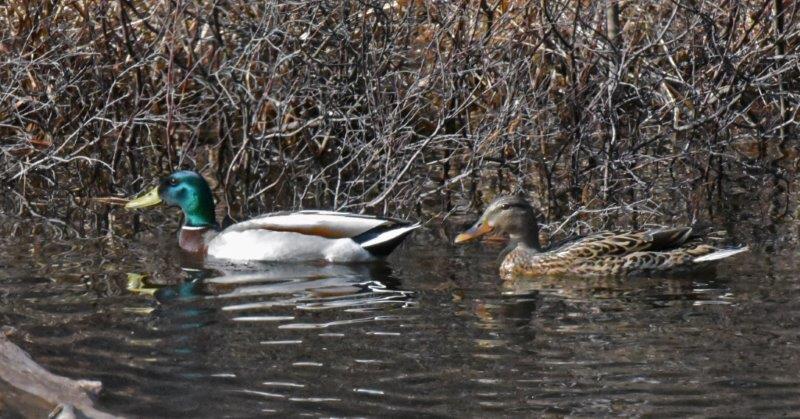 |
| Hooded merganser flying | Hooded mergansers | Mallard pair |
Eastern chipmunks are taking more than their share of bird seed. Instead of eating it, like a person would politely do at Old Country Buffet, they stuff their cheeks and store it and come back for more.
Thank you for all you do.
Lynn Rogers, Biologist, Wildlife Research Institute and North American Bear Center