
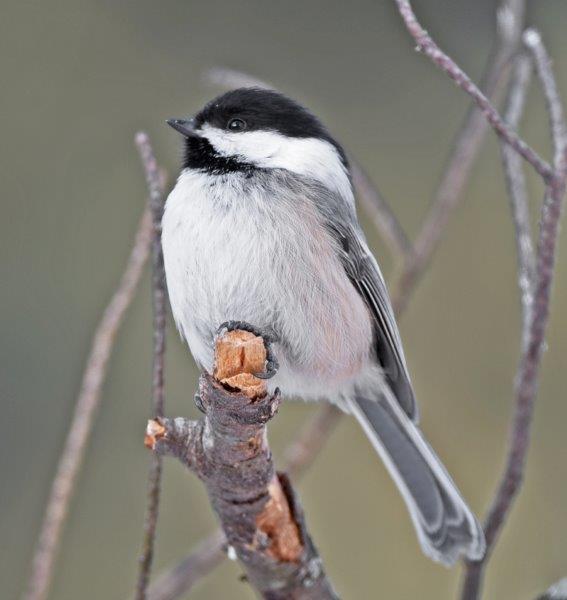
 Chickadee with white sidesDo Holly and Lucky know it is Valentine’s Day? They picked this day to resume their snuggling and hugging kind of play behind the wall of straw. A Lily Fan appropriately captured the action (5 minutes and 20 seconds) and labeled it “Behind the Wall of Straw https://youtu.be/run3GqVTdTA
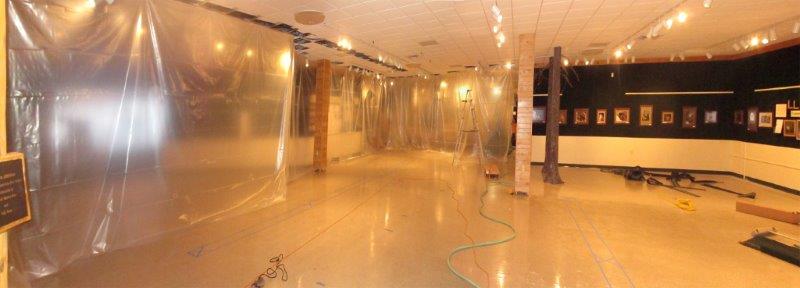
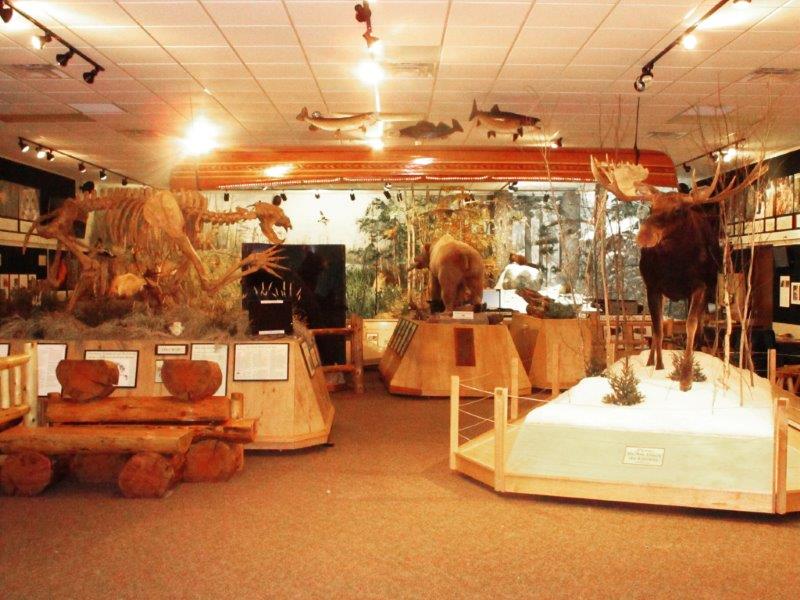
 Chickadee with buff sidesAt the Bear Center yesterday, the staff has cleared the decks for major progress to happen in the next few weeks. All the carpeted panels are down as shown in the panorama. The exhibits that were on them are in the Hope Learning Center classroom which has temporarily become a workshop. The bear mounts, etc., have mostly been rolled into the Ecology Hall to make room for work on the floor of the Bear Center. The plastic was hung in the Bear Center to keep dust from spreading too far. Workers will soon be chiseling into the cement floor to install electricity for the new beautiful wooden platforms that are being made to re-hang the exhibits.
On the other side of the plastic in the Bear Center, workers are attaching branches to the replica white pines in the Camping with Bears Exhibit.
 |
|
| Preparing for the new exhibits | |
 |
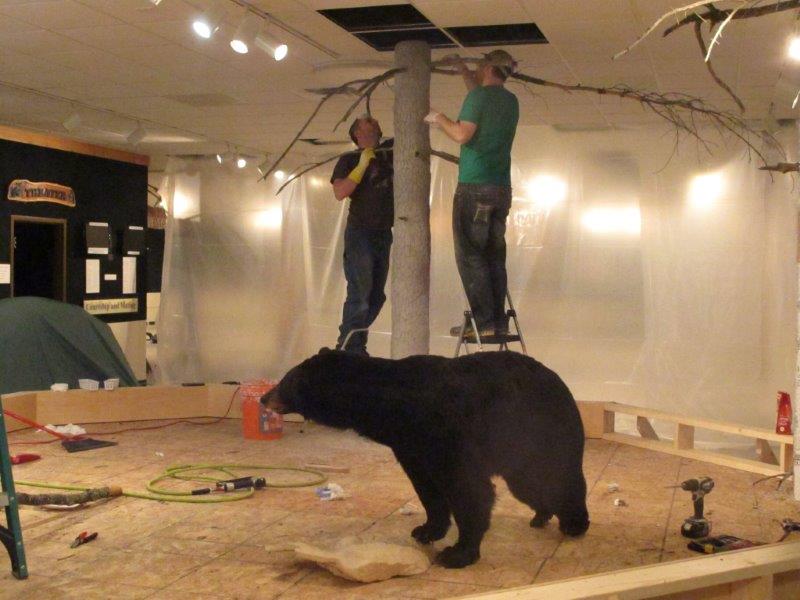 |
| Mounts have been moved to Ecology Hall | Attaching branches to white pine replicas |
Out the window, breast coloration of black-capped chickadees varies. Some have nearly white breasts. Others have a buffy wash on the sides of the breast. The pictures show one of each. The fresh plumage of black-capped chickadees in fall has the buffy wash. The buffy feather tips wear off over winter, leaving nearly white sides of the breast. Now, in mid-winter we apparently are seeing different degrees of wear. The buffiness of fresh plumage also varies with subspecies, but I believe we are far from any area of intergrade between subspecies, so I doubt if that is the explanation for different colors here. If someone knows better, please let me know, and I’ll correct the information in a future update.
Thank you for all you do.
Lynn Rogers, Biologist, Wildlife Research Institute and North American Bear Center