
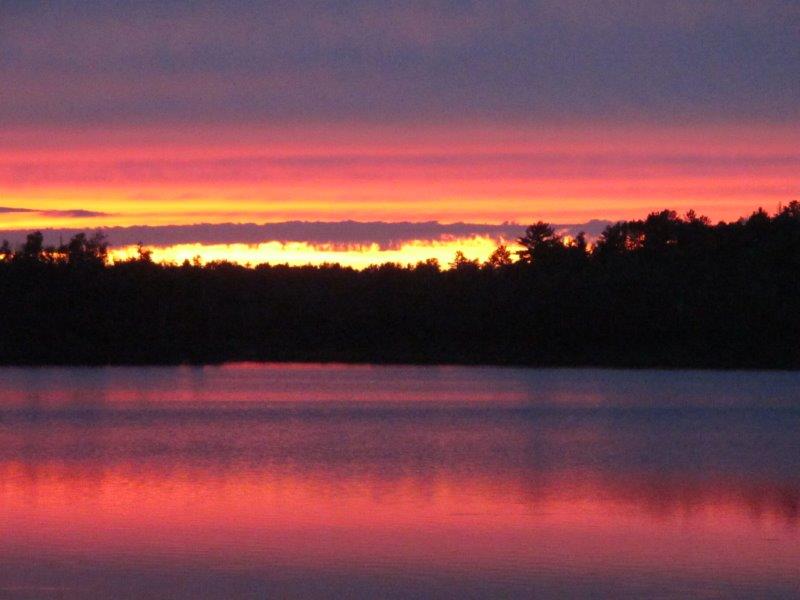
 Fire in the sky - 6/16/15 SunsetLast evening, when I started home about 9 PM, I glimpsed a very orange sun through the trees. It was already at the horizon and no way to clearly see it. I raced to places I thought might give a view. No luck. We get orange sunsets during forest fires, and this was a special opportunity to see a great sunset with one burning only a few miles away. Finally, although the sun had set, I saw the spectacular afterglow at Robinson Lake where the unusually rich colors were reflected in the water.
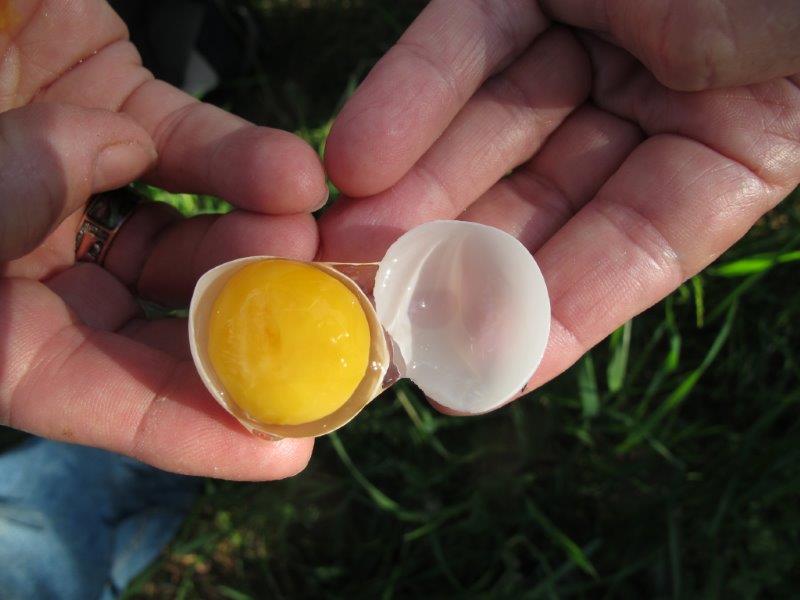 Broken snapping turtle eggToday, at the Bear Center, several of us worked on Ecology Hall exhibits. At the WRI, Mike and Lorie installed yard lights so course participants can watch bears interact as late as they want to stay up.
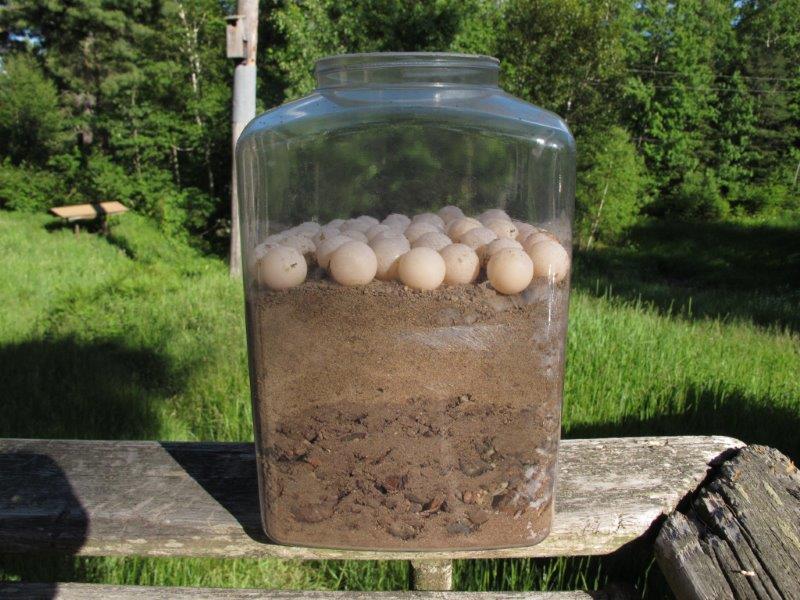 50 extracted turtle eggsLate afternoon, I got side-tracked. Peggy, our assistant bookkeeper, stopped by with a snapping turtle that had just been killed on the highway. The carapace was exactly 12 inches, and the turtle weighed 12 pounds. A retired nurse, Peggy felt the soft skin on the bottom of the turtle. She felt the outline of eggs. Would they hatch? We wanted to help. The snapping turtle is a species of special concern in Minnesota and Canada due to market hunting and low reproductive success.
 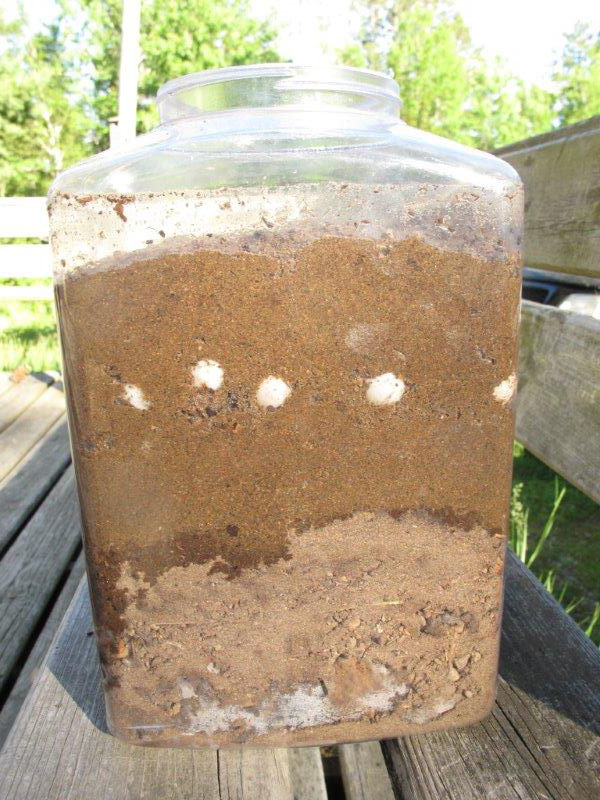 Eggs buried and hopefully incubating
Peggy neatly extracted all 52 eggs, including two that were broken—presumably by the vehicle. We looked up how to best help them hatch. We put sand in a clear two-gallon container, placed the 50 unbroken eggs on it, and covered them with more sand. The outer eggs will be visible to children in the terrarium section of the Ecology Hall, and maybe they’ll see them hatch around the end of summer. We hope we can give the local turtle population a small boost by releasing 50 newborn 1-inch turtles later this year.
Thank you for all you do.
Lynn Rogers, Biologist, Wildlife Research Institute and North American Bear Center
All photos taken today unless otherwise noted.