
 Least ChipmunkAgain we saw no hunters and heard no shots. But when a resident saw a guide crowding in on the community and baiting on private land without permission we called the landowner who had asked us to keep an eye on his land for him. He apparently, in turn, notified the DNR who sent two Conservation Officers to investigate, but they entered the woods more than a tenth of a mile from where the incident took place and likely did not find the bait. The resident photographed the truck, the license, the bait, and the no trespassing signs to send to the DNR. Two people witnessed the guide emerging from the private land with a bait bucket in hand and driving off. The community is getting fed up with not being able to walk their dogs on their familiar trails for fear of disturbing a hunter.
 Yearling BuckLynn spent most of the day at his computer and on the phone about the Northwoods Ecology Hall.
The USDA veterinarian and our local veterinarian viewed Ted’s x-rays together. Our vets are planning to have the x-rays scanned so other vets can view them and give more input. Nothing conclusive yet.
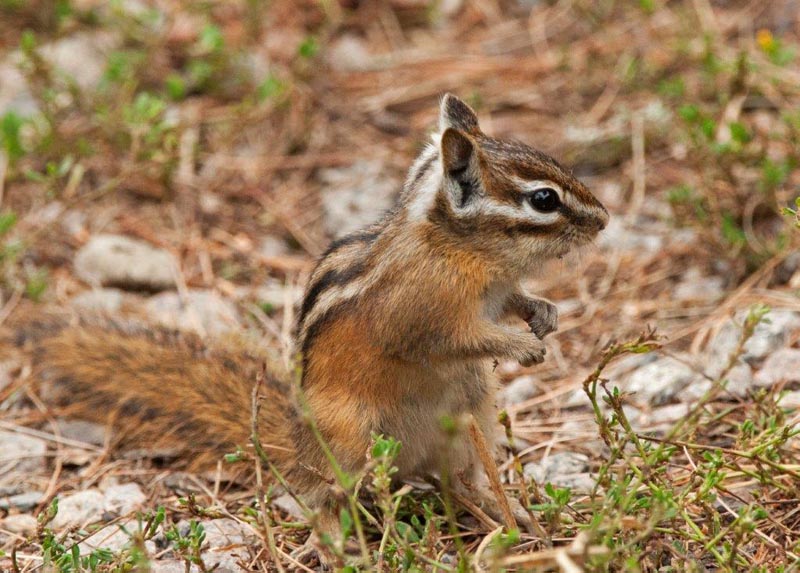
In the yard, we saw two least chipmunks (Tamias minimus), which are about a third the weight of an eastern chipmunk (Tamias striatus), which is much more common. Least chipmunks used to be much more common but have become something to comment about in the last decade. Few pay attention to these less conspicuous species, and numbers can drop drastically without much notice.
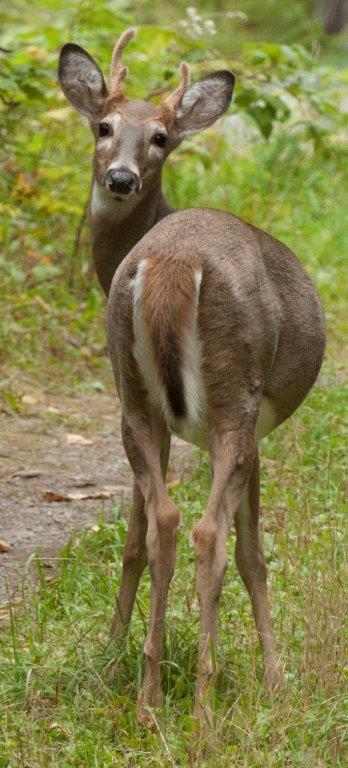
A yearling buck paused to watch a van stop for a picture as he ambled down a narrow forest road. He is a what is called a 3-point buck—one spike antler and the other a fork-horn—still in velvet.
The volunteer teams mapped bear trails without a glimpse of a bear today. They also began picking names for the cubs for the calendar and posterity. They also are creating good smells for us all to sit down to—thanks in part to your donations for their food.
Thank you for all you do.
—Lynn Rogers, Biologist, Wildlife Research Institute and North American Bear Center
All photos taken today unless otherwise noted.