
 Ted in Honey's ChaletThe Veterinarians presented Ted’s results at the Bear Center today.
Ted’s blood is normal, so the hypothyroidism concern is not an issue. Results were non-conclusive for Ted’s foot pad problems and we are still waiting for the x-ray results.
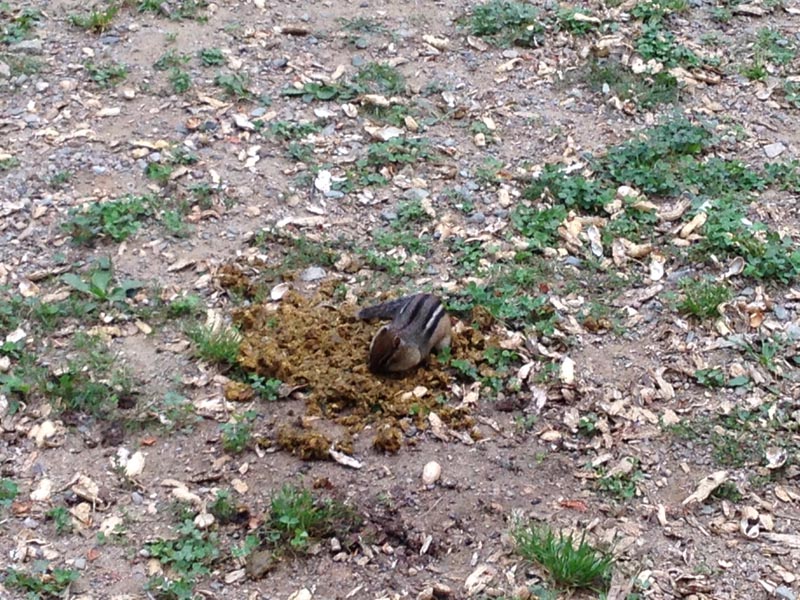 Chipmunk eating nuts in scatHis hair loss problem is due to Peloderma sp., a tiny round worm (a nematode) parasite previously found in dogs, cattle, horses, sheep, and bears. Ted is the third case we know of in bears. The first was a captive black bear. The second was wild 26-year-old Midge J_VET_Diagn_Invest-2012-Dykstra-1125-8.pdf And now Ted. The veterinarians prescribed Ivermectin, a common anti-parasite medicine. Peloderma breeds in damp vegetation and rotting vegetation, so the staff moved Ted to the higher, drier pen that Lily Fans raised money for and that our dedicated volunteers helped construct.
Between Lily Fans, the Staff, and the Veterinarians, Ted is in good hands.
 Red Squirrel in bear penBear Curator Sharon Herrell described Holly taking her food bowl: ”Last night Holly came to the fence to get her bowl of dinner. She stood up and received the bowl by cupping her paws together. Holding it in place, she took 2 steps backwards, put the bowl in her mouth, and placed it on the ground. It was amazing to see her do that. I was so taken I couldn't move for a couple seconds. Just sharing my experience with my very smart little bear.”
The staff caught some of the bears’ competitors in action—a snowshoe hare, a red squirrel, and an eastern chipmunk.
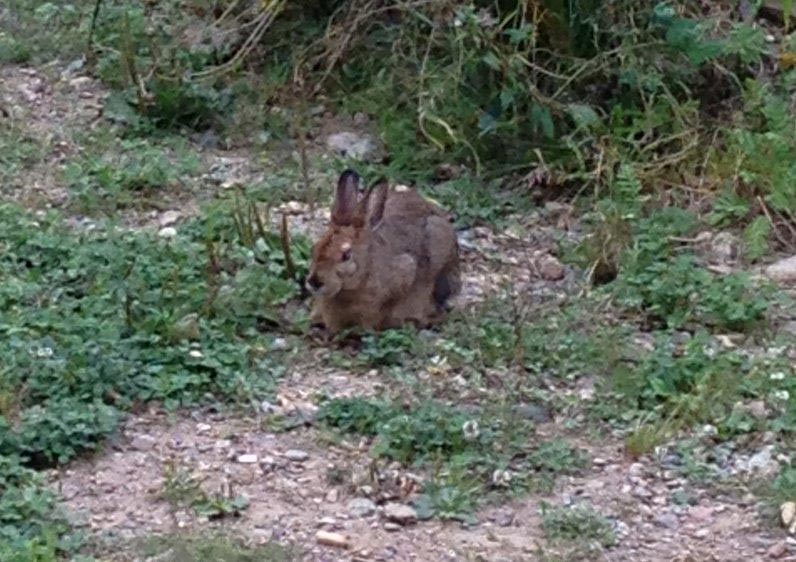 Snowshoe Hare in penOn the project to map bear trails and record reactions of bears seen in the process, we thank you for the continued donations to our paypal account (directed to
Thank you for all you do.
—Lynn Rogers, Biologist, Wildlife Research Institute and North American Bear Center
All photos taken today unless otherwise noted.