
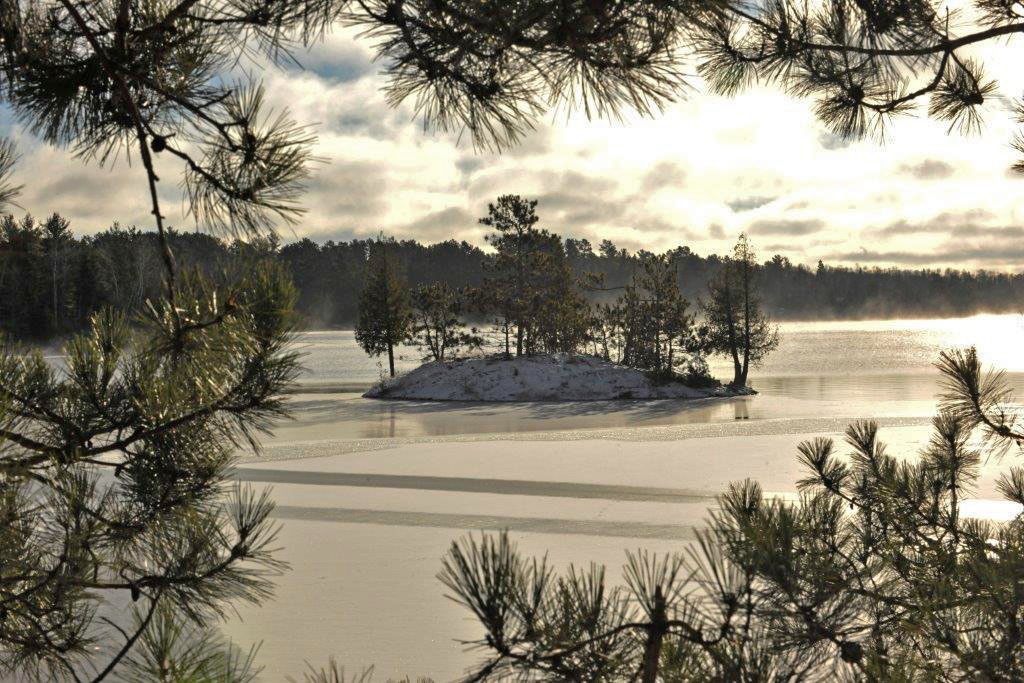
 Eagles Nest Lake One ices upTemperatures down around zero overnight made additional ice on the deeper lakes that are still somewhat open. Here on Eagles Nest Lake One, ice now stretches farther from shore—to the island in the picture—with open, steaming water beyond. The difference in the snow covered ice closer to shore and the bare ice near the island is visible. The bare ice formed after the snow ended last night. Dark lines on the ice are from water seeping up through cracks that formed as the ice shrank with dropping temperatures.
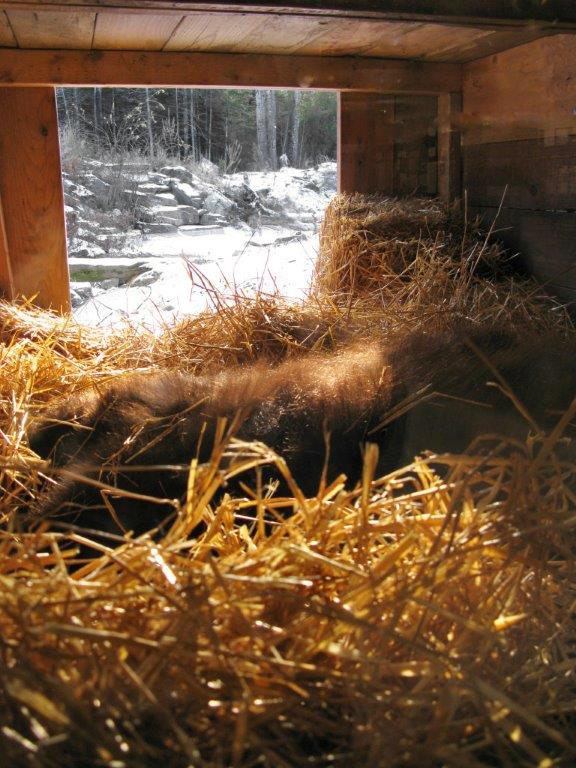 Honey in window denHoney bear at the Bear Center became much more lethargic in the last couple days and is snuggled deep in the straw in her favored wooden window den.
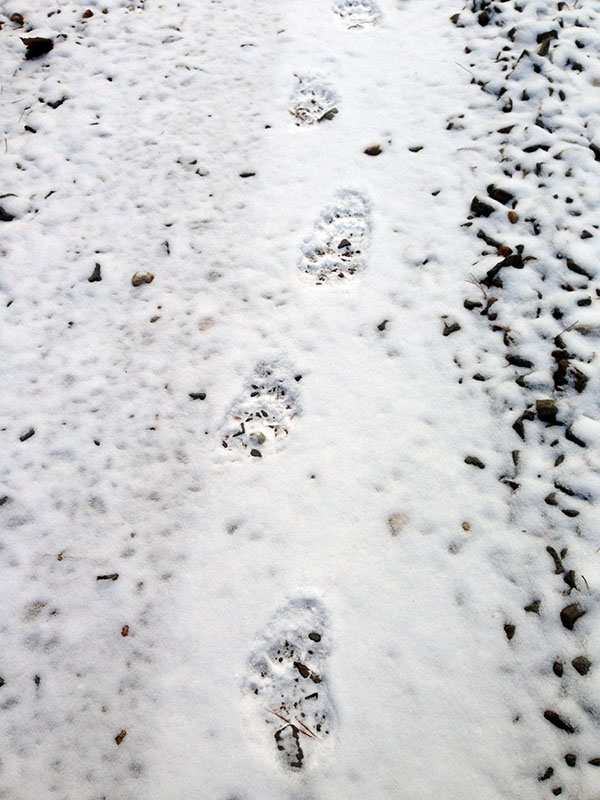 Tracks of mystery bearIn the study area, the skittish mystery bear continues to visit a community feeding station and continues to elude identification from the trail cam pictures. We’re hoping the small white streak on the left front of its chest will help as we peruse pictures people in the community have taken. We know he is familiar with the feeding stations because we tracked him to one that has no food. He knew enough to check it. Trail cams showed the second night of his visit to a community feeding site to be from 2:14 AM to 3:04 AM on November 22nd. His next visit was a little after 10 PM on that same date. This evening, November 23, the bear was there about 6:30 PM.
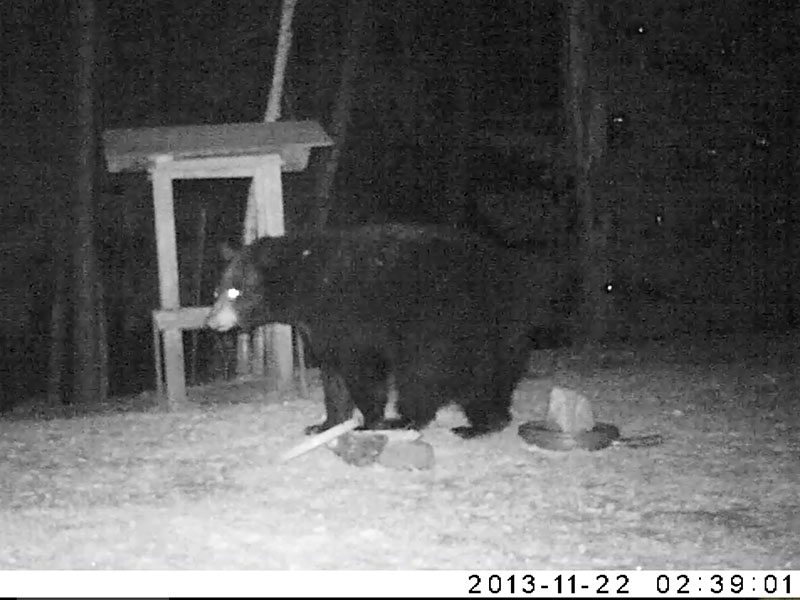 Mystery bearThis is the latest we know of any bear staying up in the current study and it comes close to tying a sad record we recorded in November 1970. In that case, a gut-shot bear moved among several dens until she died on November 24. No healthy bear came close to that date before today.
 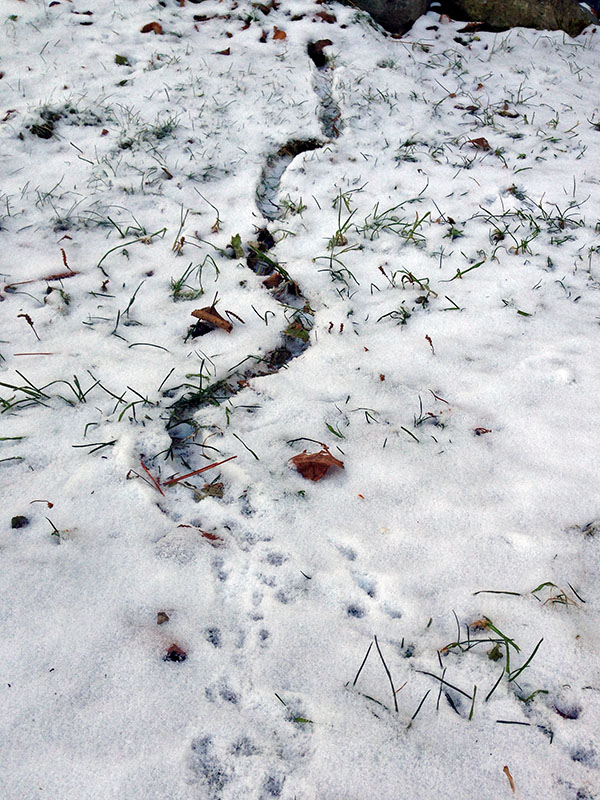 Vole tunnel and tracksHowever, staying up later into the fall is common in the eastern deciduous forest where bears evolved annual cycles of behavior and physiology that let them take advantage of fall oak, hickory, and beech crops. For example, in eastern Tennessee, bears typically enter dens in late December or early January according to a study by Ken Johnson and Mike Pelton back in 1977 and 1978.
The snow today was perfect for tracking. The vole burrow through the snow shows its depth.
Thank you for all you do.
—Lynn Rogers and Sue Mansfield, Biologists, Wildlife Research Institute and North American Bear Center
All images taken today unless otherwise noted.