
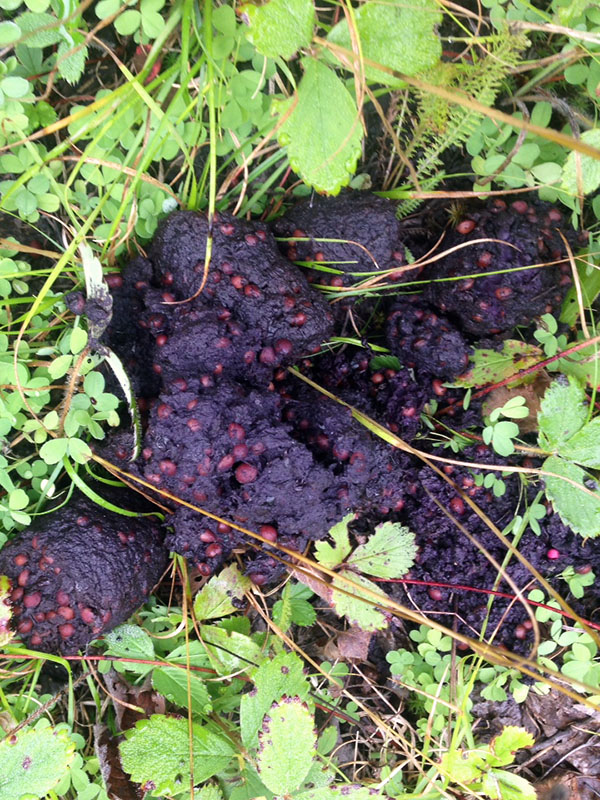
 Faith's chokecherry scatAmong other things today, Mike and Lorie caught up with Faith to change her GPS batteries and see what she is up to. Faith had found a big stand of chokecherry (Prunus virginiana) trees still loaded with cherries. A scat nearby showed what she had been eating—totally cherries. Ant pupae are about done, and the scat contained none. Some bears are raiding hornet nests for larvae, but one wouldn’t expect that to be a big food this year with the late spring giving hornets a late start. Hornets wouldn’t have been able to expand exponentially to the large numbers as we see in years with early springs. The scat contained no hornet larvae.
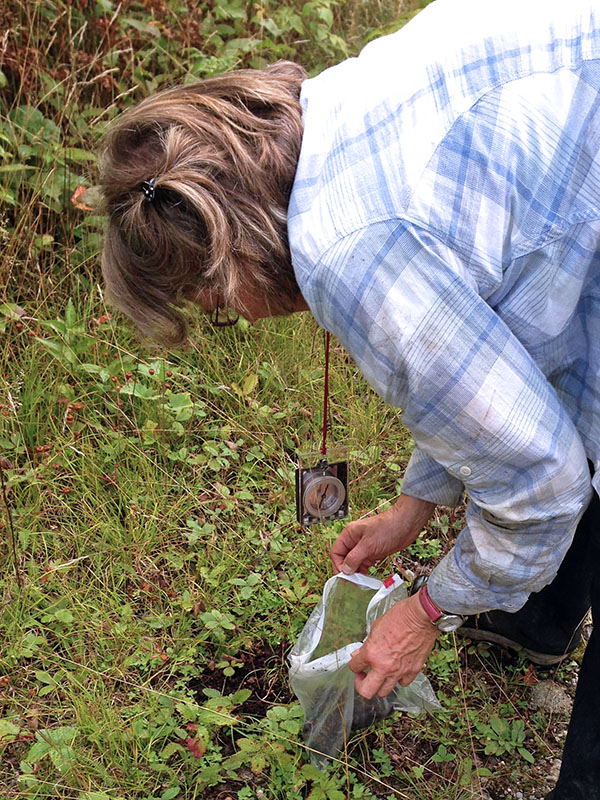 Lorie retrieves scatA medical doctor volunteering at the Research Center was an expert at counting pills—so counting cherry seeds shouldn’t be that different. She was elected/volunteered to count the 1,554 cherry seeds in the 275-gram scat. If Faith made 6-9 scats as we’ve typically found in a day of eating berries, her day’s work would have included eating roughly 9,000 to 14,000 cherries.
 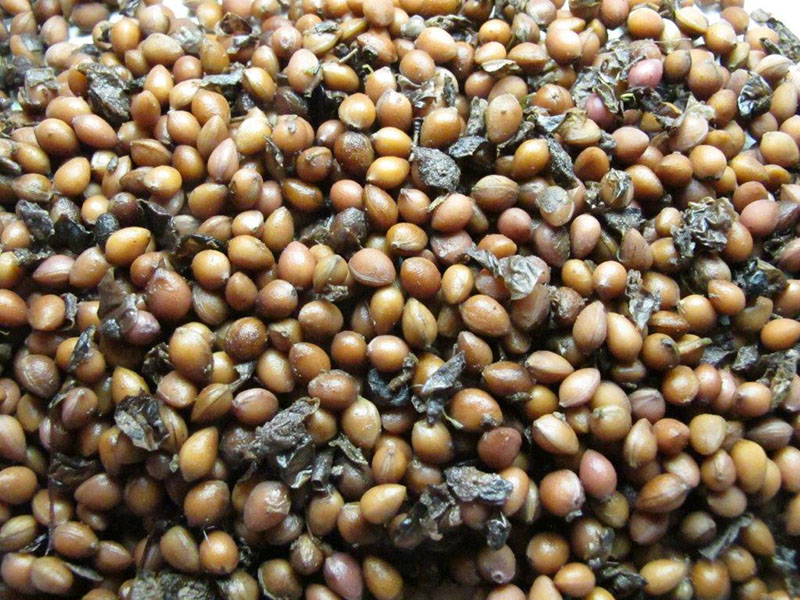 Chokecherry pits ready to countThat would make it worthwhile for her to stay in that general area day after day as she has been doing. No wonder she hasn’t visited any residence or feeding station this summer.
Aster arrived at her current location by 8:19 PM last night. She spent the day in an area only 56 yards in diameter—a far cry from her wide-ranging travels before she was shot. She did not change her location today like she has other days, so this remote site may have been her intended destination.
We received this poignant poem today:
Aster's Prayer
Susan Adams Moloney, September, 2013
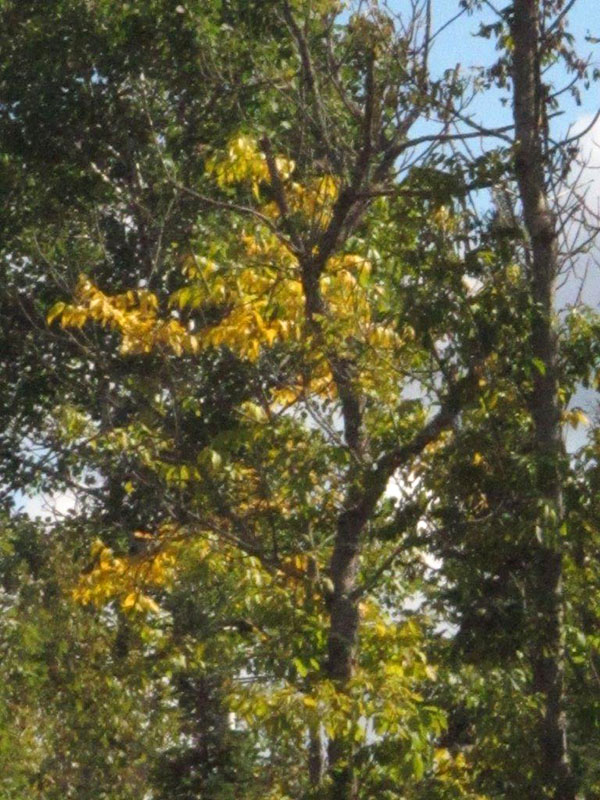 Black ash leavesOn another topic we thought Charlie Russell’s words about trust and bear safety were good, too, at http://moonmagazine.org/charlie-russell-life-among-grizzlies-2013-09-01/. That kind of coexistence is mostly what we see here in the Eagles Nest Community and it is what we saw with grizzlies in Katmai National Park where big bears walked past people with hardly a look and no aggression.
A sign of fall: black ash (Fraxinus nigra) leaves are turning
Thank you for all you are doing.
—Lynn Rogers and Sue Mansfield, Biologists, Wildlife Research Institute and North American Bear Center
All photos taken today unless otherwise noted.