
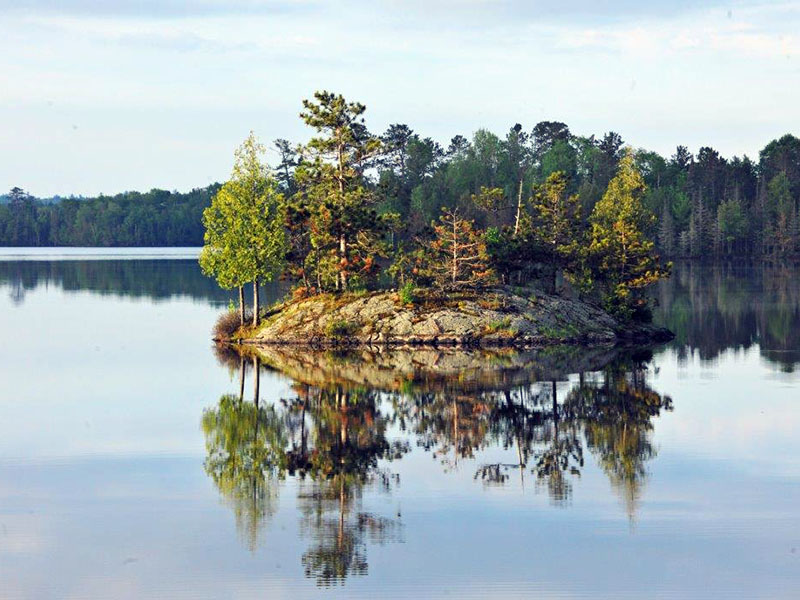
As dawn mist and mirror calm lakes gave way to clear skies and wind, the light was beautiful.
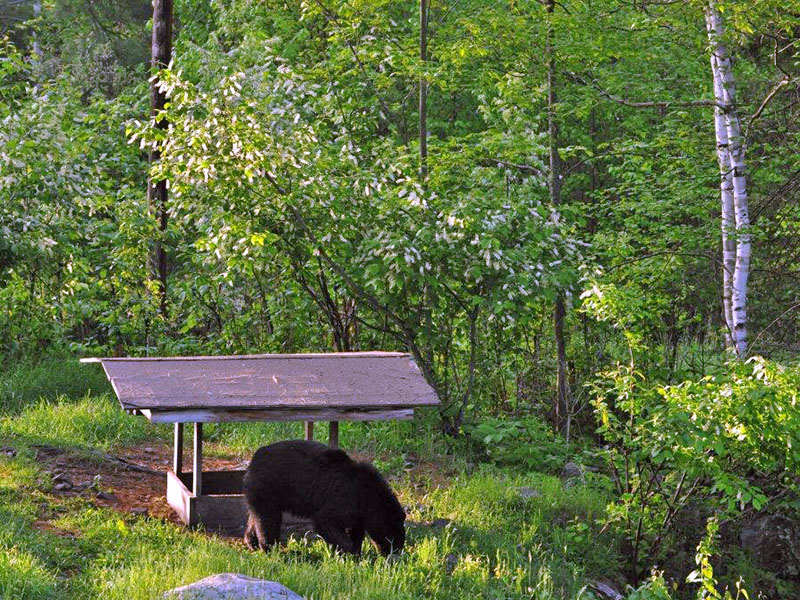
A bear staying out of trouble at a bear feeder while it waits for the chokecherry blossoms overhead to turn into berries.
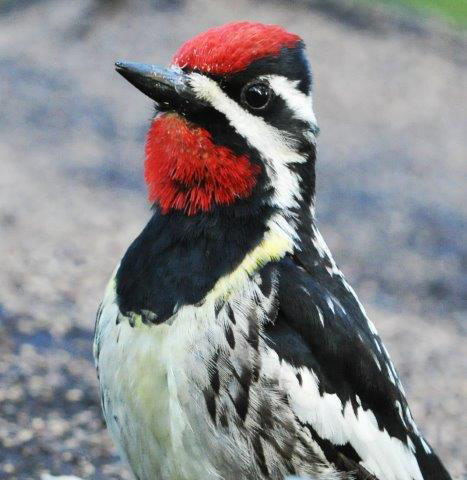
A male Yellow-bellied Sapsucker (Sphyrapicus varius) showed off its red head and throat in the sun.
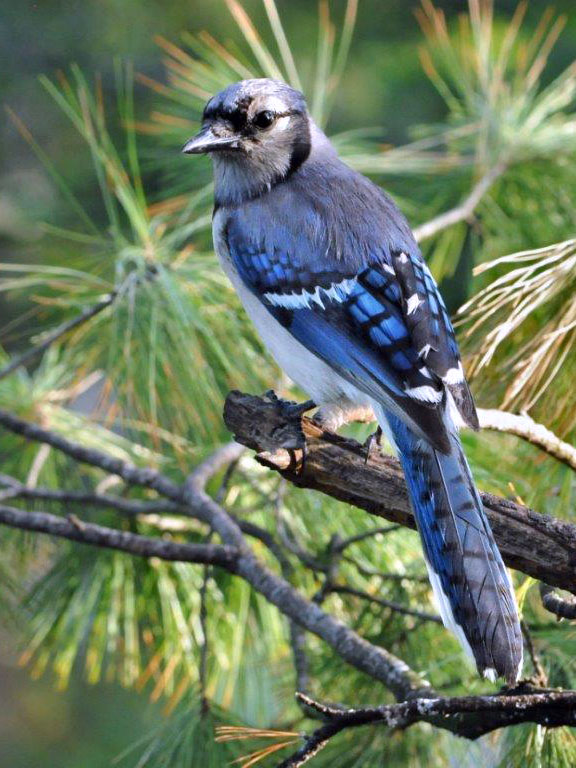
A blue jay showed how its back reflects blue in the sun without having any actual blue pigment.
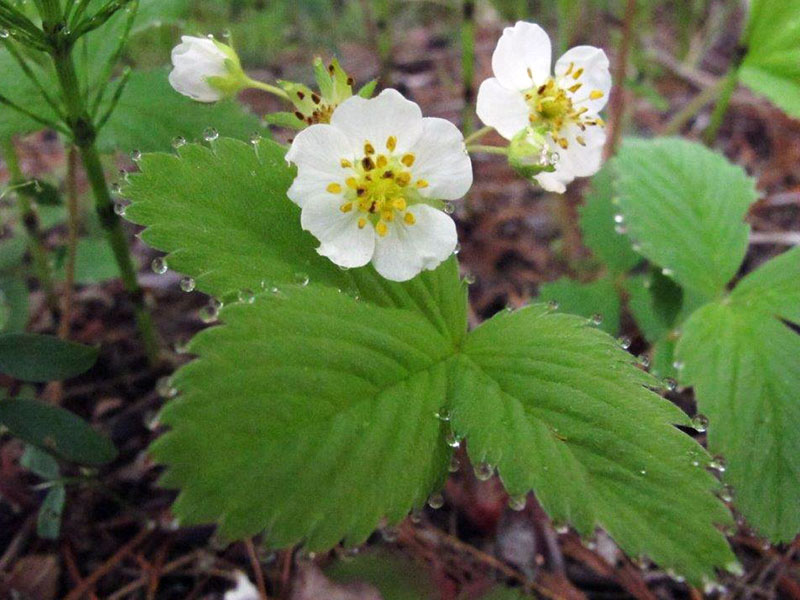
Strawberry leaves were tipped with dew.
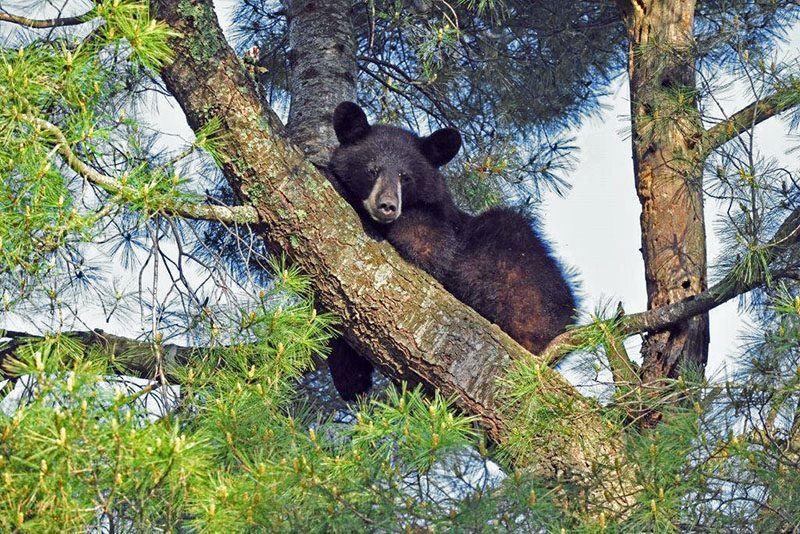
High in a white pine, a bear overslept the sunrise. He hadn’t gotten the memo about bears arising a half-hour before dawn.
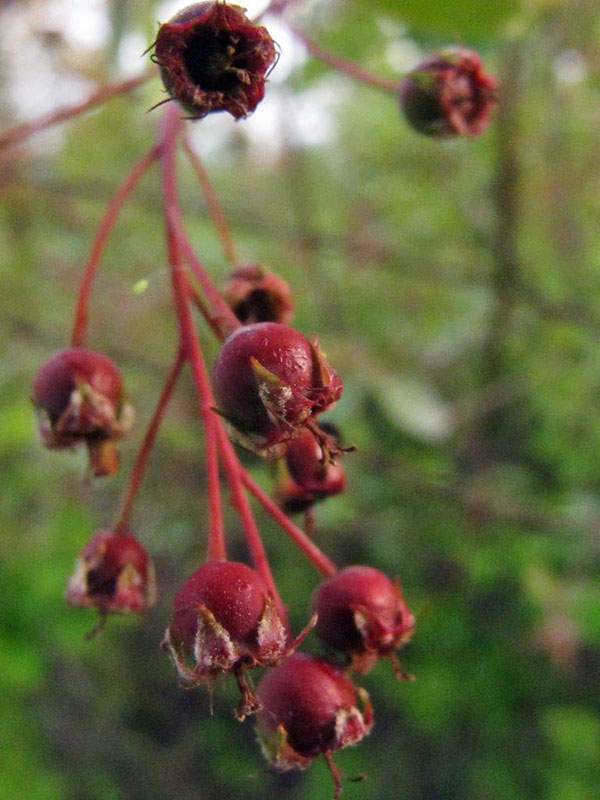
In sunny areas, Juneberry bushes are setting fruit and looking for rain to become plump and ripe. The abundance of blossoms is truly turning into fruit.
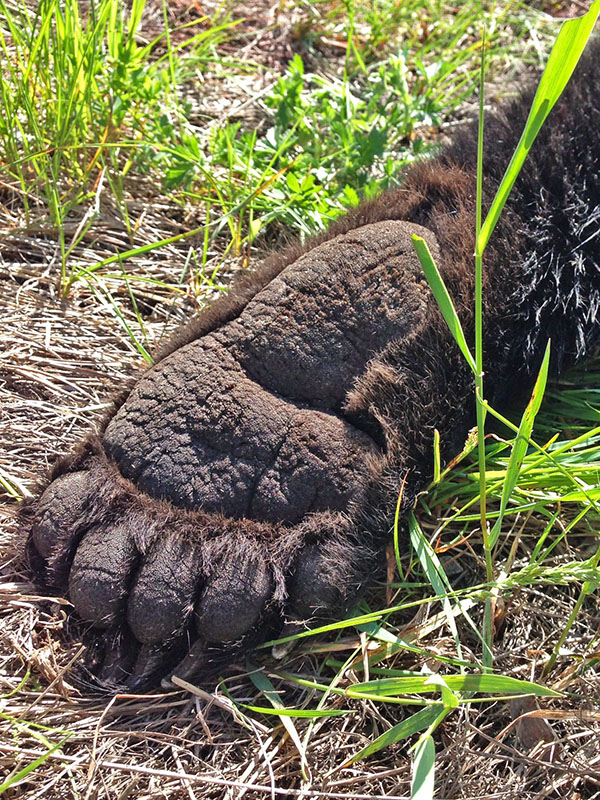 Rear FootThen word came that a medium-sized bear was lying dead beside the highway with a smaller bear in attendance. We checked. The dead bear was a male new to the area. We had seen him a few times this year but didn’t recognize him from previous years. Looking at his teeth, he was older than we initially thought from his size—maybe 10 or so, judging the distance from his gum to the beginning of enamel. The teeth continue to slowly erupt with age. The point where the enamel of the crown meets the cementum covering of the root reaches the gum line at about 3 years of age and continues to move beyond the gum line a little each year.
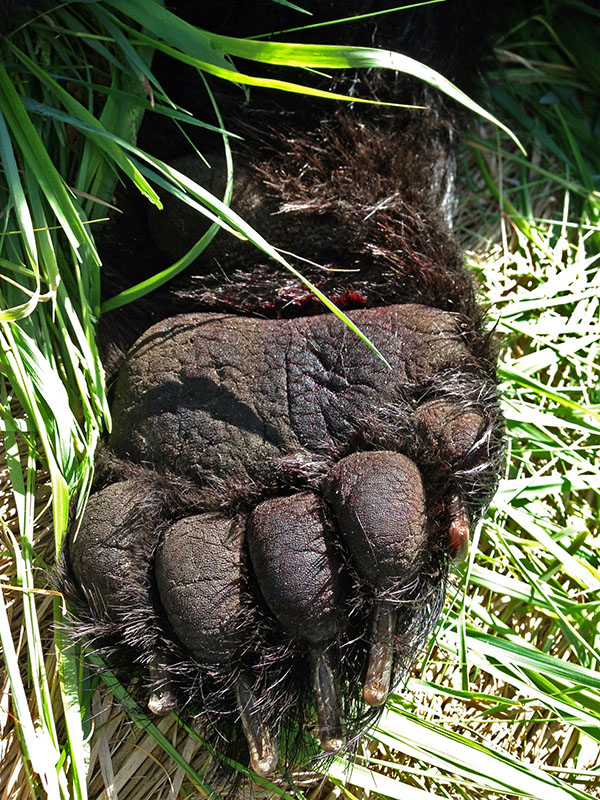 Front footHe had been dead for hours, judging from his stiffness and bloating and the dozens of ticks exiting the fur. Yet his mate remained at his side until traffic picked up and people stopped to look. She was no longer visible at midday when we returned with help from the neighborhood to get his weight (295.0 lbs) and take a small premolar tooth to have aged more precisely by counting the number of cementum annuli.
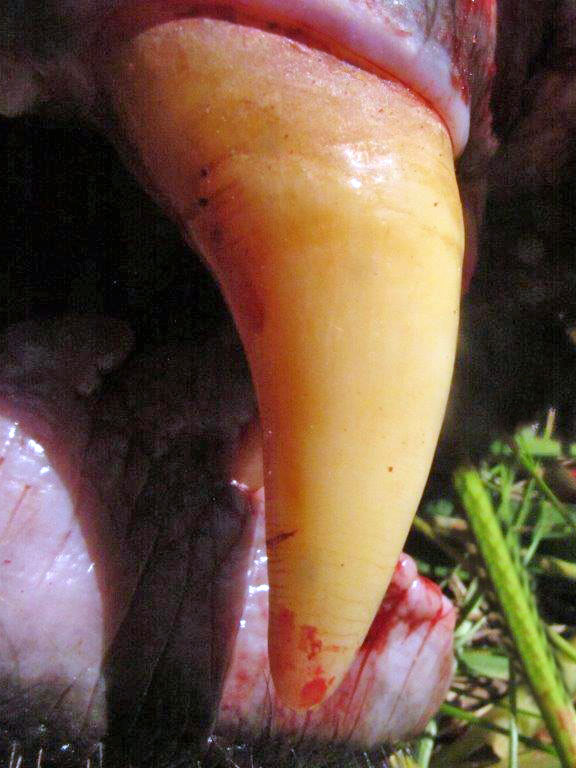 Canine toothOut in the woods, research associate Lorie Kennedy tracked down Juliet to change her GPS batteries and Aster to swap out her GPS unit. She attempted to connect with Lily to get her back on the map, but Lily was moving away. We’ll try again tomorrow.
Thank you for all you do.
—Lynn Rogers and Sue Mansfield, Biologists, Wildlife Research Institute and North American Bear Center
All photos taken today unless otherwise noted.