
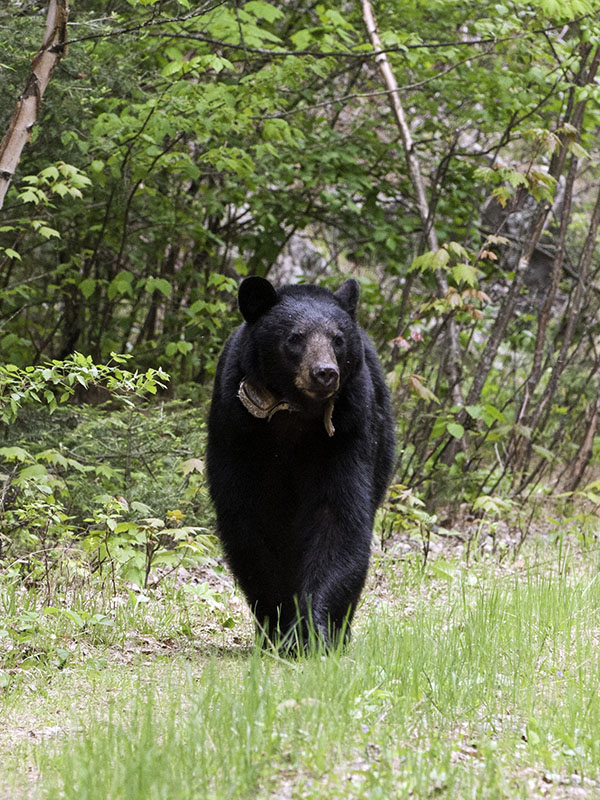
 Jewel still aloneJewel is still on the move and perhaps wondering where the big males are. People who are used to seeing bears are asking where they all are. They’re out in the woods somewhere, we believe, finding food and (especially) females in this delayed mating season. We say delayed because family break-ups are running nearly 2 weeks later than the average May 25.
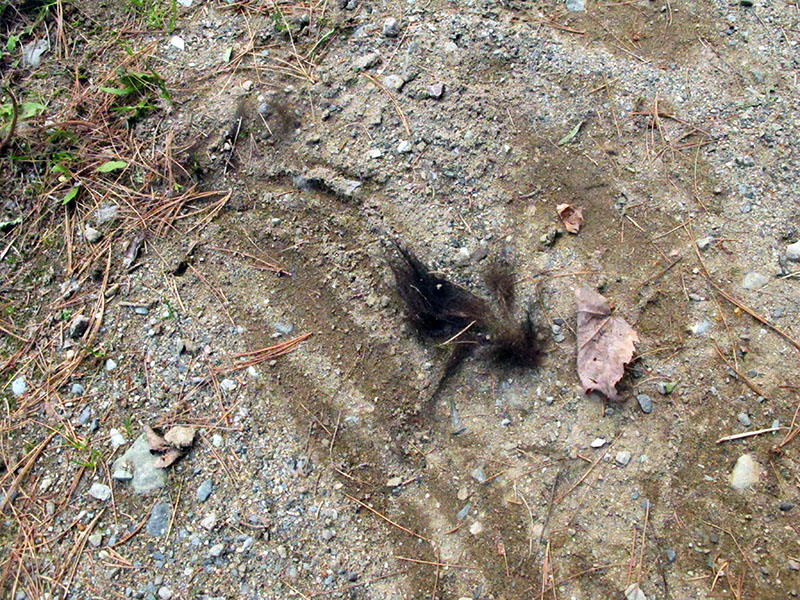 Signs of mating battle - June 6, 2013Jewel’s GPS locations showed her to be approaching a good spot to check whether a male was accompanying her. Nope. She was alone. We wanted to check her for estrus when she was on the scale at the Research Center a couple days ago, but she was a little touchy about that, so nobody dared try.
Samantha still has her yearlings with her. We were mistaken a few days ago when we thought one of her male yearlings was temporarily separated from the others. 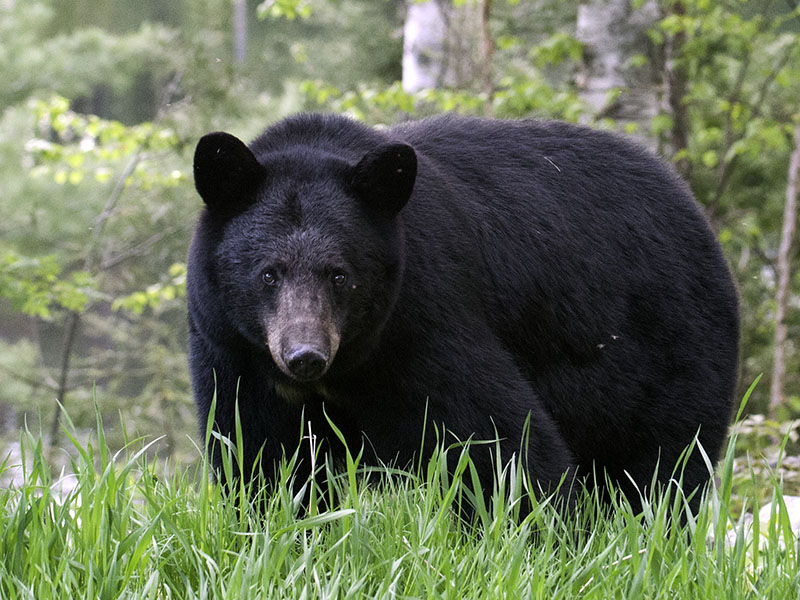 BowHis face had the same pattern as one of hers, and his weight (40-something) was similar as well. It is a strange male we don’t recognize. We’re still looking for pictures for comparison with males in other litters, but we wanted to keep the record straight on the erroneous report. He is separated from somebody, but it’s not Samantha.
Bow put in an appearance at the Research Center today. She has 2 new cubs this year.
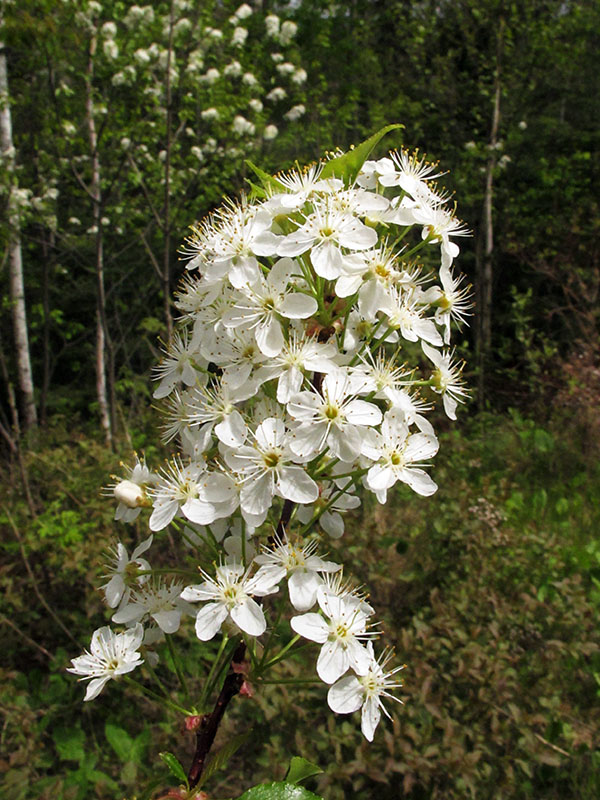 Pincherry blossomsPincherry trees (Prunus pensylvanica) are loaded with blossoms. The blossoms on their cousin, chokecherry (Prunus virginiana), are just beginning to open and look to be loaded, too. The likelihood of a killing frost is becoming remote. We’re hoping for lots of juneberries, pincherries, and chokecherries to keep the bears out of trouble.
 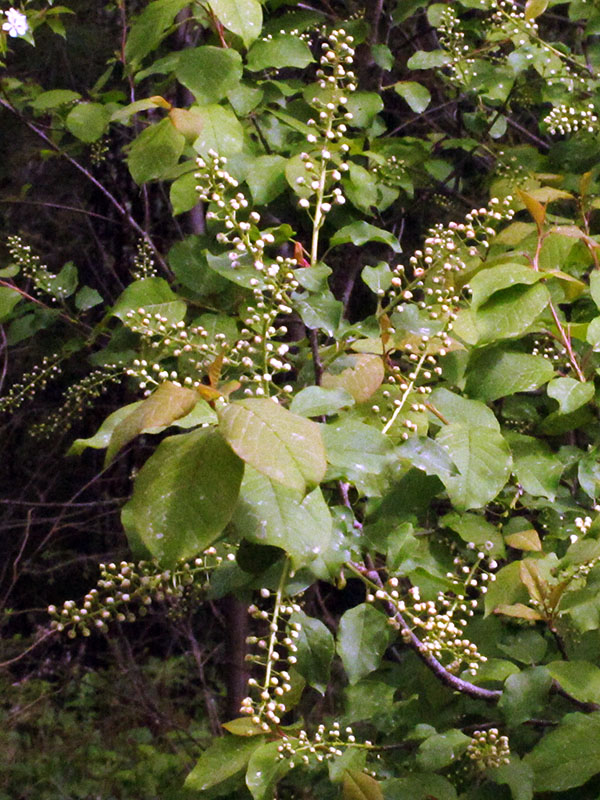 Chokecherry budsAnother favorite, wild sarsaparilla (Aralia nudicaulis), that was shown in last night’s update, had full sets of healthy looking buds. Juneberries and sarsaparilla berries are major favorites. Blueberries (Vaccinium angustifolia) have lots of blossoms this year, too, but are more highly favored by people than bears. Given a choice of blueberries or sarsaparilla berries, bears choose the sarsaparilla berries and people choose the blueberries.
I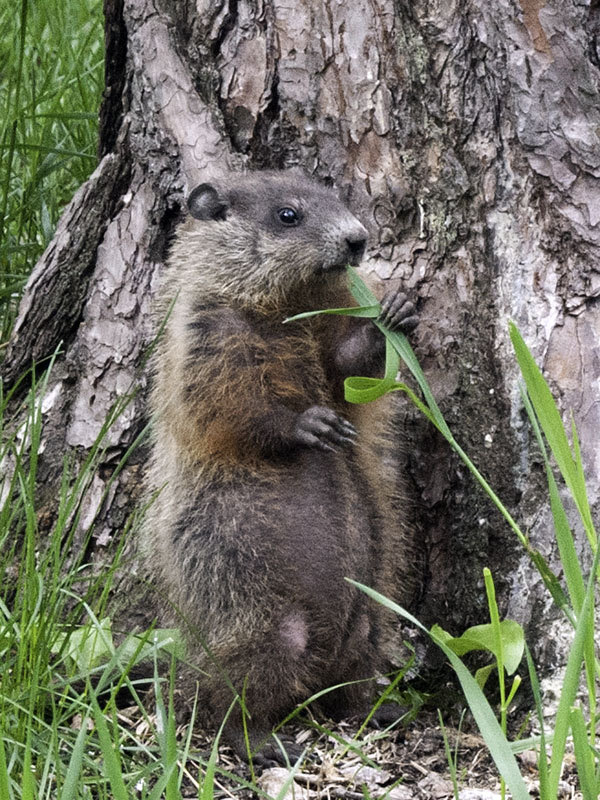 Young woodchuck eating grassn the yard, the woodchuck youngsters are getting bigger. Soon it will be hard to tell them from their mother.
At the Bear Center this morning, Lucky and Honey had an interaction that showed Lucky is doing fine after the surgery. A concern we’ve heard is that neutered males can become targets for the other bears. Lucky ventured close to Honey, who was cornered against the fence. She blew and chomped her jaws. 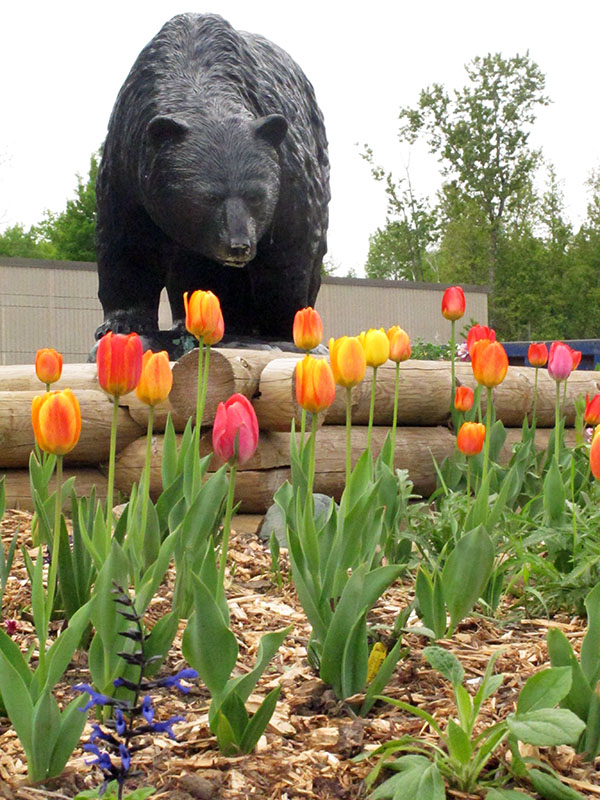 NABC tulipsUnconcerned, Lucky came closer. She lunged at him with her mouth open. Lucky half stood up defensively but seemed confident that no harm would come. His face looked calm. They were inches apart. It was just talk. Neither tried to bite the other.
From his calmness and her chomping, we judged that Lucky was slightly dominant and above all peaceable. We suspect that it would be okay to have Lucky and Ted meet, but we would just as soon wait until after mating season for that to be on the safe side.  Inside the new additionThe staff is willing to do the extra work to keep them separated until then.
The cement floor in the Hope Learning Center is hard enough to walk on. Out front, Donna Rogers’ tulips look great. Other volunteer Lily Fans are busy there today, too.
Thank you for all you do.
—Lynn Rogers and Sue Mansfield, Biologists, Wildlife Research Institute and North American Bear Center
All photos taken today unless otherwise noted.