
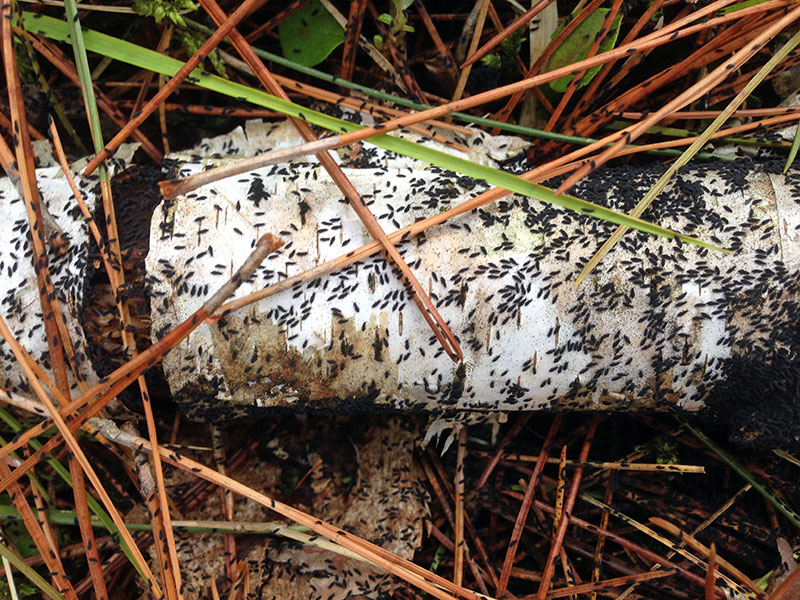
 Snowfleas (Collembola) on birch logThe long rainy spell broke and we took advantage of good weather to do much-needed field work. The GPS units give us incredibly detailed data, but they do require regular maintenance—new batteries every 10-12 days.
Aster had been off the map for several days, so she was top on our priority list. Jewel’s GPS was still transmitting, but the batteries were on day 11 and she was easily accessible, so we planned to make her our first stop.
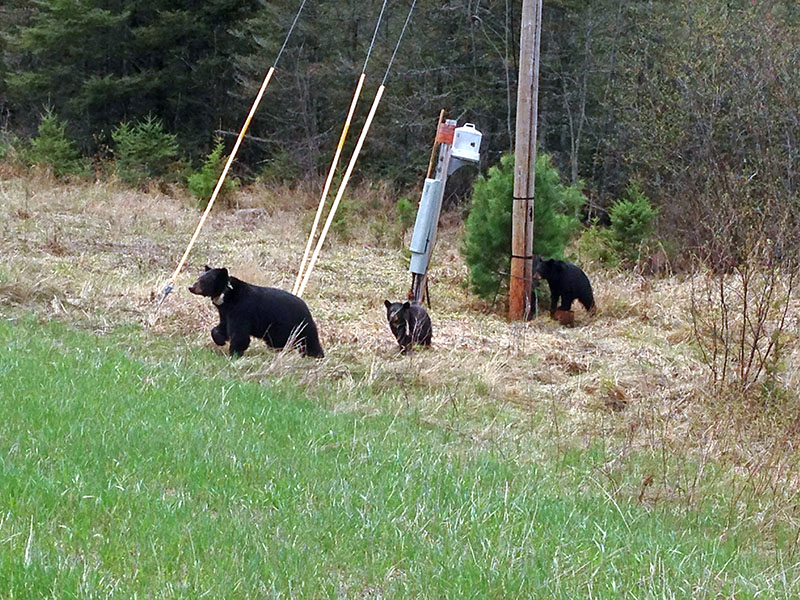 Jewel and yearlingsAs we pulled over where we planned to walk in to Jewel, we caught sight of her and her yearlings marking a utility pole along a power corridor. They ran into the woods as we approached—which is what we had hoped for. We didn’t want to work on her collar within sight of the road. We easily met up with them, did the deed, and we on our way to find Aster.
We had a bit of a hike to get to Aster, but most of it was along a good trail so it was quite a pleasant walk on this bug-less sunny spring day. It doesn’t get much better. We were able to intercept Aster without much trouble and got her back on the map.
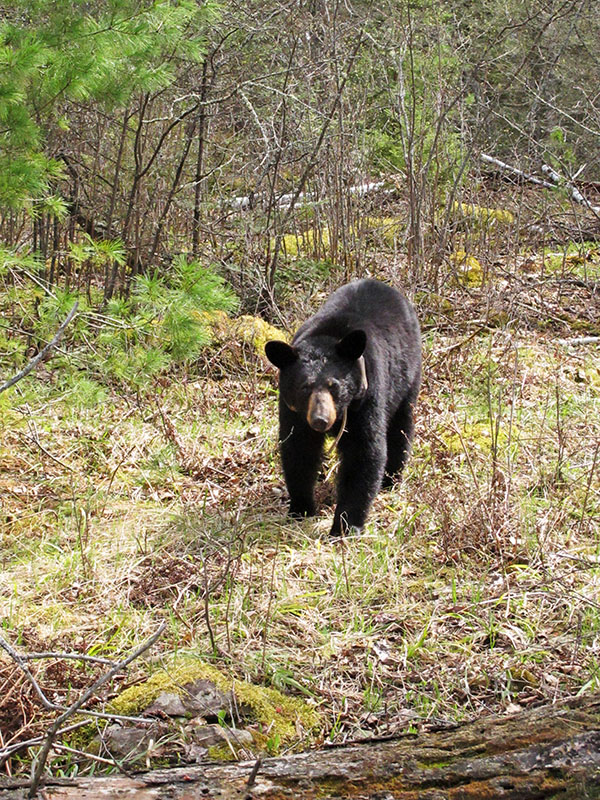 Aster approachingThen it was on to Ursula. We had two reasons to check on Ursula. She needed a battery change, plus she had had an encounter with Juliet earlier today. At 8:28 AM this morning, Juliet began a move in Ursula’s direction—arriving at Ursula’s bed tree at 11:18 AM. Ursula left the area at 11:45 AM and Juliet remained there until 1:39 PM. Had Ursula’s cubs moved with her? Unfortunately we weren’t able to answer that question. We found Ursula alone. However she was relaxed so we’re pretty confident all is well and her cubs were just high in a tree beyond our sight.
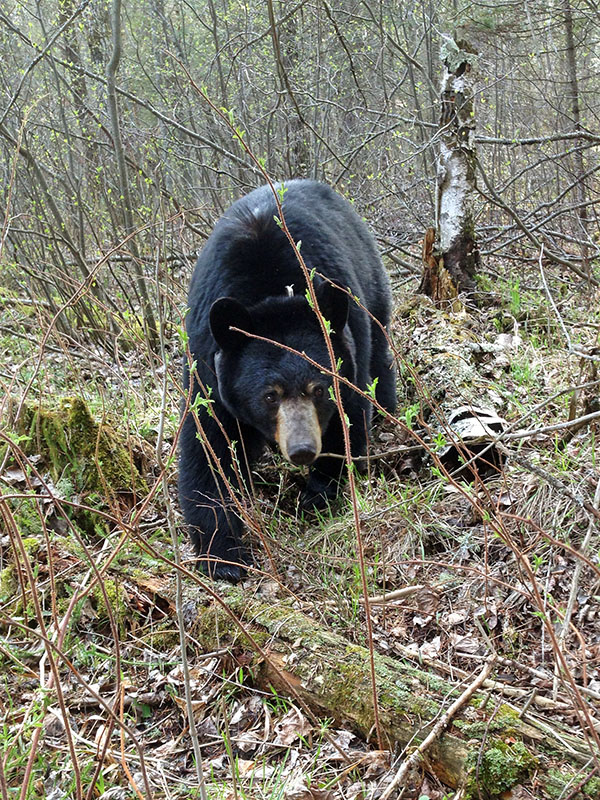 Ursula approachingShortly after leaving Ursula’s bed tree area, Juliet surprised us by traveling at least 10.5 miles per hour to cover 10.15 miles (straight-line distance) in 58 minutes! We strongly suspect her travels were part of family breakup. We attempted to confirm that fact when Juliet returned to her territory, but she was moving away from us too fast to for us to catch up. In my old days of getting one location per day for each study bears, I would have entirely missed this dramatic movement. As much work as it is to keep these units going, it is well worth it.
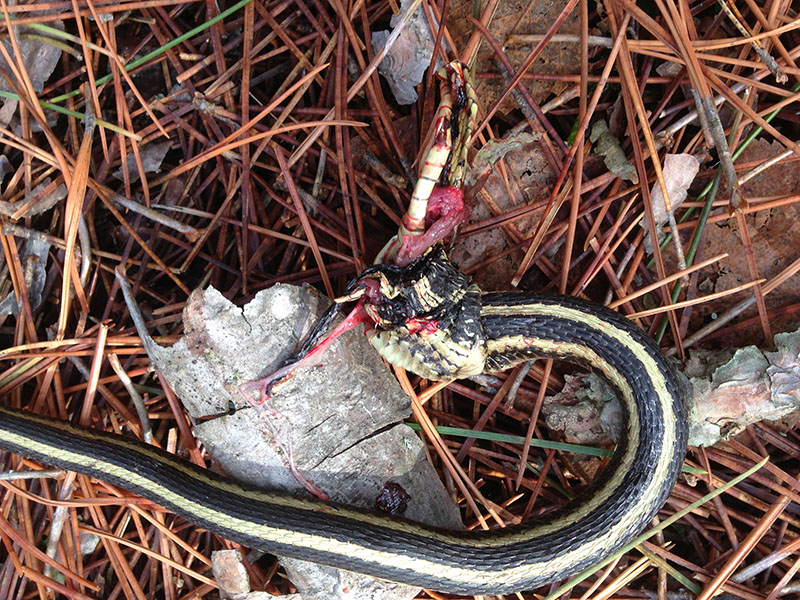 Dead garter snakeWe made an odd find on our walk in to Ursula—not one...but two headless snakes about 200 feet apart—one very fresh and still twitching. It appeared something had killed the snakes, eaten the head, and then pulled out part of the insides—actually scrunching up the skin on the one in this photo. We are mystified.
 Old bear trap - May 20, 2013On the walk out from working on Ursula’s collar we found several large patches of snowfleas (Collembola), also called springtails. It is hard to believe that bears seek these tiny creatures out as food!
Another highlight of today was Braveheart’s first visit to the Research Center. We immediately popped her collar back on, so she is back on the map too. All 9 bears wearing adult collars are once again transmitting data.
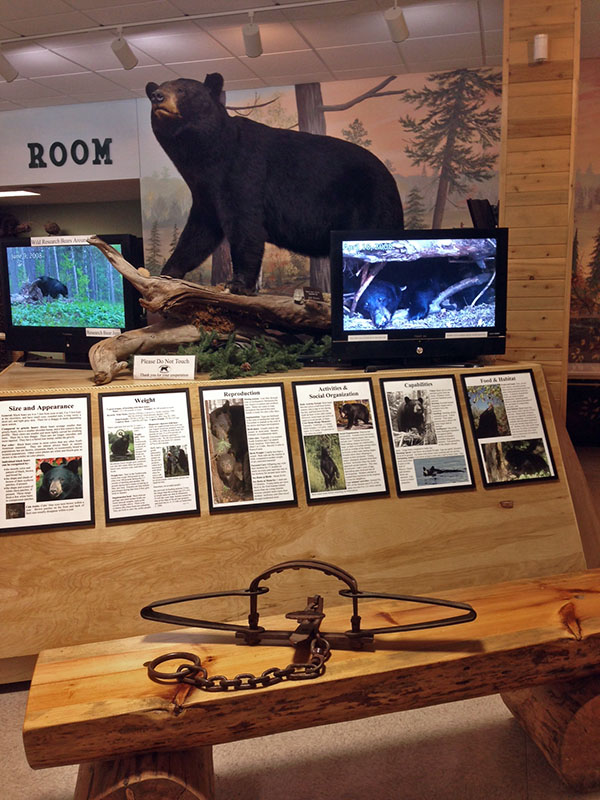
We are grateful to the family of Richard K Richards (Sept 4, 1921 - June 26, 2012) for donating an old 36” Mackenzie District Fur Co #15 bear trap to the North American Bear Center. Richards was a resident of Ames, Iowa and visited Ely and the BWCA nearly every year since 1927. Special thanks to his daughter Beth for delivering it earlier this week.
Thank you for all you do.
—Sue Mansfield, Biologist, Wildlife Research Institute and North American Bear Center
All photos taken today unless otherwise noted.