
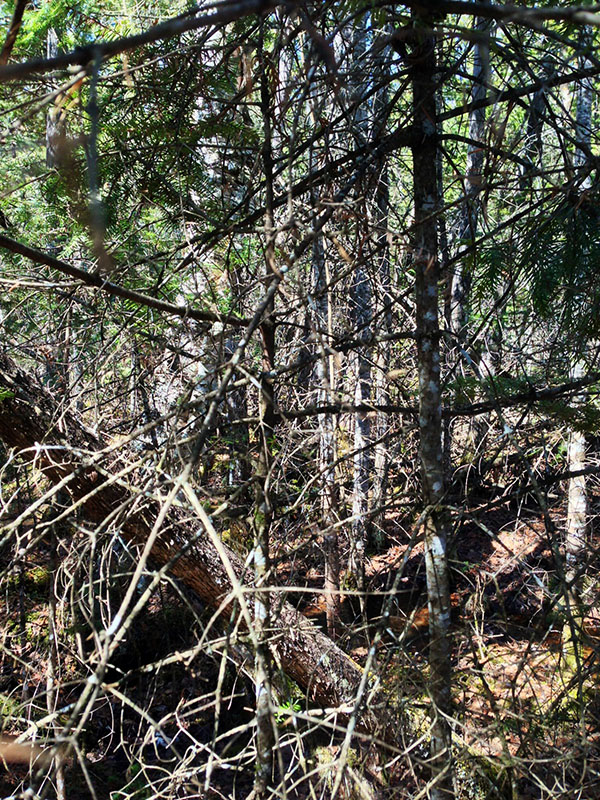
 Faith's cedar swampToday, Jim and Bec went out to adjust Faith’s collar. Nothing daunts these two, and they got tested today. Faith was in a dense cedar swamp. Dense means a tangle of downed cedars that never seem to rot away. The branches remain stiff and strong. Old cedar swamps can be the most inhospitable habitat for humans. But Faith, June, Lily, and Cal all love or loved this particular swamp for little getaways to rest on soft, deep moss. Going is very slow for humans, and you have to be close to a bear to see it in this swamp. They never saw her. Her GPS locations show she circled around and never left the area, but she wasn’t about to be seen either. Is this wariness something she learned from Hope and Lily? Actually, all the bears are like that out in the woods.
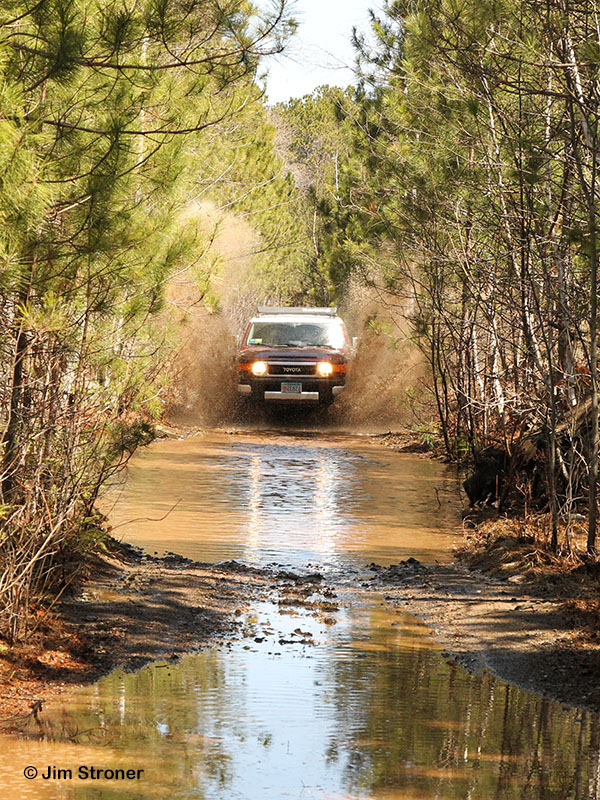 Jim is not easily discouragedToday reminded us of a Black Bear Field Course we held for wildlife professionals only. Two wildlife managers were skeptical about bears being fed, learning that food comes from people, tracking people down in the woods, pestering them for food, or worse. It’s a common notion we hear a lot. We gave them a telemetry antenna and receiver to see if they could glimpse a bear resting in a valley. The bear just happened to be the bear with the most experience at feeding stations in the community. If any bear should view people as sources of food, she should. Two hours later, the managers came back with new thoughts about habituation and food-conditioning. The bear circled and circled as they homed in on her telemetry signals. Not a glimpse. The people were not where they were supposed to be—not where she had learned to trust people.
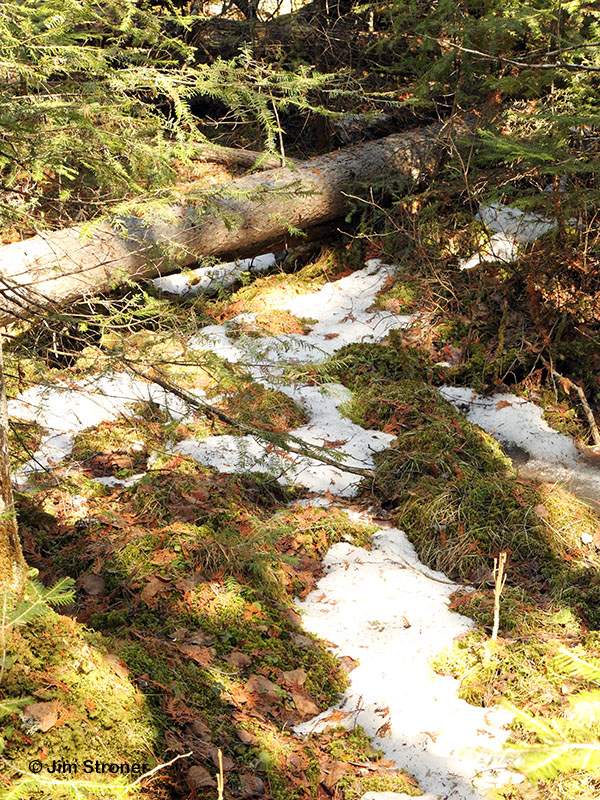 Still patches of snowOn the other hand, this late spring is stretching out too long. Sooner or later, bears have to eat. Yesterday, we documented that a GPSed bear went from home to home for an hour or so. The residents in that area enjoy peaceful coexistence with bears. If a bear occasionally visits a bird feeder, they blame themselves and remove the feeder. By now, most people there must know this old bear. It takes two things to make a complaint: what the bear does and how the person feels about it. We also know that going from house to house is not something this bear commonly does. But hunger can drive bears to do the unusual. As we’ve often said, habituation and food-conditioning do not create nuisance bears. Hunger does.
 Windblown lake iceIn the picture of Dot yesterday, a Lily Fan remarked about the low fern-like plants that covered the ground and hoped they are bear food. They’re deer food but not bear food. They were Princess Pines (Lycopodium obscurum), also called clubmoss. They are evergreen plants that stay green under the snow. They are very common, and some people harvest them to make wreaths, but they don’t readily come back after harvest, so others people are concerned about over-harvest. Although, they are a deer food, they are not a favored deer food. It’s something deer eat in fall and spring when better foods are scarce.
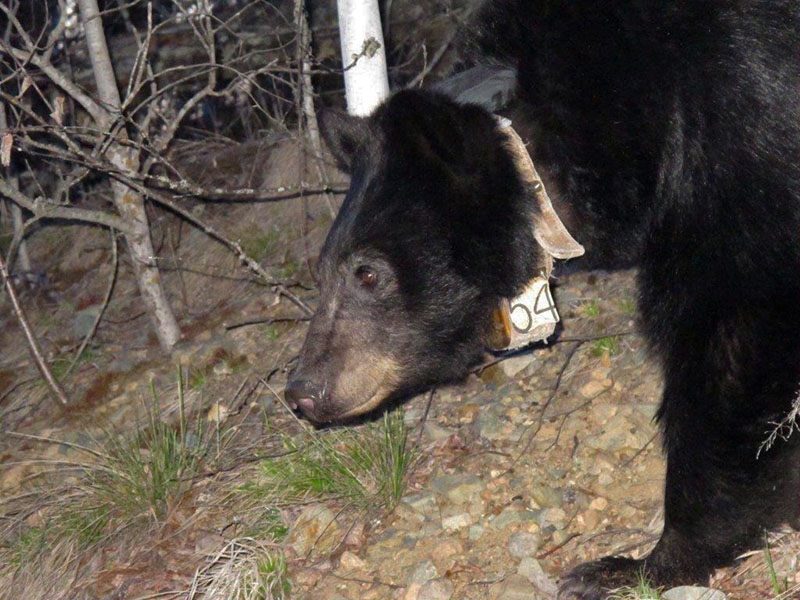 JewelIt’s Mother’s Day, and Aster went to visit her mother June. We could have predicted how that would turn out. Although we haven’t seen June yet, she should have cubs. What we know is that Aster skedaddled fast.
A Lily Fan asked if Victoria has been seen since her mother Jo was killed. Yes, Victoria (who is not radio-collared) still apparently lives in the same area and was seen a few days ago. Fortunately, she has a distinctive 'V' chest blaze which makes her easier to identify.
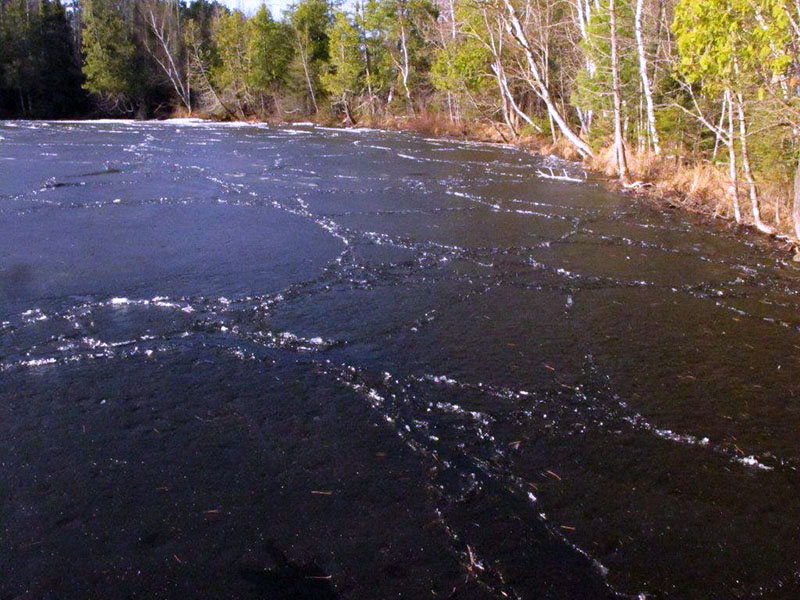
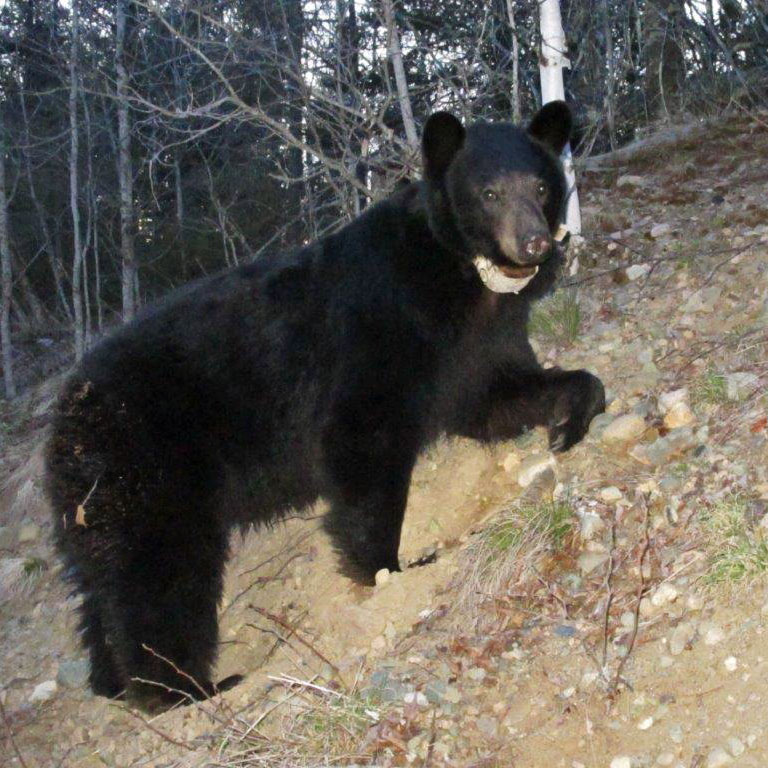 Jewel on slopeSnow is down to a few patches in the woods. Lakes are opening up. The wind yesterday broke up the thinner ice on some lakes and blew it downwind against the shore. Last night it froze again.
A Lily Fan asked if a bleached muzzle is common. No. We’ll be watching Ursula’s muzzle as she sheds to see if it starts out darker again.
 Northern pikeWe saw a good article in the latest Journal of Wildlife Management on “Building tolerance for bears: a communication experiment” (Slagle et al. 2013, JWM 77(4):863-869). The aim of the study, conducted in Ohio, “was to increase acceptance of black bears.” A quote that struck home to us was “increased knowledge and better understanding of bears could lead to increased public tolerance.” That’s something no one knows better than Lily Fans. That’s the basis for the Bear Center’s Speakers Bureau. That’s why Lily Fans talk to so many people about bears. That’s why we do what we do.
Jewel’s batteries were about to expire, so at day’s end we joined her to exchange batteries. We could hear the yearings nearby—and saw one in a tree—but they kept their distance.
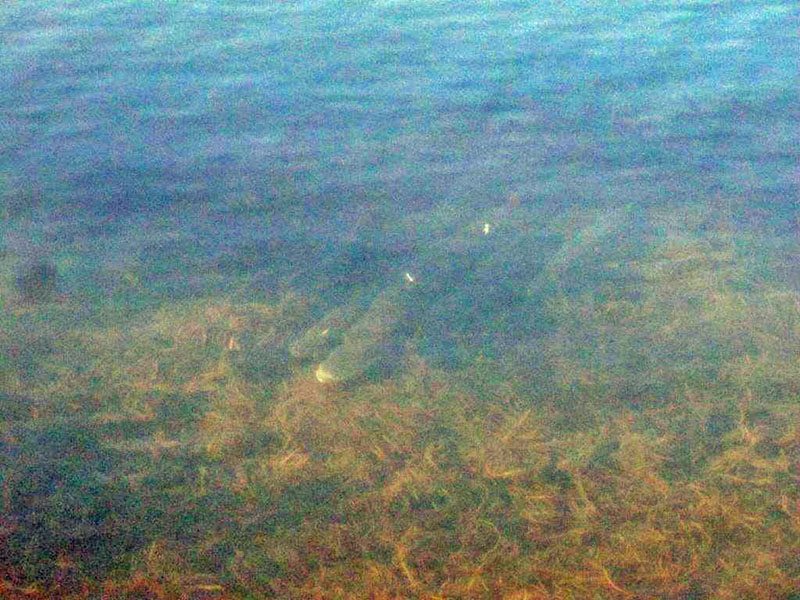
Signs of spring are that snow in the woods is down to patches and northern pike are starting to spawn. The picture shows a big female with 3 males in attendance.
Thank you for all you do.
—Lynn Rogers and Sue Mansfield, Biologists, Wildlife Research Institute and North American Bear Center
All photos taken today unless otherwise noted.