
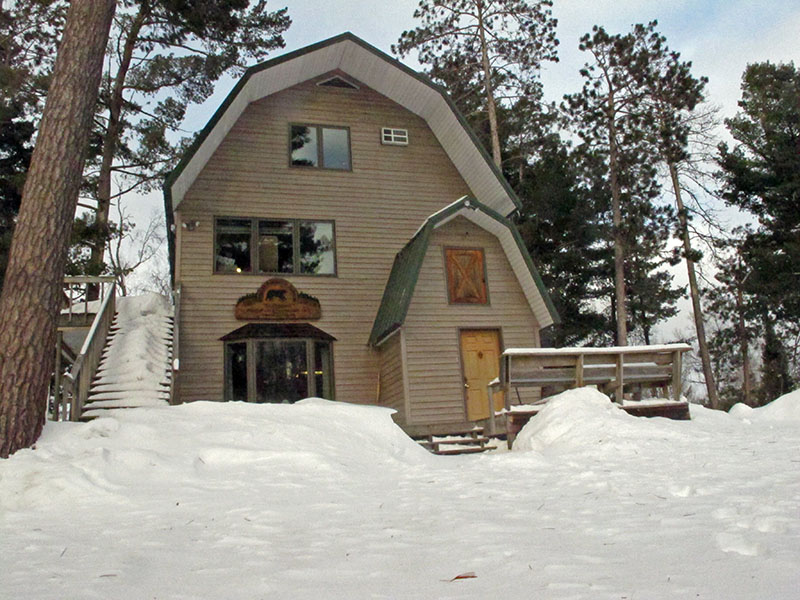
 WRI field station - March 19, 2013We loved the warm weather and early melt last spring, but we know the snow of this year will make better berries—that’s provided the tent caterpillars don’t defoliate the berry bushes. The tent caterpillars in the western part of the study area last spring might have spread. We don’t know what we’re in for this year. Tent caterpillars are a favorite bear food for the few weeks they’re available in late spring, but they can have a dramatic effect on the availability of the summer foods.
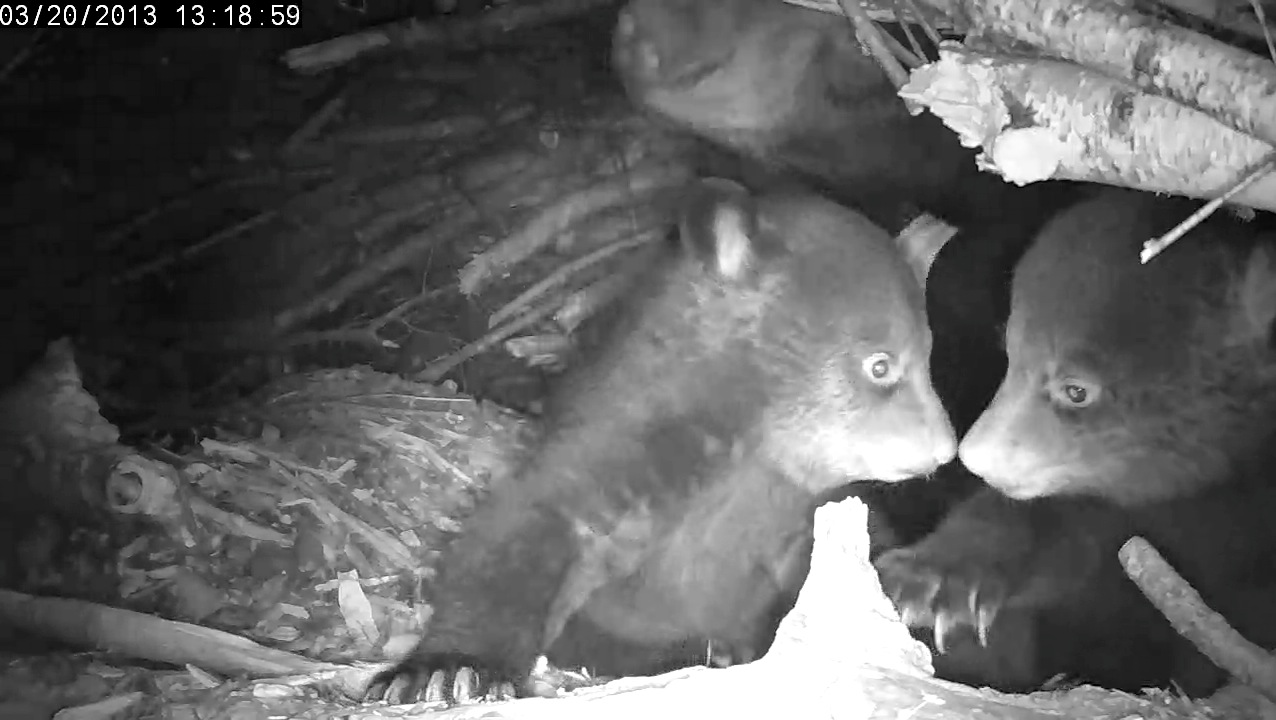 Lily's cubs nose to noseWe’re not surprised the cubs have teeth, but we actually caught sight of them for the first time in last night’s video and saw more today. We wondered if teeth could explain a couple loud screams in the last couple days. The cubs had been gumming each other’s noses. The eruption of teeth could make that a bit unpleasant. Cubs don’t restrain their bites very well.
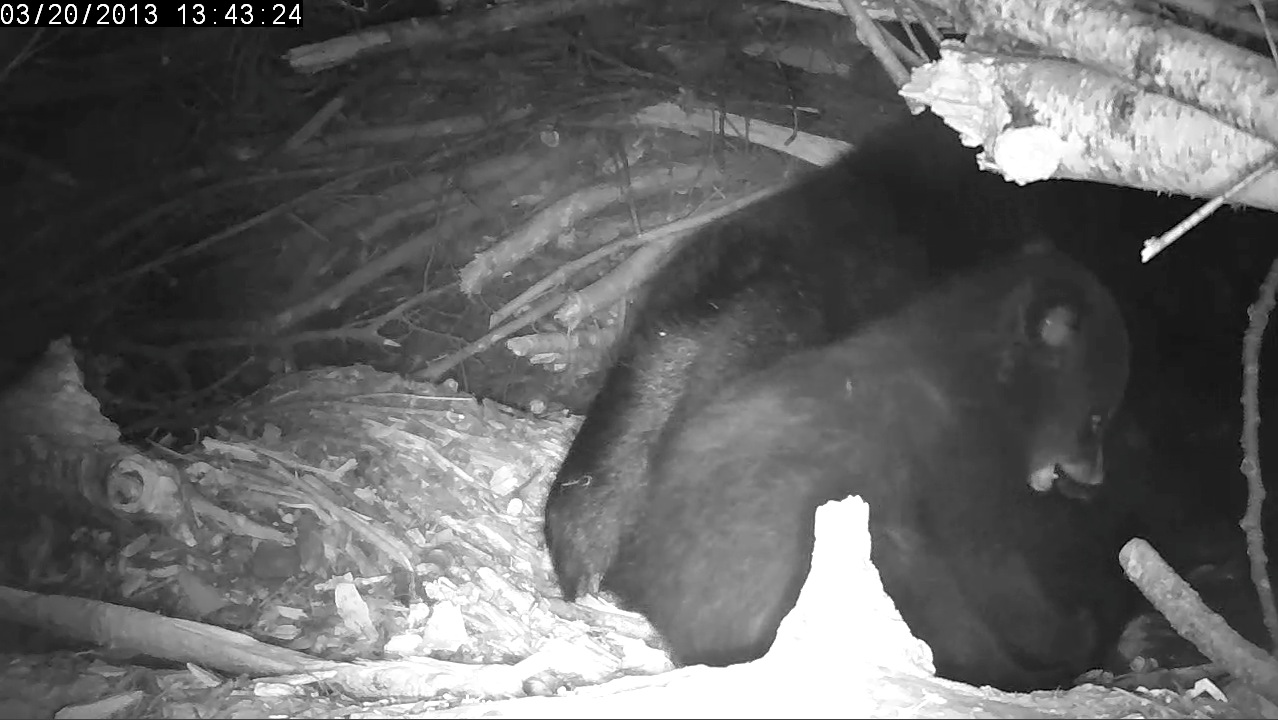 Female cub bares a toothToday, the female cub slipped while walking on the log between the den bed and the camera. She dug her claws in and pulled herself back up without a cry. Lily paid no attention. What a change from a few weeks ago when the male cub tumbled off the same log, screamed, and Lily leaped to his aid to pull him back into the bed. These cubs are playing more and more—gaining strength and confidence in the process.
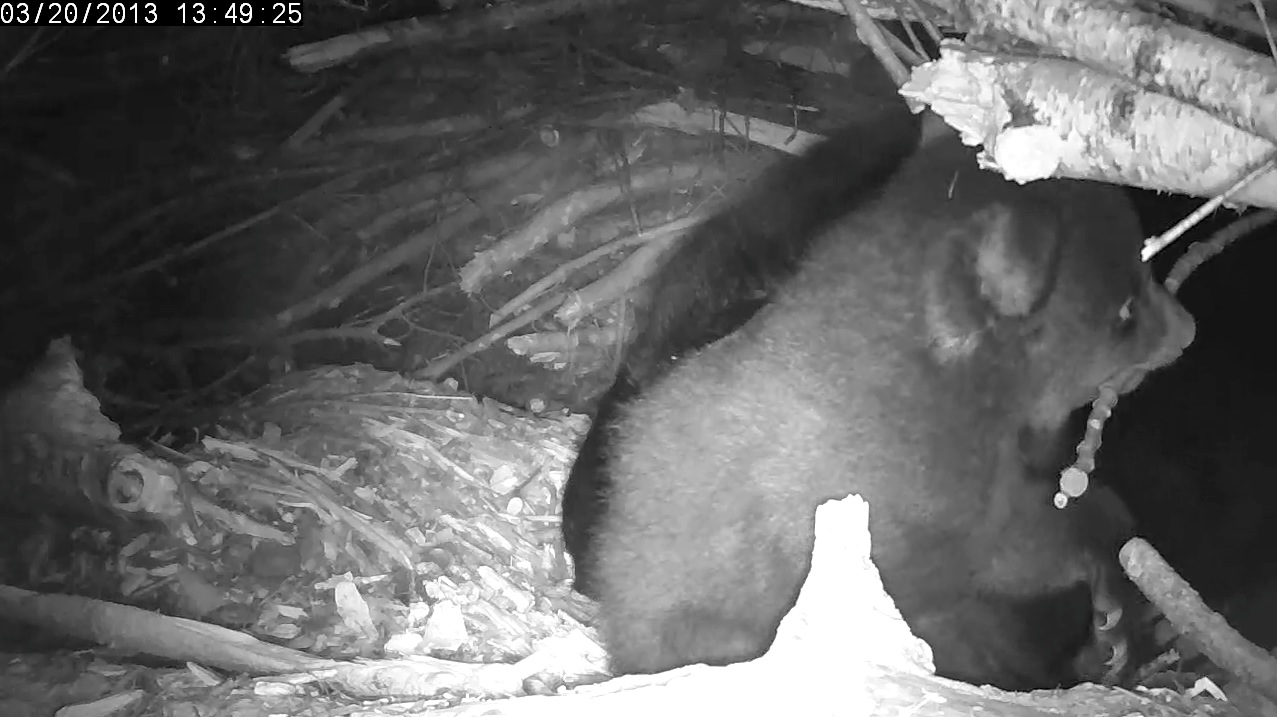 Female cub trying out her new teethToday’s videos of Lily and her cubs are Part I at http://www.youtube.com/watch?v=V54V491VzfM and Part II at http://www.youtube.com/watch?v=vymZ9EbsjUM.
Thinking about birth, development, and survival, we looked up a good study from Florida to see how Shadow’s clan compares with cubs from warm country.
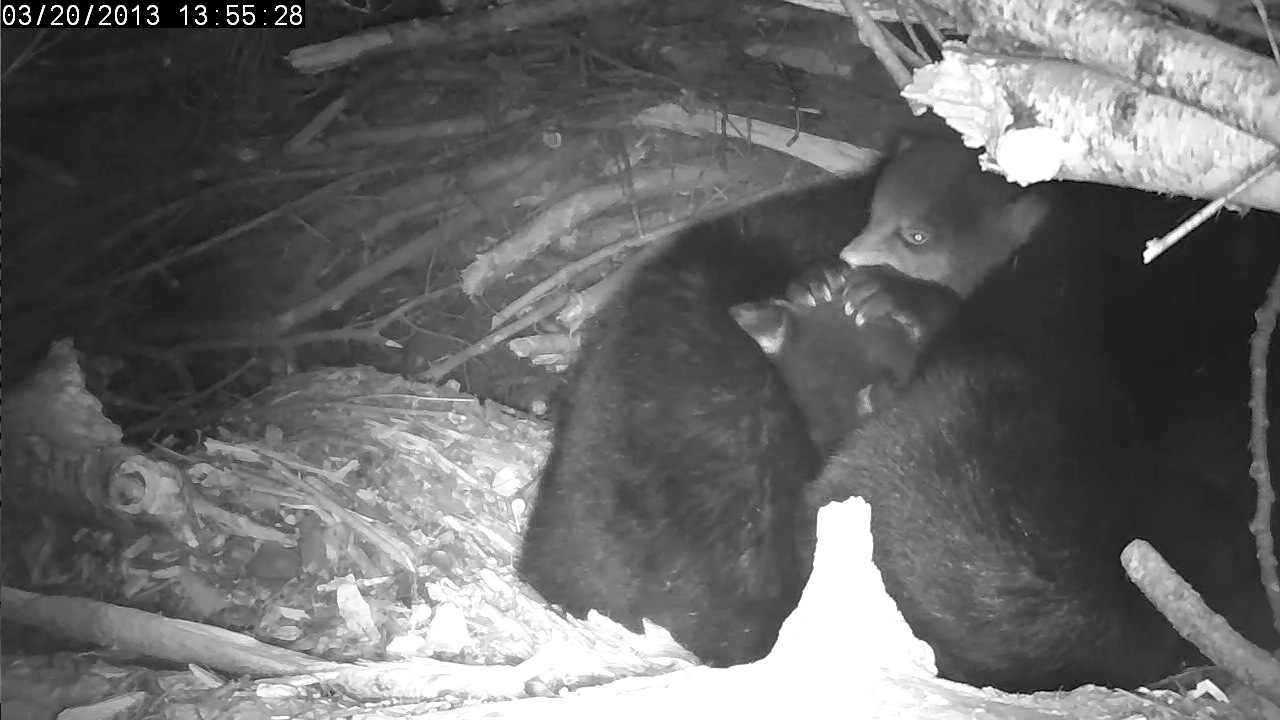 Cub playFirst we wondered if the fed bears in Shadow’s clan could grow fast enough to out-reproduce Florida bears. We compared age of first reproduction. Of 12 females in Florida, 3 produced their first litters at two years of age, 4 at three, 4 at four, and 1 at five. Average 3.25 years of age.
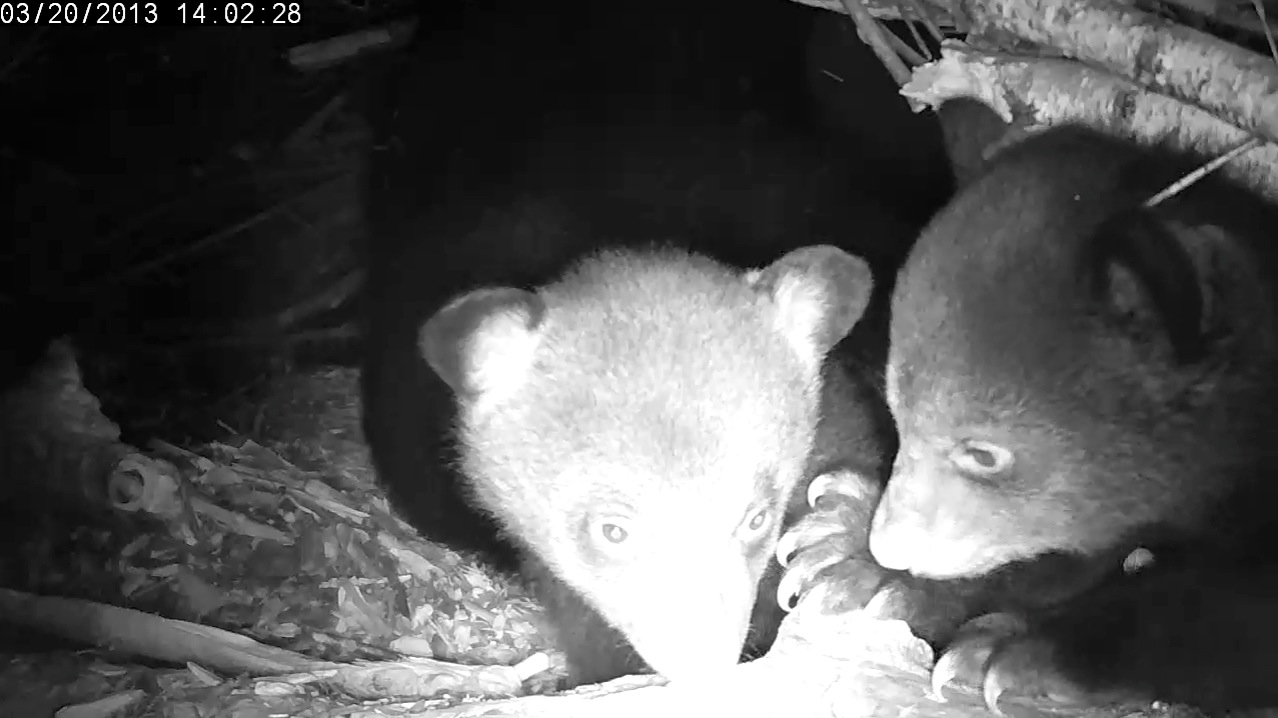 My what big claws you have!Of 24 females in Shadow’s clan, none produced litters at two, 14 did at three, 10 at four, and 1 at six years of age. Average 3.52 years of age. Florida edged Shadow’s clan out on age of first reproduction. Florida females grew a little faster and reproduced a little sooner than Shadow’s females did, even with supplemental food.
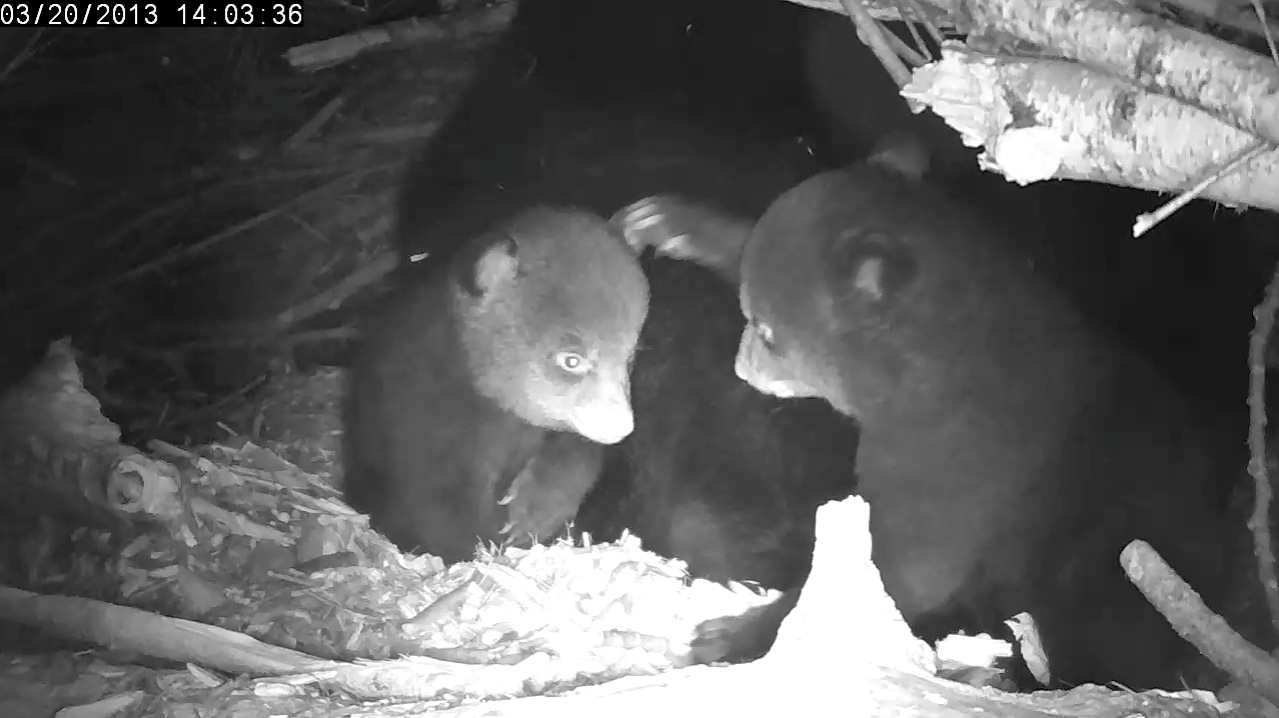 The smack your sibling gameTo say it another way, 58% of the Florida females gave birth at the age of three or sooner, but only 56% of Shadow’s female did that. Along that line, Pennsylvania beats both by a mile. There, 29 (85%) of 34 females gave birth at the age of three or sooner, according to Gary Alt’s Ph.D. thesis (1989).
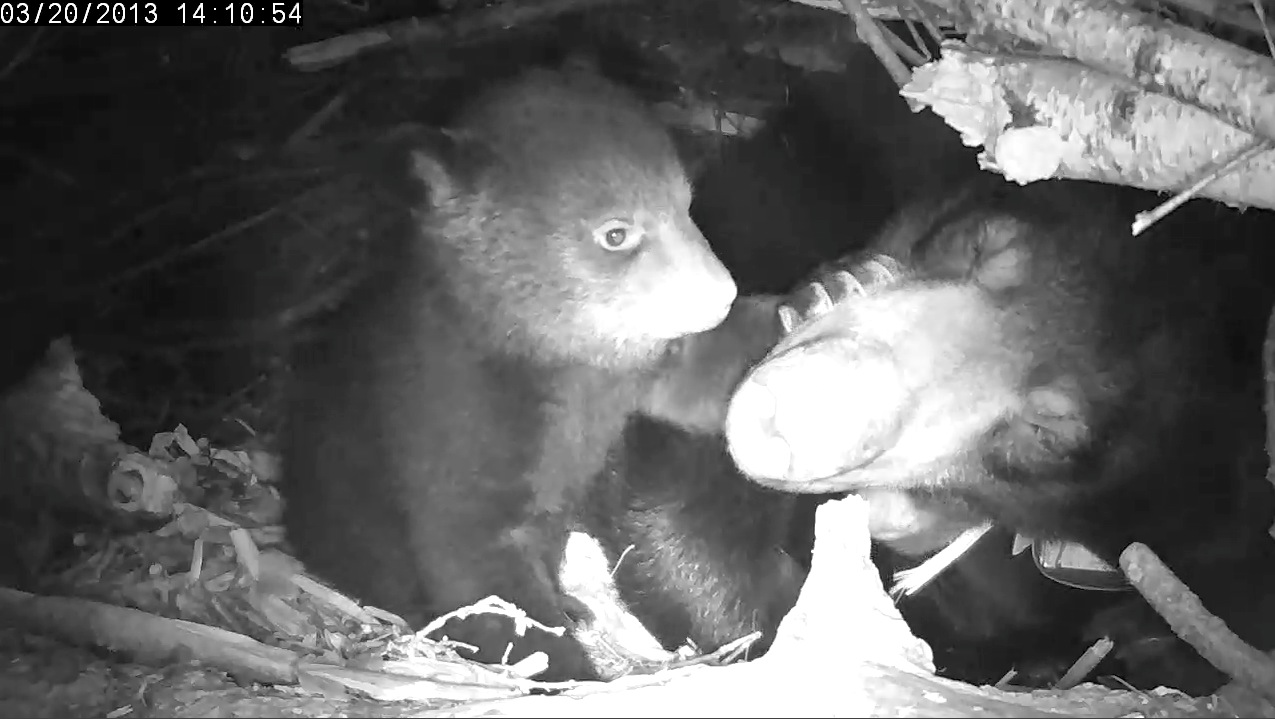 ...smack your mother?We know Shadow’s clan has good cub survival. We compared that. In Florida, only 33 (54%) of 61 cubs survived their first year. In Shadow’s clan, 142 (93%) of 153 cubs survived (not counting Hope who we helped). Shadow’s clan apparently includes some pretty good mothers.
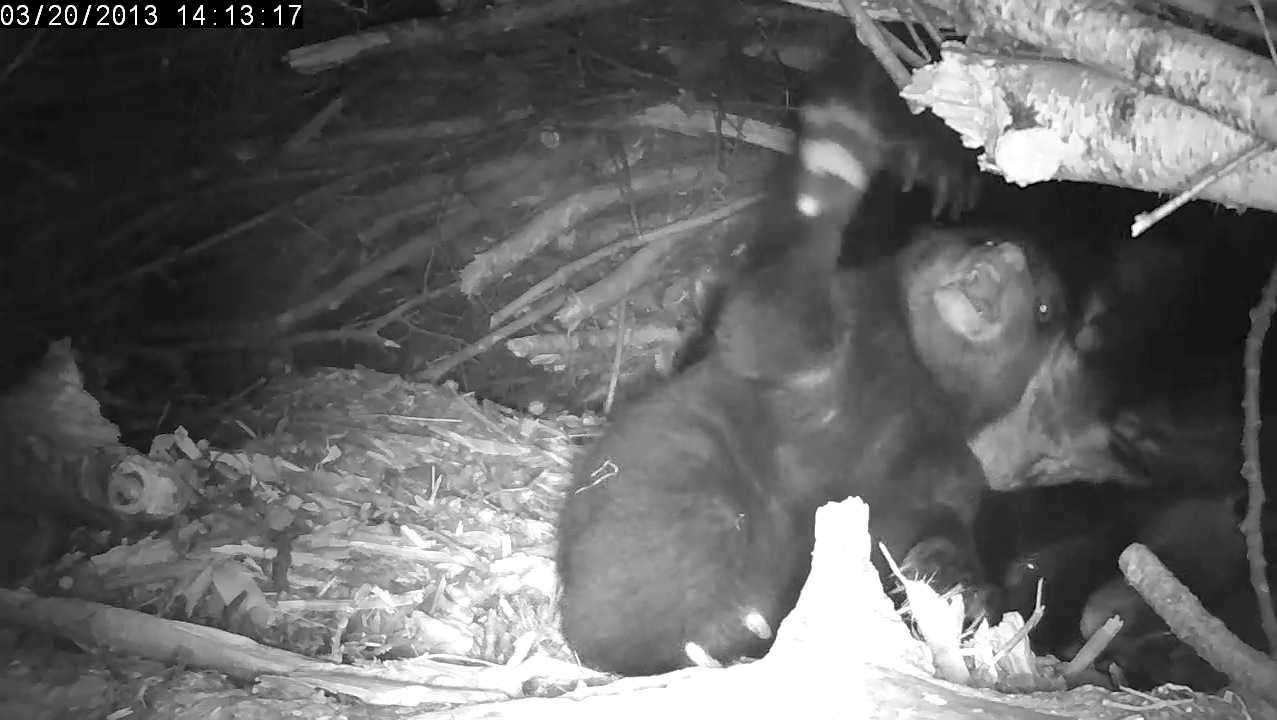 Male cubs shows off his teethBut maybe the Florida cubs were up against worse conditions to have such low survival. What were the causes of death for the 28 cubs that died in Florida? The authors said 9 were from infanticide, 5 from vehicle-related mortality, 2 malnutrition, 2 abandonment, 1 trauma, 1 disease, and 8 unknown. We don’t know if infanticide means killings by mothers or by other bears.
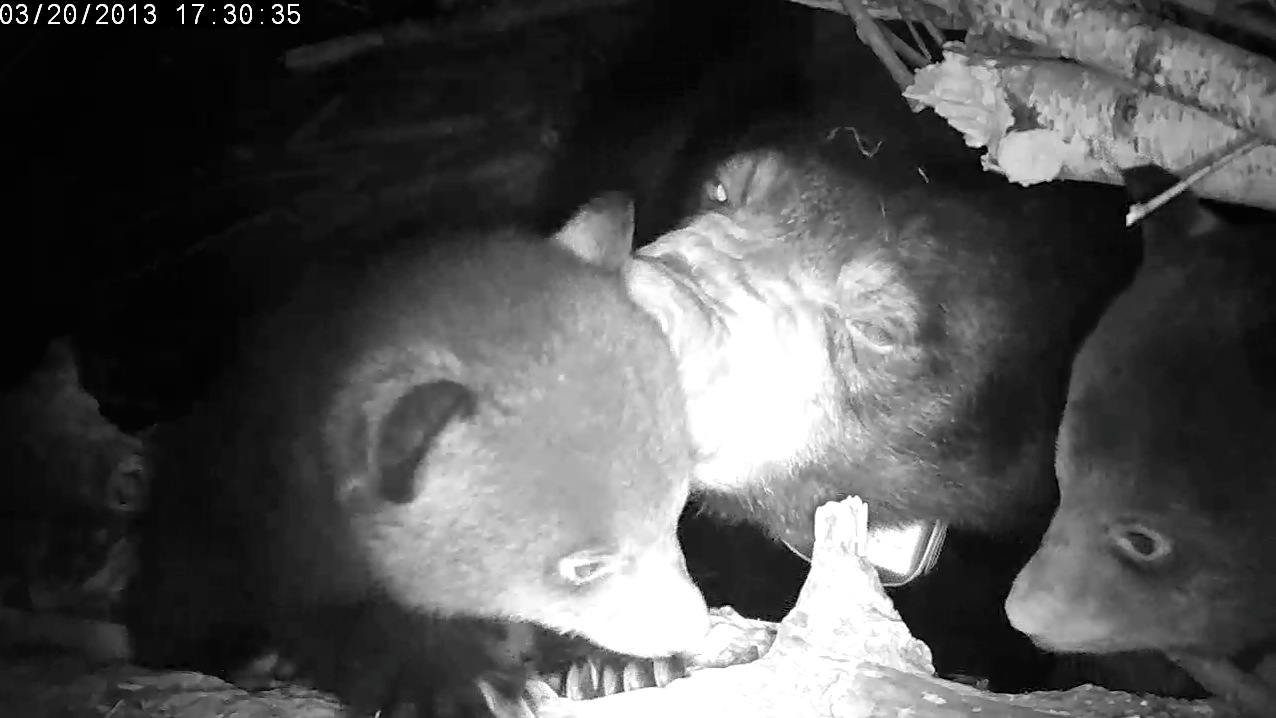 Lily nibbling on cub's cheekIn Shadow’s clan, the 11 cub deaths included 2 from predation (Jason [coyote?] and a cub killed by a male bear), 1 killed by a hunter this past fall, 1 by disease (Mimi from sarcocystosis), 1 hit by a vehicle on Highway 169, I presumably drowned in its flooded den, and 5 unknown. So again, Shadow’s clan has some pretty good mothers.
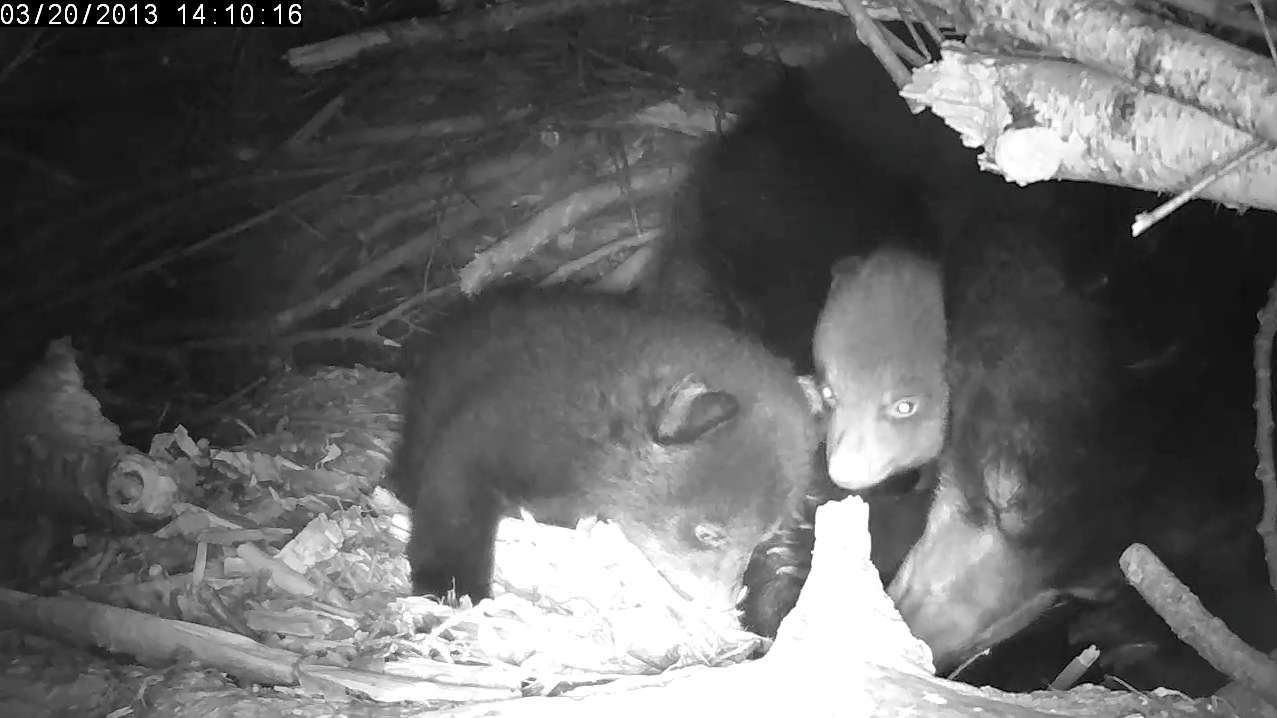 Lily and cubsThe full reference for the Florida study is Garrison et al. 2007. Reproductive ecology and cub survival of Florida black bears. Journal of Wildlife Management 71(3):720-727. http://tinyurl.com/Garrison-et-al.
The voting for cub names continues with about 4900 people registering votes! If you haven’t cast your votes for male and female names, there is still time. Voting is at http://www.bear.org/website/cub-naming.html.
Thank you for all you do.
—Lynn Rogers and Sue Mansfield, Biologists, Wildlife Research Institute and North American Bear Center
All photos taken today unless otherwise noted.