
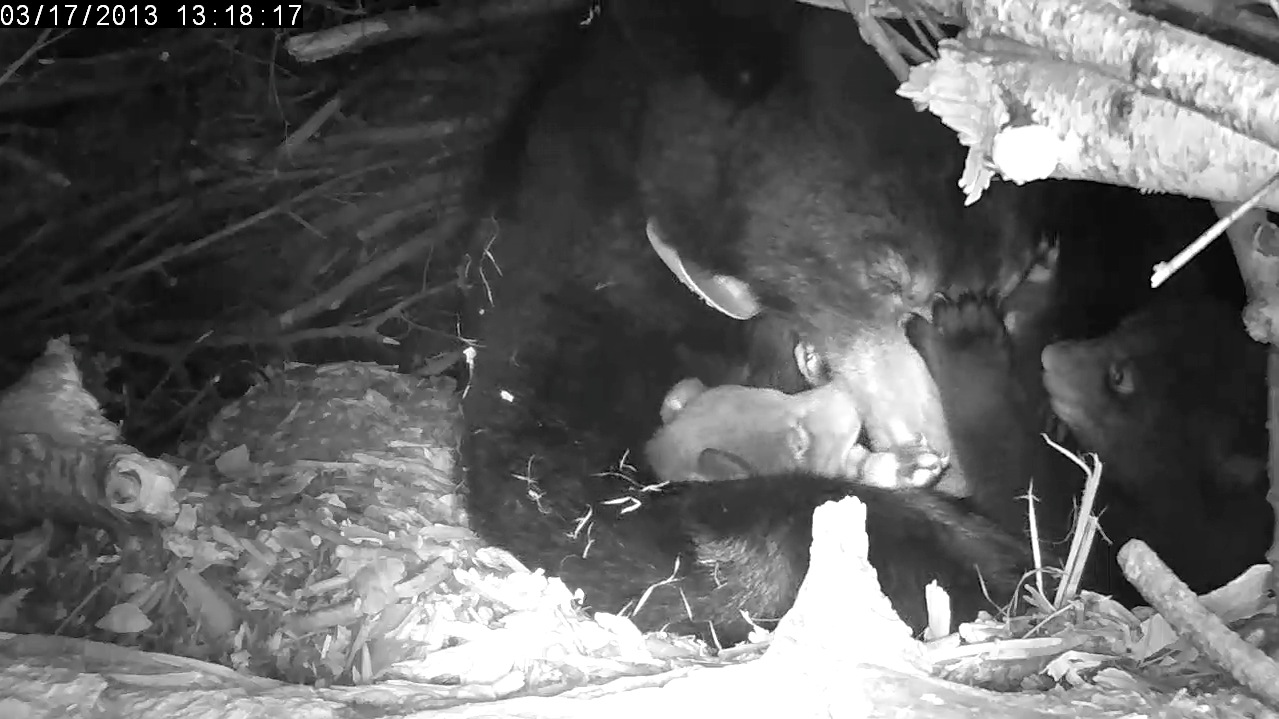
 Lily plays with her cubsWith the cubs so active today, we know they’re not undernourished—in spite of the seemingly constant battles over nipples. The cubs are growing and looking great. They certainly should be able to easily follow Lily by the time she leaves the den. Again, the activity in the den cried out for 2 videos! Part I is at http://www.youtube.com/watch?v=pbgOxII-WKQ and Part II is at http://www.youtube.com/watch?v=d3noK_CeZCQ.
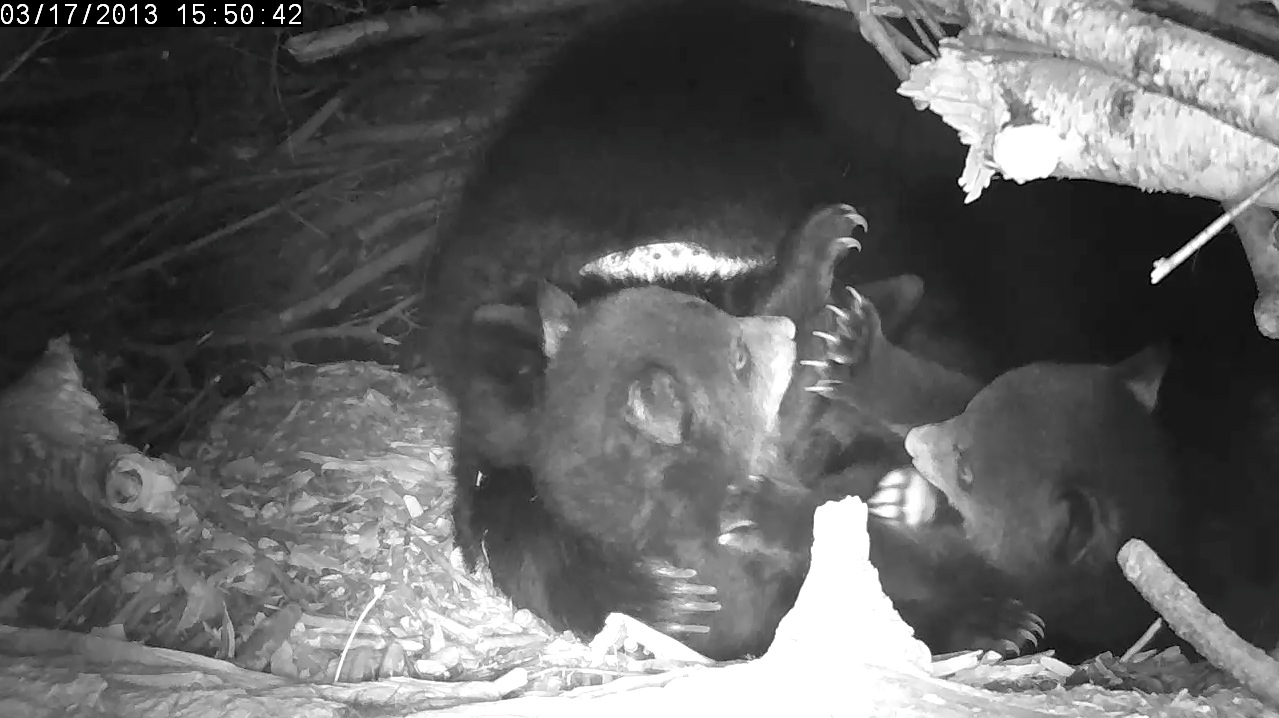 Cubs play while Lily snoozesThe activity of the cubs reminds us that—unlike Lily—the cubs are not hibernating. Their job is to eat (drink) and sleep and grow—and we guess play if they have plenty of energy, which they do. Sometimes, Lily plays with the cubs, but other times she snoozes while they play with each other.
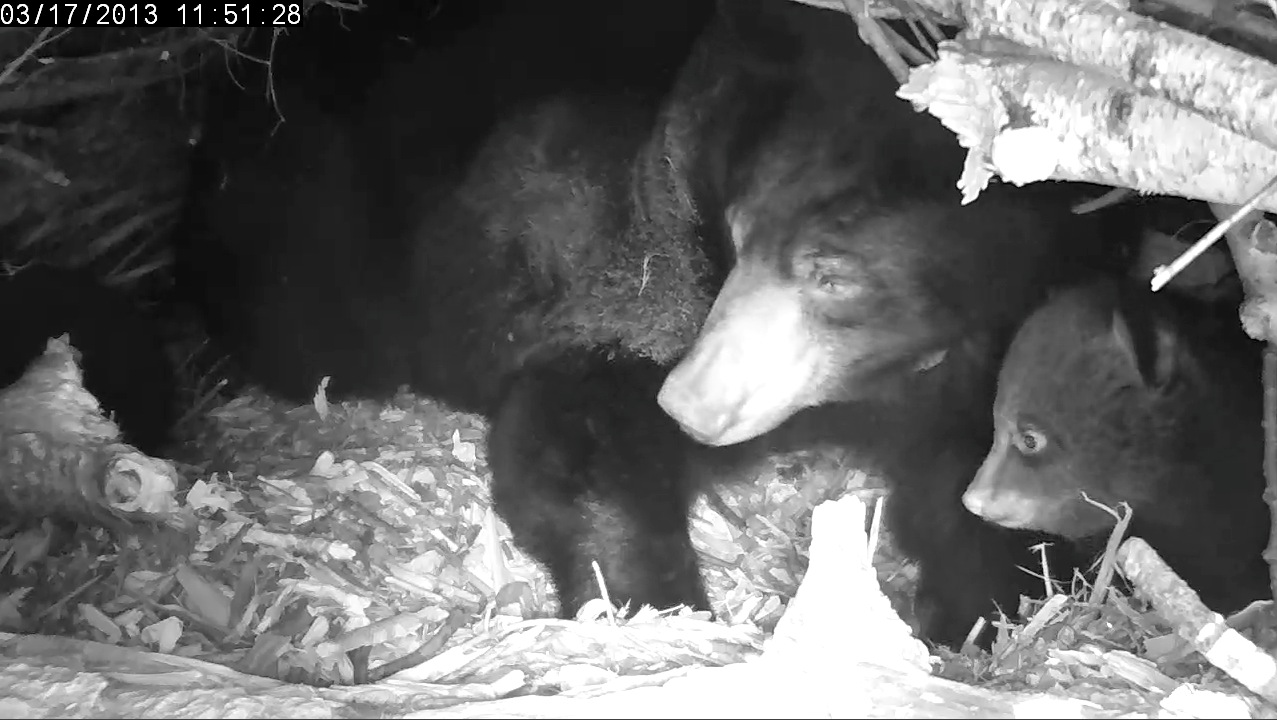 Lily backs into her latrineLily showed us some latrine action again today. Without checking back, we think this is the fifth time she urinated or defecated. This seems like a lot for an animal that has long been thought to go 5-7 months without eating, drinking, urinating, or defecating. We know they go without eating food, but we see Lily eating snow like we’ve watched her mother and Jewel do, which should count as drinking. Some defecate during the winter, and many defecate as they get closer to spring.
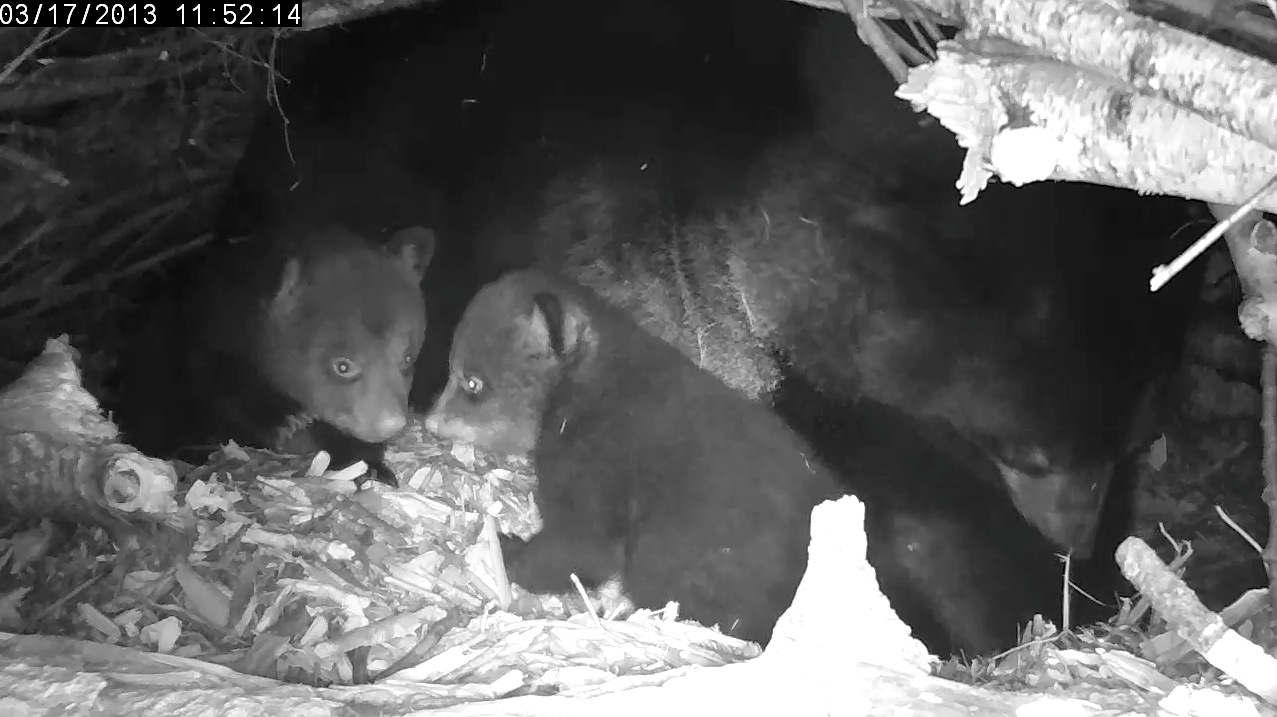 Lily taking care of 'business'We’ve talked before about what makes the feces when they aren’t eating—mostly dead cells from the digestive tract. Add to that hair and bits of bedding material ingested while grooming (we watched Lily groom today) as well as footpad pieces.
But urinating is something we’ve wondered about. Supposedly, fat metabolism produces enough water for their needs but does not produce enough urine to cause urination.
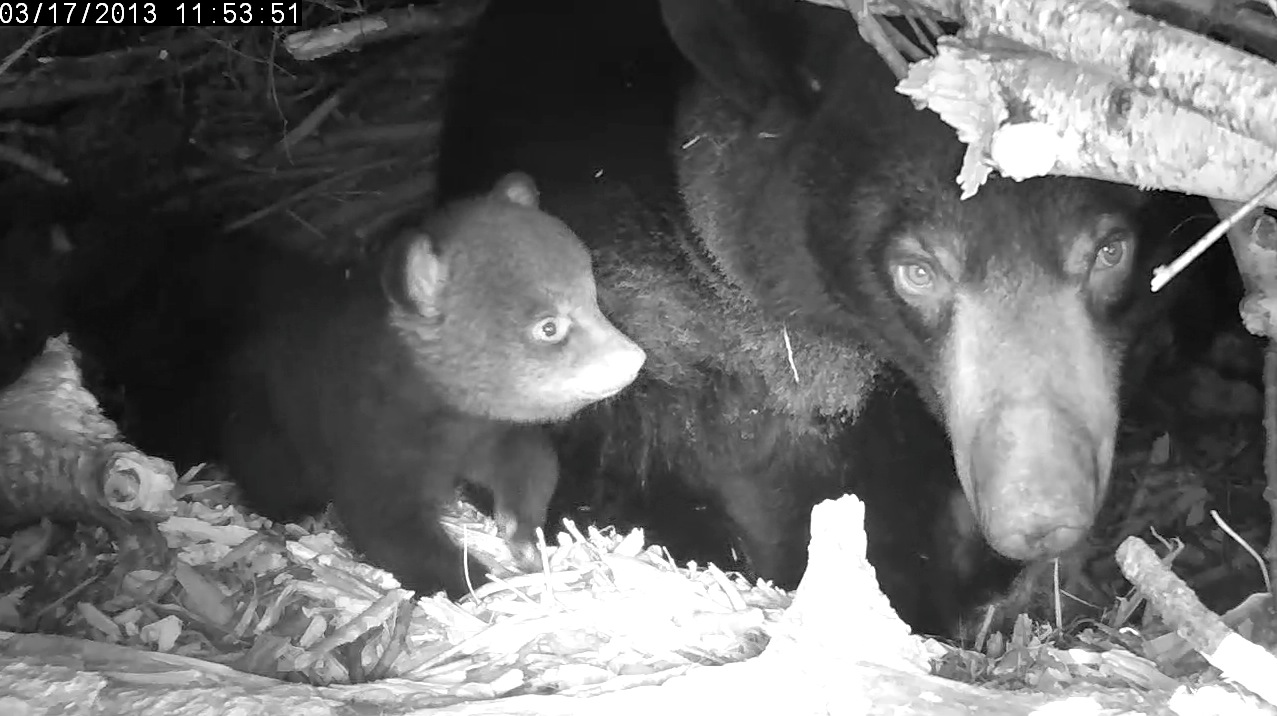 Cub checks out frost on Lily's furThe concept of a bear going through 5-7 months of hibernation without eating, drinking, urinating, or defecating came from studies of captive bears. They would have been well fed bears like Lily, but we don’t recall any of them being mothers with cubs. If not all age/sex/reproduction status combinations were studied, then the concept might not hold for all cases.
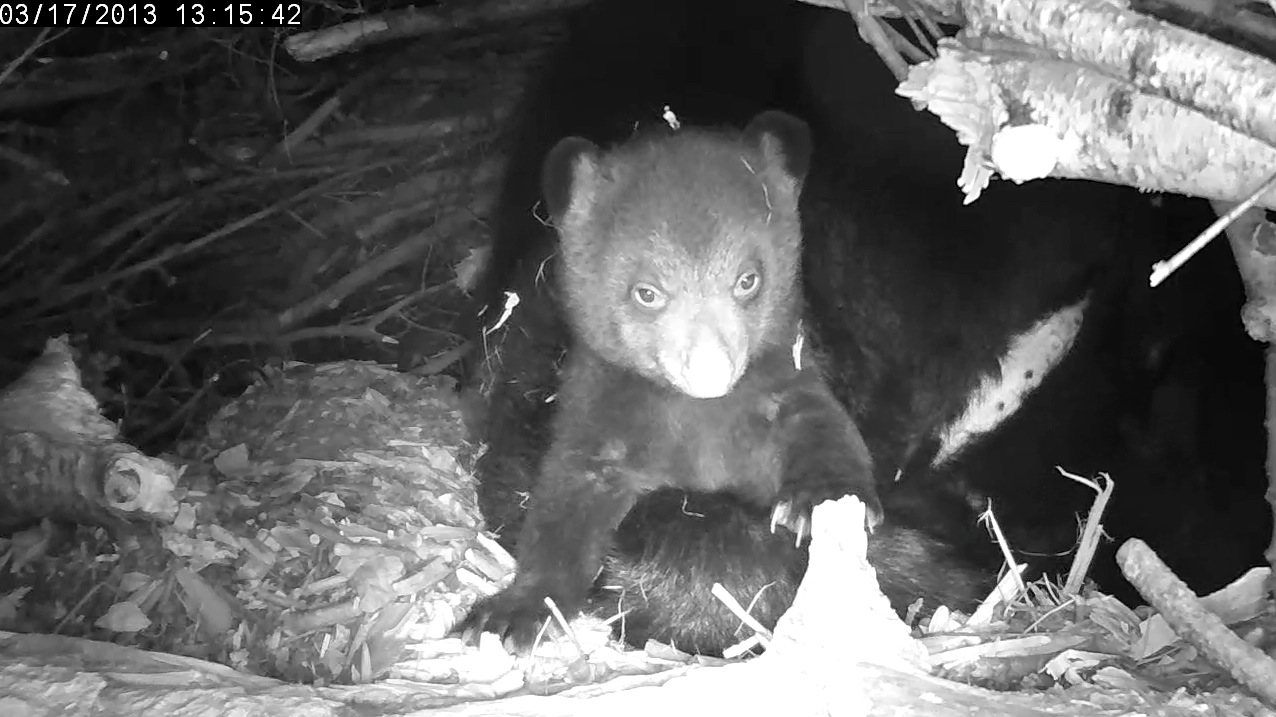 Lily's leg no longer corrales this cub!So maybe lactating mothers are different. First, they are fatter—only fat bears produce surviving cubs. And maybe they eating more snow and icicles to produce milk—we don’t know, but the only bears we’ve seen eat snow in dens were lactating females. And the higher metabolism that goes with being fat and having cubs might mean more urine. We wonder if lactating females in southern climates leave their dens to drink water.
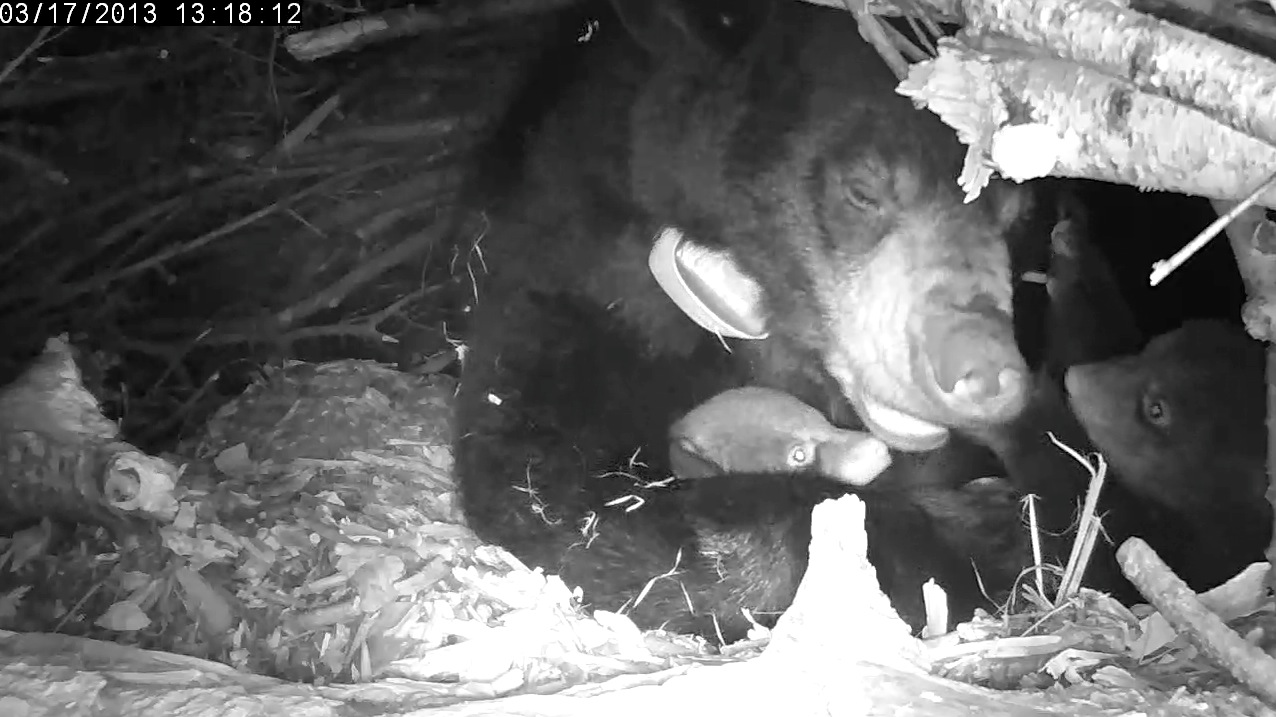 Lily mouths a cub legIf females are not fat enough, they have to drop into a deeper hibernation to make it through the winter. A lower metabolism means less oxygen consumption, which probably transfers to lower blood oxygen levels, which could become too low to support fast-growing fetal tissue. Fetuses die and are absorbed or stillborn, depending upon how close to parturition they were.
 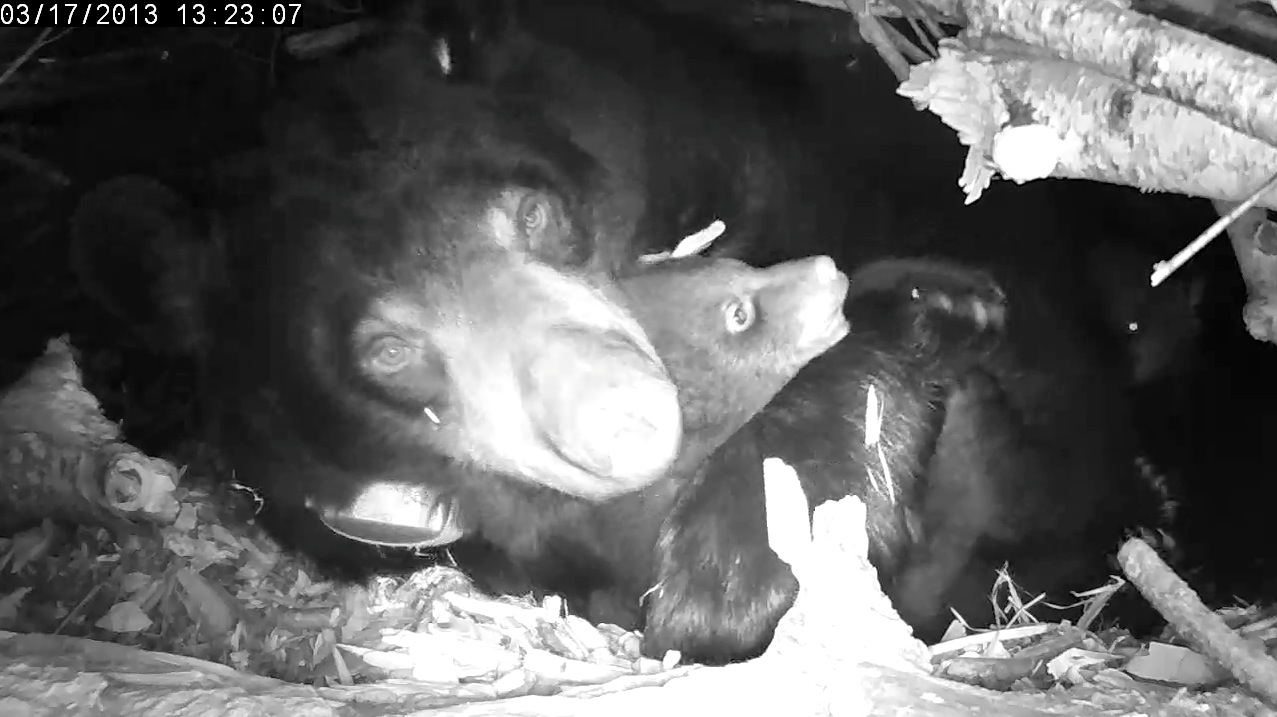 ...and he's down!Or they can be born alive but find too little milk. Food supply is the name of the game. Some years there are more berries and nuts than a bear can eat. Some years not enough. One study showed a 50-fold difference between high and low berry years.
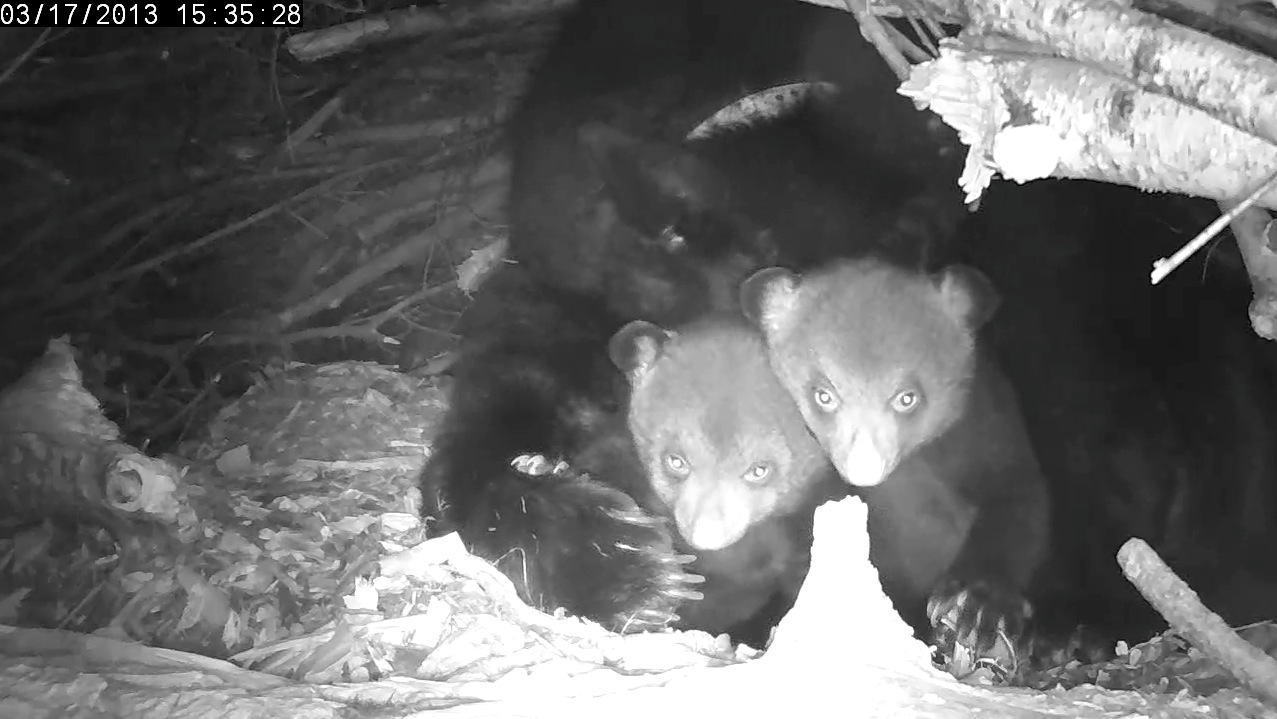 Cub face and ear comparisonAdult survival is high no matter what, we’ve found. We remember a female that was too lean to produce cubs after a bad food year, and she was hibernating so deeply that Lynn shoveled snow off her without her stirring. She survived just fine.
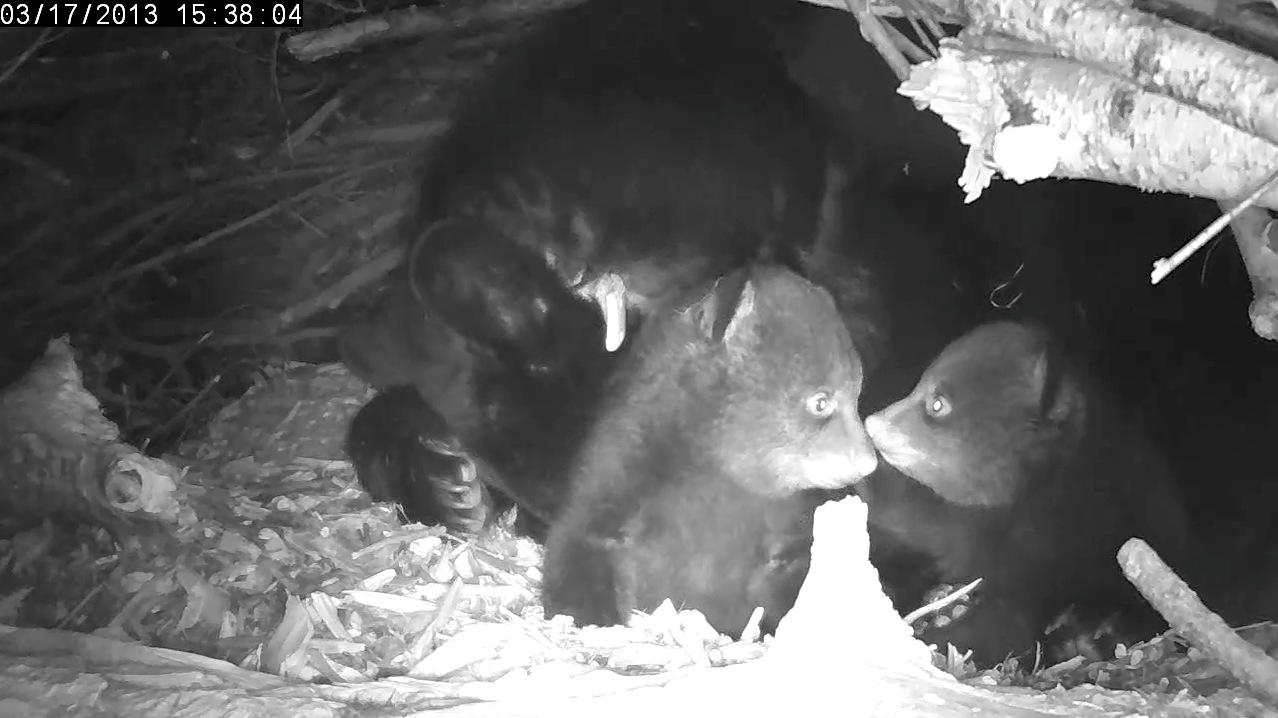 Cub profile comparisonMothers with newborn cubs in dens have rectal temperatures between 96 and nearly 100, but lone, skinny females have temperatures as low as 88F. A value of long-term studies is seeing year-to-year variation. Still there are lots of questions.
Another question is what will the cubs be named? Lily Fans are answering—over 3,100 votes in less than 24 hours at http://www.bear.org/website/cub-naming.html.
Thank you for all you do.
—Lynn Rogers and Sue Mansfield, Biologists, Wildlife Research Institute and North American Bear Center
All photos taken today unless otherwise noted.