
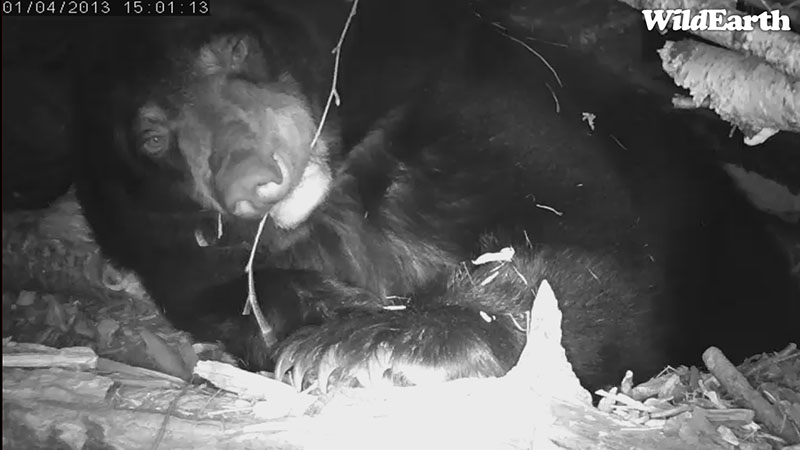
 Lily chews a twig - Jan 4, 2013With a host of Lily Fans out there, no stone remains unturned. People suggested a number of reasons that might explain the lack of play we are seeing. This is a good example of why we don’t rush to publish before we feel ready. In the past, this policy has saved us a lot of embarrassment. Several times we had data that would seem to confirm favorite theories of the day—complete with statistical significance. Then we’d get a little more data and see the pattern fall apart. We were glad we didn’t publish prematurely.
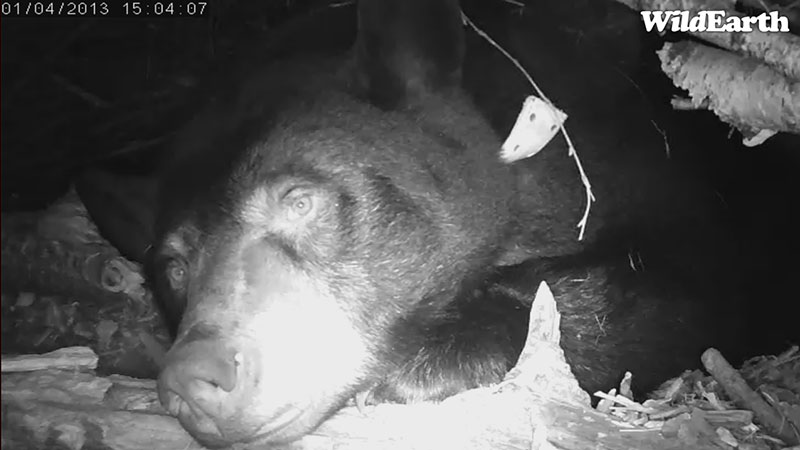 Lily - Jan 4, 2013Along that line, early in our research we thought we knew a lot when sample sizes were small. We could easily answer questions then, like, “Yes we know how that works. We’ve seen it.” But our studies continued. Variability occurred, and answering questions became harder because we’d have to think in terms of bell-shaped curves. We became cautious to avoid overstating what we knew. It’s like the more we learned the less we knew.
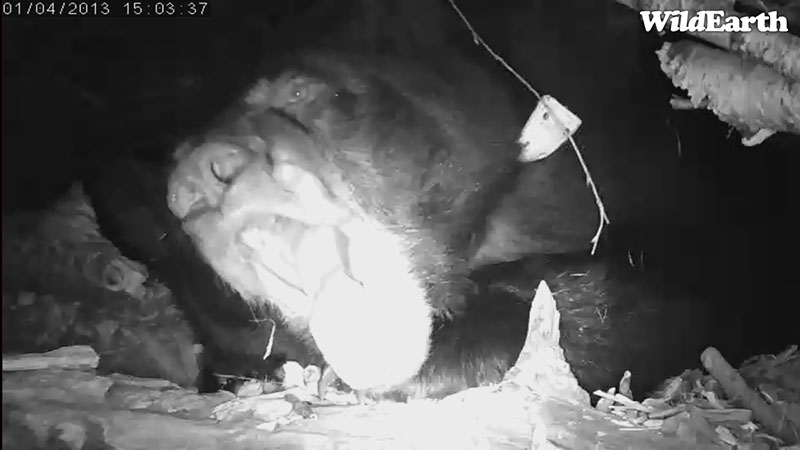 Lily yawns - Jan 4, 2013Another difficulty is pressure to do research like we were in a laboratory with a controlled environment to set up experiments with controls and hypotheses. That is nearly impossible in a field situation. Also, pressure to do those kinds of experiments prematurely is likely to produce bogus results. First, enough observational data has to be obtained to have a good idea of the factors that actually control situations before naively trying to test for some inconsequential factor.
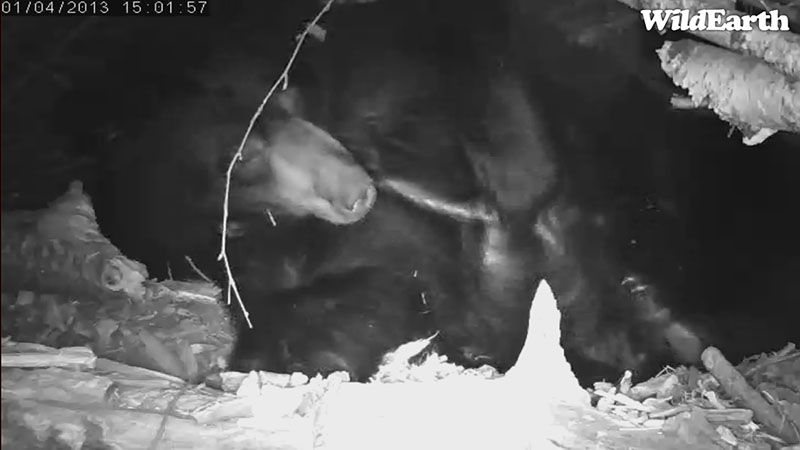 Lily scratches belly - Jan 4, 2013Observational data is the foundation of science. Examples include the top-ranked research of Dr. George Schaller who just won the $100,000 Indianapolis Prize, the long-term observational research of Dr. Jane Goodall that has revealed so much about chimpanzee life, space exploration, and many more. When Harvard Professor E. O. Wilson listed our research as one of the four major studies of large mammals in the world, all four studies were observational studies of wild mammals. The four at that time were Jane Goodall’s studies of primates, Ian Douglas-Hamilton’s study of elephants, Brian Bertram’s study of lions, and us. Add to that, Dave Mech’s long-term study of wolves and Valerius Geist’s studies of mountain sheep that won the Wildlife Society Award—all observational studies.
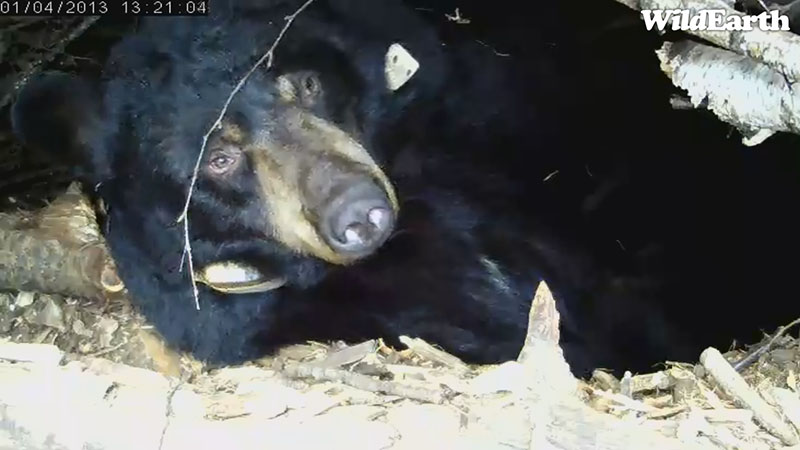 Lily's bright south-facing den - Jan 4, 2013And then we are humbled by a 3rd grade class noticing something we missed. We saw this comment last night, “Are the dens facing due south? My 3rd grade class and I noticed sunbeams shining into the dens at 12:15 local time.” Actually, we have paid less attention to the directions dens face after we found that the old idea that they face north or south didn’t hold up. But yes, Lily’s den does face south. Way to go, kids! Jewel’s Dens faces southeast and is sheltered by conifers so there is seldom enough light for the camera to switch to color mode.
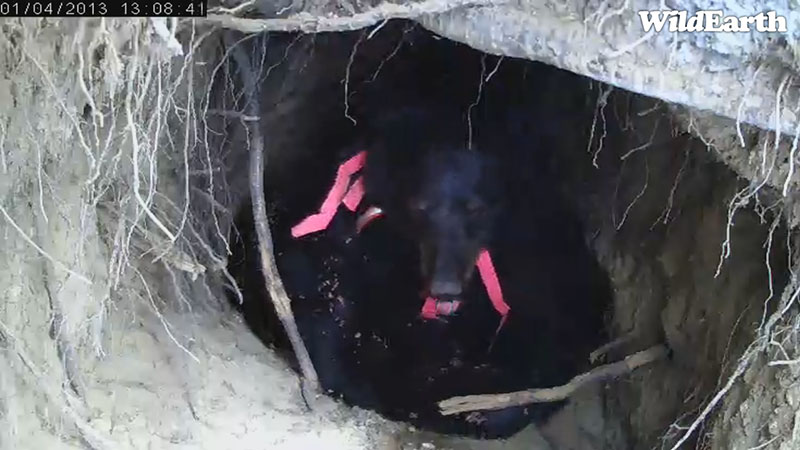 A rare color image of Jewel - Jan 4, 2013The comment went on, “Also, how far apart are the 2 dens as the crow flies? This is my 4th year watching these wonderful bears. My class is loving them this year! We're all learning so much!” We loved hearing that. The dens are two and a quarter miles apart.
Another commenter said, “Hooray for inquiring minds!” Right on.
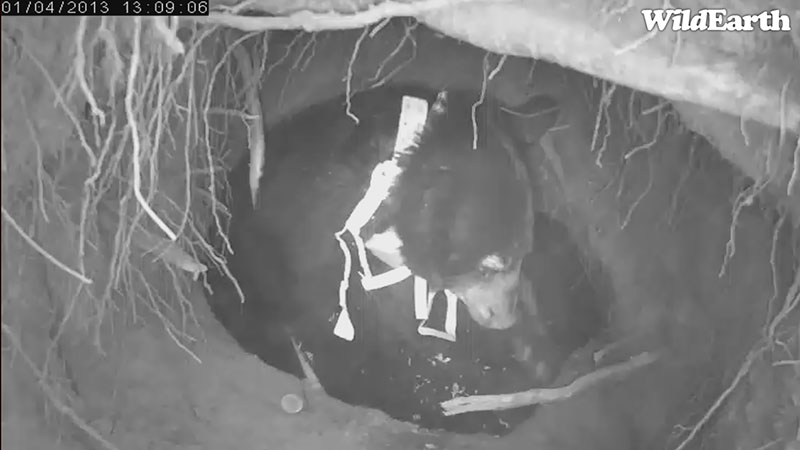 Jewel's camera quickly switched back to infrared - Jan 4, 2013We’re having trouble with the new 4G Den Cams—especially Lily’s. Because this technology is new, we’re learning as we go—not just our Tech Team but also the technicians for the various components (Verizon, Digi Int’l, XTS Corp, etc.). And of course just to complicate things we’re running Lily’s Den Cam ‘off the grid’—powered by the sun. We have our fingers crossed that all issues will be rectified before Lily gives birth in a couple of weeks or so.
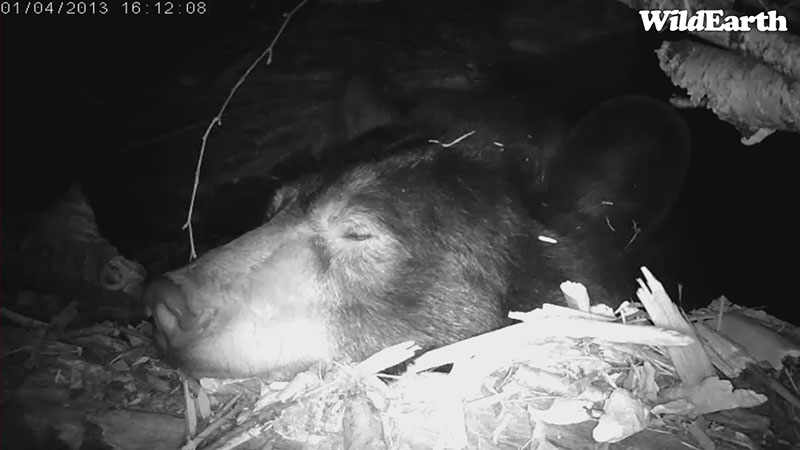 Lily snoozes - Jan 4, 2013Along that line, another commenter said, “ The cams are so great....I really can't wait for Lily to have cubbies....wondering how many she will have!” We wonder, too. If we were to guess, we’d pick the number in the following order of likelihood with the most likely first—3, 2, 1, 4, 5, 6, 0—with 6 being a rare record number of cubs. Three is the most common litter size for mature females to produce around here—average 2.6.
Thank you for all you do.
—Lynn Rogers and Sue Mansfield, Biologists, Wildlife Research Institute and North American Bear Center