
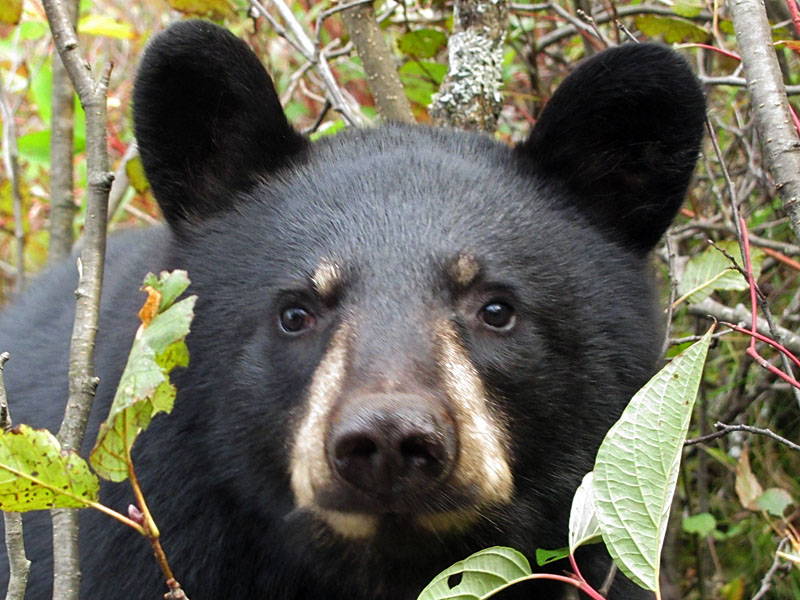
 Sophie - Sept 20, 2012Juliet’s GPS stopped working last night, but we found her by telemetry today at her last GPS location in an alder/willow swamp. Bears eat the leaves of both alder and willow this time of year. We don’t see them eating these leaves in summer. The two scats we found at their bed were both full of leafy vegetation, and nearby willow branches had been pulled down and stripped of leaves. New batteries were not enough to rejuvenate Juliet’s GPS unit. Hopefully we can connect with her tomorrow to give her a new one. Sam, Sybil, and Sophie look big with their 3-inch-long winter fur standing straight.
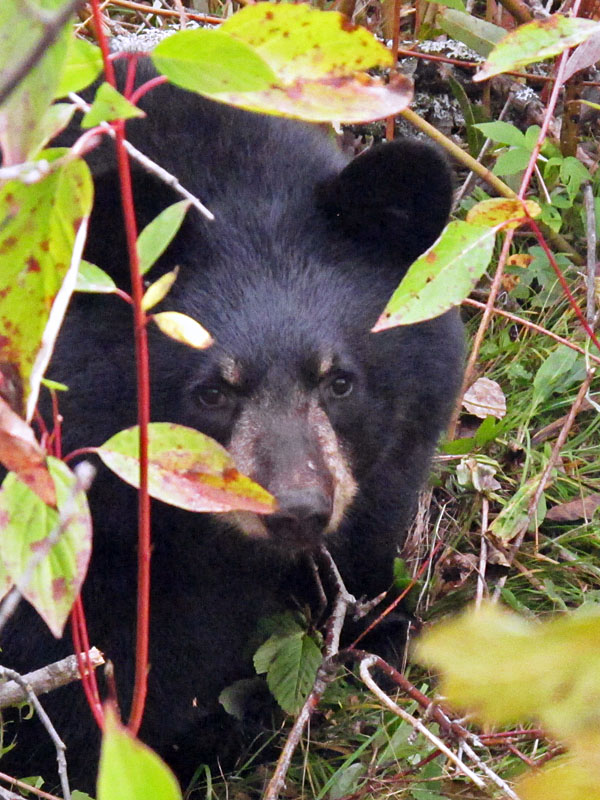 Sybil - Sept 20, 2012Sharon might be answering a question with her travels the last 24 hours. We wondered whether she would den in the new area she explored as a possible territory this summer or den in Juliet’s territory. She is in her new area, bolstering our belief that her travels there were establishing a territory rather than just looking for food. We’ll see what she does in the next couple days. She should den soon. We’ll see if she has cubs this winter.
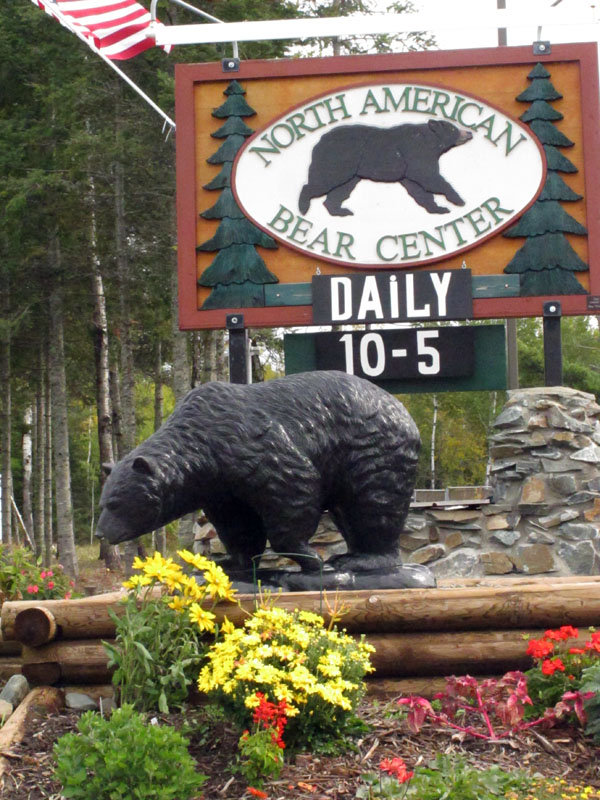 NABC sign - Sept 20, 2012We see that the MPR photographer snapped a picture of a collage of photos here at the field station as part of the Minnesota Public Radio story on our current research. It includes a picture of a radio-collared bear ‘driving’ a boat. The picture was taken 22 years ago of Gerri, who had been raised in captivity during the 2-month socialization period in March and early April. She was socialized to people to the extent that her former caretakers had taken her around to schools. We didn’t know that when we accepted her into our research project and gave her to a wild mother at the DNR’s request. The bears we are studying now don’t drive boats!
 NABC stone bear - Sept 20, 2012Nevertheless, Gerri provided kinds of data we couldn’t have gotten from the wild bears we were studying. That was back before we realized we could touch radio-collared bears. Being able to touch Gerri bear opened the door to learning heart rates and rectal temperatures under various conditions, fur temperatures in sun and shade (helping us understand habitat use), new methods for deterring nuisance behavior, and things about bear homing behavior we could not have learned otherwise.
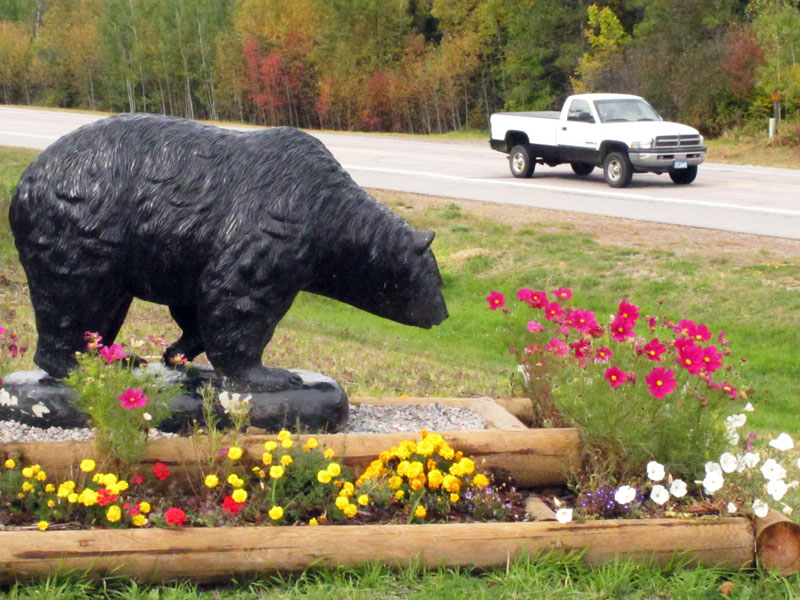
Having seen few bears lately, we snapped pictures of the stone bears in front of the Bear Center where Donna Rogers has been planting flowers. We hope the flowers and bears catch the eye of passersby interested in bears.
Thank you for all you do.
—Lynn Rogers and Sue Mansfield, Biologists, Wildlife Research Institute and North American Bear Center