
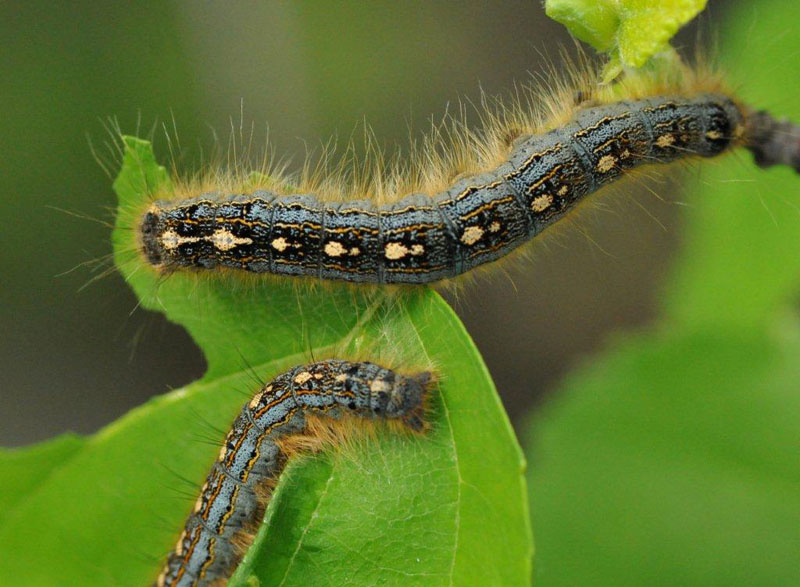
 Forest tent caterpillars on birch leaf - June 4, 2012June, Lily, Jewel, Juliet, and Braveheart are all in safe places away from people. We wish we could catch up to June to see if Big Harry is with her, but she is inaccessible. Faith and Aster have been seen recently but don’t have GPS units, so we have to prioritize how often to home in on them.
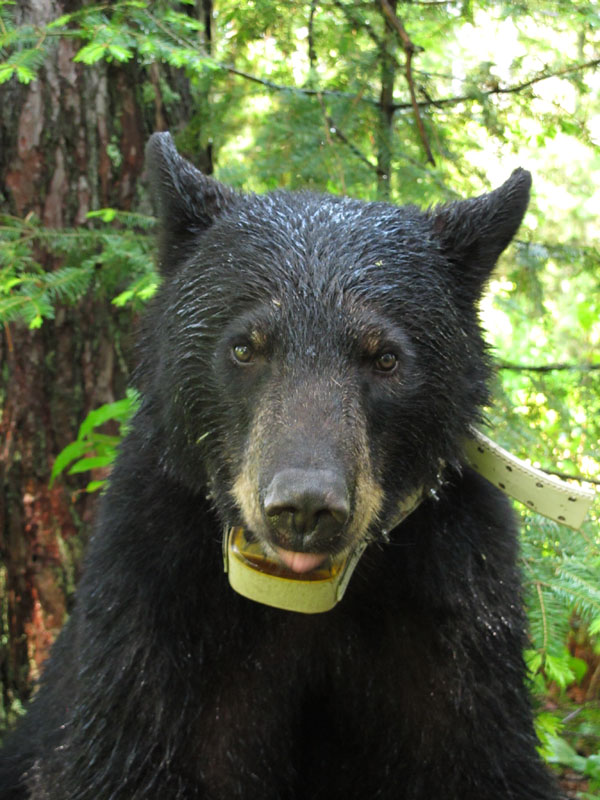 Sharon has begun shedding fur on her face as is typical - June 4, 2012Today, we were worried about Sharon whose last GPS location was 11 hours old and near residences outside the study area. We took a new GPS unit with us and homed in on her, hoping for the best. She was fine. She ran from us at first but then realized who we were and let us approach. She looked around warily the whole time we were with her but was comfortable and confident with us (heart rate 78/min).
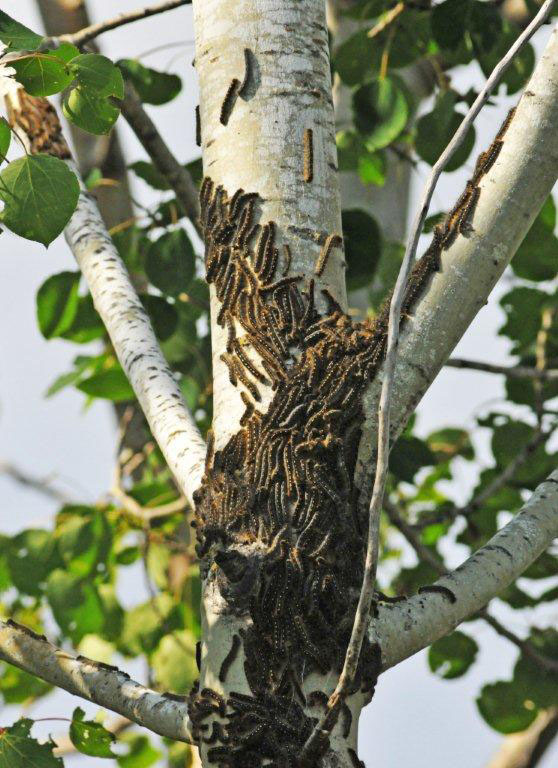 Forest tent caterpillar clump on aspen - June 4, 2012On the way back toward the town of Tower, we saw the highway covered with hundreds of forest tent caterpillars (Malacosoma disstria). A minor outbreak was forecast for this year, and we were in the middle of one and wondering if there were enough of these caterpillars across the area to influence bear movements this month. Forest tent caterpillars are a favorite food. Bears readily eat the masses of caterpillars but don’t bother with them once they form cocoons and pupate by the end of June.
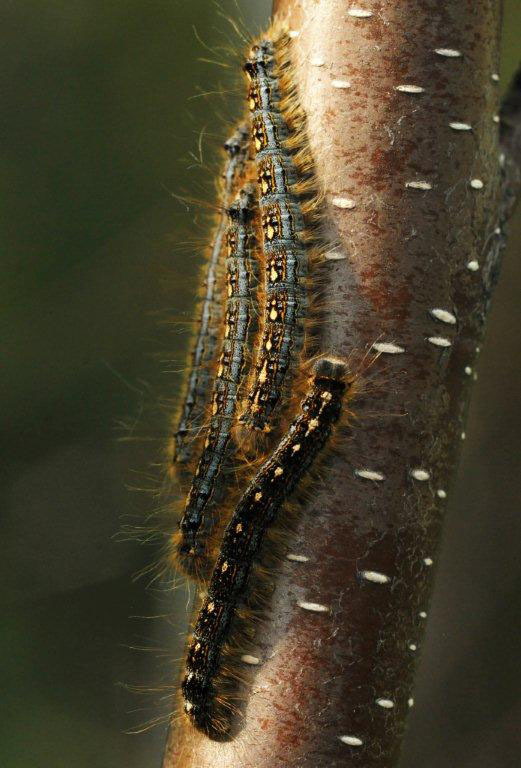 Forest tent caterpillars on birch - June 4, 2012This is the first year of a significant outbreak since 2001. In a major outbreak like might come next year, forest tent caterpillars become the main food for several weeks, followed by a lack of food. The caterpillars eat the leaves of food plants, leading to few berries. Aspens are their favorite, but after aspens are defoliated, they turn to many other shrub and tree species. Photos from the air in such years look like autumn after leaf-fall. Next year, and possibly the next few weeks, could be interesting. We took pictures of this mini-outbreak as an introduction of what could come big next year.
The caterpillars are beautiful but are eaten by few birds and mammals other than black bears and black-billed cuckoos. Cuckoo stomachs are adapted for dealing with the hairs of these caterpillars. The caterpillars also contain oxalic acid as a deterrent.
More information including video footage of a bear feeding on caterpillars can be found at http://www.bear.org/website/bear-pages/black-bear/foraging-a-foods/86-forest-tent-caterpillars.html.
The Bear Necessity Cookbook is coming soon to the Northwoods of MN. The Fund Raising Team is compiling recipes from Lily fans and NABC/WRI staff. The cookbook will be sold on-line through the gift shop and all proceeds will go to the Hope Education Building. Stop by the "Lily Fan Cookbook" forum on http://www.facebook.com/lily.the.black.bear to submit your recipes by June 8th. You may also email your recipes to
The NABC website (www.bear.org) now has a way for you to sign up to receive all mailings about happenings, including the Hope Education Building updates, Education Outreach communications, Speakers Bureau events, special event notices, TV broadcasts, Volunteer news, gift shop messages, surveys, press releases and general announcements. The sign-up box (marked "e-newsletters") is located on the lower right-hand side of the NABC home page.
Thank you for all you do.
—Lynn Rogers and Sue Mansfield, Biologists, Wildlife Research Institute and North American Bear center