
 Den Cams. We began considering which of the bears (now all in dens) are possibilities for Den Cams and further study of the six months of black bear life for which the least is known. Before Den Cams, the only way anyone could see what was happening in a den was to go and look, and then there was no way to tell how much of the activity seen was due to the human presence. The Den Cams have revealed more activity in dens than anyone realized. Is that much activity typical? Only a larger sample size can answer that. The dozens of Den-watchers provided excellent data on Lily as she gave birth, etc., these past two winters. We need to record the next chapter in Lily’s winter life to help put all the play and other behavior in perspective. How differently will she and Faith behave when Lily is neither pregnant nor lactating?
In addition, we need to put a Den Cam in the den of a bear that will have cubs to see how another mother behaves. We have several choices. Star and Jewel will each turn 3 in January and could have cubs. Jewel is accessible and a possibility, but we fear she might not have cubs at 3. Juliet (turning 9) is another possibility. So is Dot who will turn 12 in January. Dot is the oldest mature female we have radio-collared. She is an experienced mother (4 litters). It would be interesting to compare her labor, delivery, and care of cubs to that of Lily. A question with Dot, though, is that she failed to produce cubs this past winter. Did that signal a problem? We don’t think so. Her sister Donna skipped having cubs in 2010 and produced a litter of 3 (her first litter of 3) this past winter. We’re assessing the various pregnant females and the accessibility of their dens.
Words. For words today, we started putting together words for use in GiveMN’s “Give to the Max Day.” Both the Wildlife Research Institute and the North American Bear Center are participating in “give to the Max Day.” For the Wildlife Research Institute, we’re thinking of a video of Sue walking with June Bear and subtitles that might go something like:
“Wildlife Research Institute bear researchers work in forests where people’s greatest fears are proving unfounded, where the black bear’s ferocious reputation may hide a peaceful animal, where presumed enemies may be harmless neighbors, or even companions for walks of discovery.
In this trust-based research, wild bears are replacing misconceptions with scientific facts. Researchers meet wild bears and get to know them—not only as specimens but as living beings willing to share the land.
Bears are part of the balance of nature. They are part of our culture—one of the first animals children recognize. For people who love nature, bears add so much to the land. As more and more people enter bear country, the lives of these misunderstood animals increasingly depend on us. Instead of asking what right bears have to live around us, maybe we should be asking how we can coexist.
Never has this research and education been more important. Bear habitat is shrinking worldwide as people occupy areas that were once isolated. People will not coexist with animals they fear. People must learn the true nature of black bears. Learning and teaching that is the mission of the WRI. Donations will help continue and expand bear research and education.”
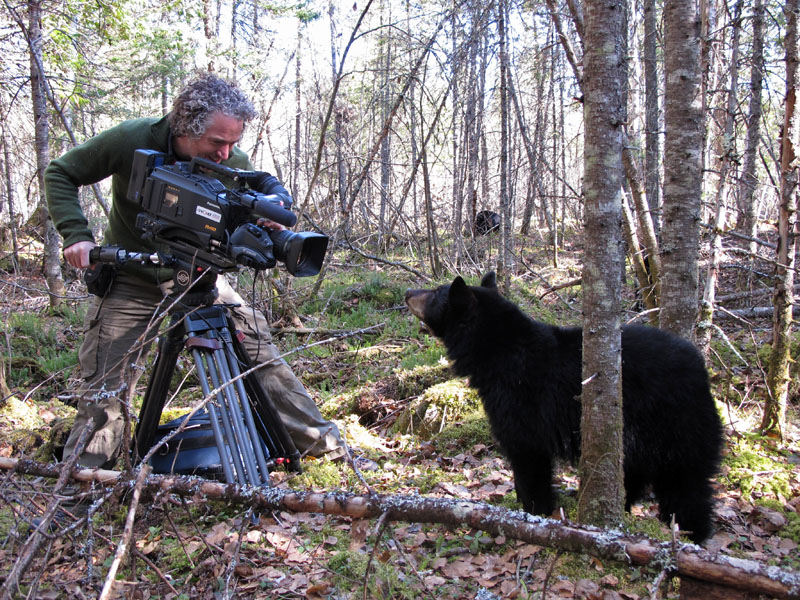
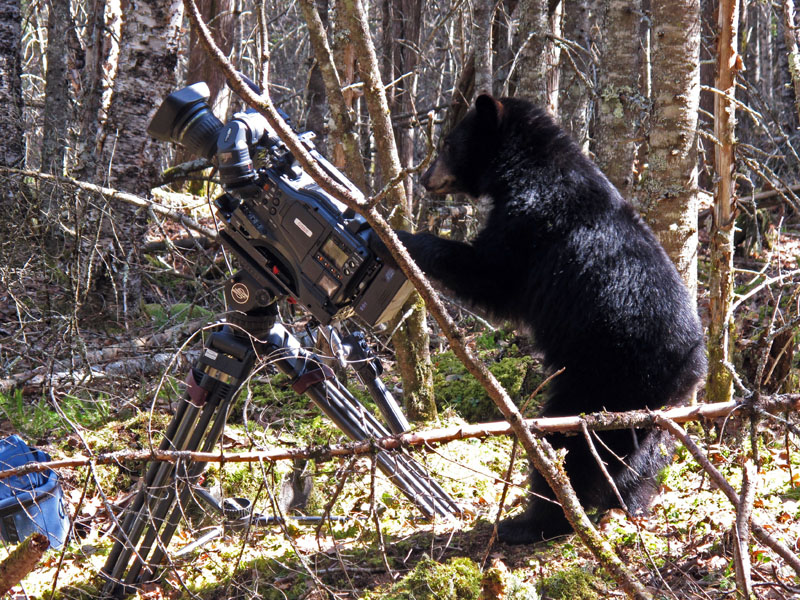 Nomination. On a different subject, we heard today that the BBC Heads nominated only two natural history films for this year's prestigious Royal Television Society Awards in the UK. One is David Attenborough's mega-budget Frozen Planet. The other is humble little The Bear Family and Me. The RTS awards are among the top three awards in the global television industry. Lily, Hope, and Shadow’s Clan are being recognized around the world. One thing The Bear Family and Me showed viewers is that black bears are not the ferocious animals that some would make them out to be. We’re rooting for The Bear Family and Me to win this award.
A few minutes ago, we got a shock. The thermometer says that you reduced the Bear Center debt to under $10,000! Thank you! Seeing all that you did there in less than 2 years makes us almost tearful with hope. What a difference you are making in so many ways. This is one more thing that makes us think the Education Outreach Program will grow.
Thank you for all you do.
—Lynn Rogers and Sue Mansfield, Biologists, Wildlife Research Institute and North American Bear Center