
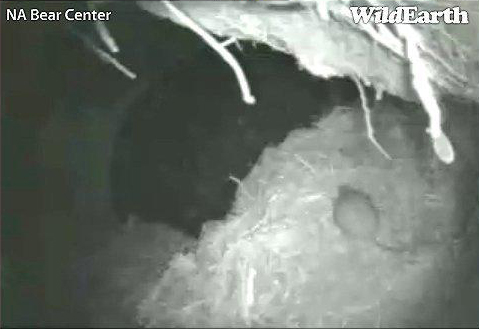
Sue thought she twice saw a mouse on Lily’s back today, and she thought a mouse ran out of bedding that Lily was rearranging. Are we seeing things? With thousands of pairs of eyes, Lily’s fans won’t miss much.
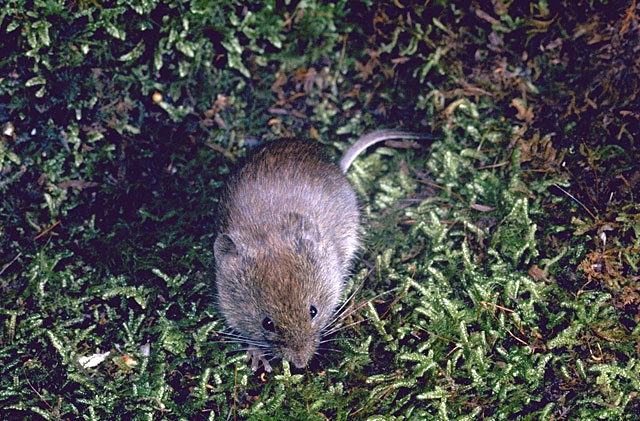
 What kind of little animal is it? Are there more than one kind? What are the choices? Using names as given in the Mammals of North America (2002) by Roland Kays and Don Wilson, there are 8 mice around here. They are: Woodland Jumping Mice (Napaeozapus insignis), Meadow Jumping Mice (Zapus hudsonius), North American Deermice (Peromuscus maniulatus), Southern Red-backed Voles (Clethrionomys gapperi), Meadow Voles (Microtus pennsylvanicus), Rock Voles (Microtus chrotorrhinus), Eastern Heather Voles (Phenacomys ungava), and Southern Bog Lemmings (Synaptomys cooperi).
Last year’s Speedy was a deermouse, if we remember right, but this year it’s a different species. On the list above, the first three have tails that are too long, and the last four have tails that are too short, from what we saw in the pictures and videos Linda Gibson shared with us, so those are out. The middle one, the Southern Red-backed Vole has a tail that is just right, and the habitat fits, too. Red-backed voles are the most common rodents in swampy forest habitat like Lily and Hope are in. They are active day and night. They are less territorial in winter than during their May to September breeding season, so we should be on the lookout for other species that might share the den.
Deermice are the most likely other mouse for this habitat. Deermice have tails about as long as their bodies and have big Mickey Mouse ears. Lily and Hope live too far north for rats.
Bill Powers of PixController is building a 12V sound amplifier he will have to us by mid-week. He has to make it because amplifiers for microphones other than 110V are not commercially available. Meanwhile, Charlie Meyer will plow to make access easier. Sometime this week, we’ll go to the site and see if the new amplifier helps. We’re closely watching the charge on the batteries to see if they are providing enough power. Bill Powers can monitor the battery charge from Pennsylvania, and he emails the charge level each day.
You are doing good things behind the scenes. More on that soon.
Thank you for all you are doing.
—Lynn Rogers and Sue Mansfield, Biologists, Wildlife Research Institute and North American Bear Center