
Bears on the move
September 15, 2010 – 8:00 PM CDT
Cold and rainy. We stayed indoors and the bears stayed bedded.
Jo spent the day resting near her last year’s den—the culvert den where she slipped her collar. At 5:30 PM she became active and moved further into a remote area.
Braveheart became active about 6:15 PM and—judging from the pattern of her GPS locations—spent a half hour foraging along a woods road before heading deeper into her territory.
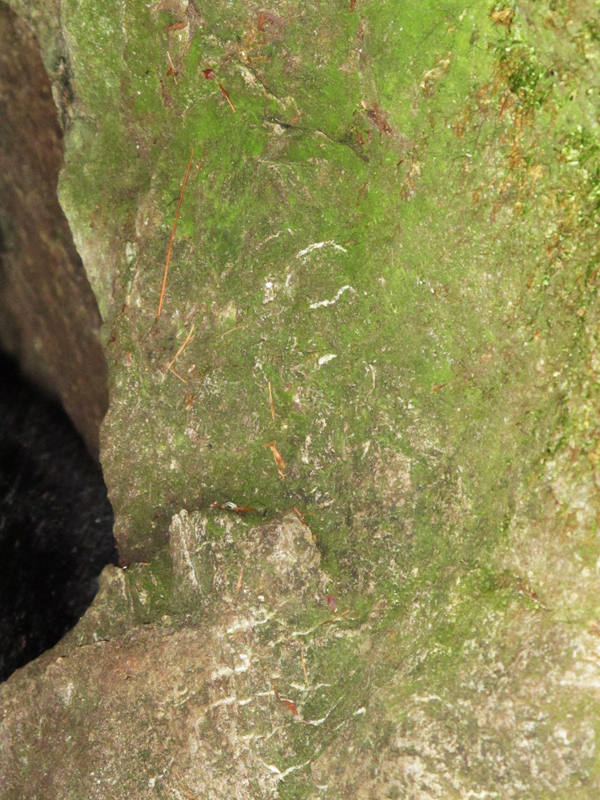 June did not return to the deep rock den we found her in yesterday. The picture shows claw marks left by a bear (likely June) climbing up out of the den. Remembering how hard it was for Hope to get out of Lily’s den last spring, we wonder how tiny cubs would ever get out of that steep rock-walled den! Today June rested in one of her familiar bedding areas before beginning to roam about 6:30 PM. We’ll be watching closely to see where June settles in and if her den has den cam potential.
Ursula also began moving at 6:30 PM but moved only 0.14 miles before resting again. It’s been an hour since her last GPS signal which makes us wonder if she may have ducked into a rock den. Time will tell.
Two years ago, June entered a rock den on Sept 6th. She was in and out of the den over the next 2 weeks as she foraged on wild calla in a nearby swamp, rested outside the den, and raked new bedding into the den. Each time we knew when she left the den because we suddenly began getting GPS readings again. Then when she returned to the den the readings would stop.
Lily and Hope spent the day in a cedar swamp as is their pattern lately. They began moving about 7:00 PM. Lily seems less active than other mothers with cubs. Juliet and her cubs were seen foraging on grass this afternoon while Lily and Hope rested. RC and her cubs were also active before dark. We are anxious to see how the timing of Lily’s denning fits with that of other mothers with cubs.
The exciting work on the Educational Outreach continues. We hear a spaghetti dinner for staff is arriving at the Bear Center tomorrow. Thank you!
Again, thank you for all you do.
—Lynn Rogers and Sue Mansfield, Biologists, Wildlife Research Institute and North American Bear Center